

This legislation closes a loophole in the current law which allows 100% of the work being completed on a jobsite to be done by workers only possessing an apprentice license. Currently, under Delaware law, an apprentice license can be acquired with little or no experience in the electrical trade. Recently the State discovered that construction on Delaware’s largest building, measuring more than 3.7 million square feet, that houses over 500 workers and received $3 million in State taxpayer dollars was being built with electrical workers not possessing the necessary licenses. When the job was shut down, the contractor had all the electrical workers acquire apprentice licenses rather than hire experienced, properly trained electricians. A similar violation was discovered at the construction site of an elementary school here in Delaware. The current law only holds the worker responsible and allows the contractor to avoid any fines. This legislation corrects that inequity by also holding the contractor responsible and subject to fines.
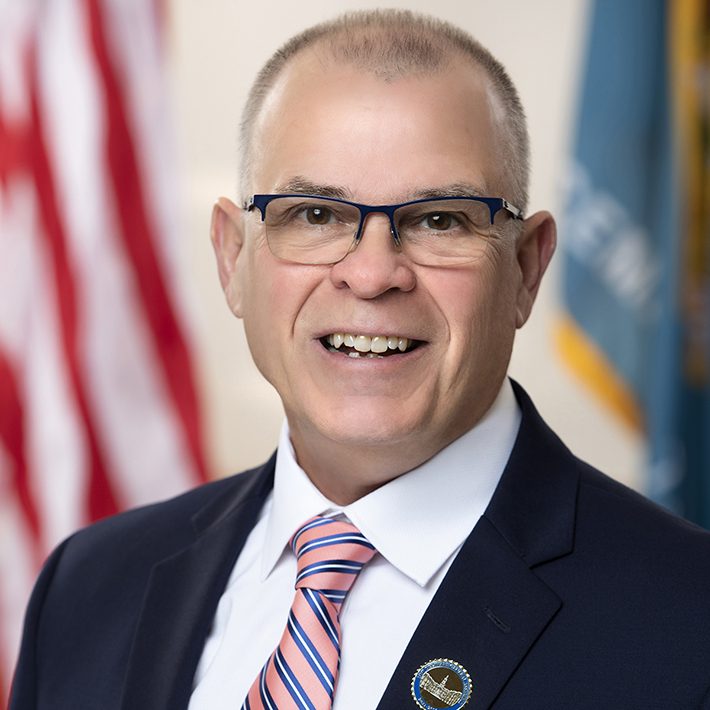
Rep. Ed Osienski
Sponsored bills
This resolution directs all electric utilities in Delaware that offer net metering to solar customers to participate in a cost-benefit study and analysis of net metering in Delaware being undertaken by the Delaware Sustainable Energy Utility to address issues such as cost burdens and cost shifting to non-solar customers.
This bill creates a special license plate to help underwrite Youth and Conservation Day for the Delaware Ducks Unlimited youth members known as Greenwings. Greenwings are younger Ducks Unlimited members who participate in the conservation, restoration, and management of wetlands and associated habitats for North American waterfowl. The purpose of this license plate is to raise money to educate our youth in the continued conservation of our habitats to benefit our wildlife and people. This plate is intended for use by individuals of all ages.
This Act requires public institutions of higher learning to grant credit for advanced placement examination scores of 3 or higher. An instution may require a score higher than 3 if the credit is to be used for meeting a course requirement for a particular major or program, provided that the student can receive course credit for that examination in an area outside of the student’s major or program area. The institution must publish its advance placement score policies on its website. This Act takes effect on August 1 following its enactment into law.
This Act creates a new offense of Aggravated Criminal Mischief with enhanced penalties (class D felony) applicable when an individual knowingly damages or tampers with critical utility infrastructure intending to disrupt utility services. In recent years, the U.S. Department of Homeland Security (DHS) and the FBI have issued repeated warnings about domestic terrorists and extremist groups targeting critical utility infrastructure. Bulletins issued through DHS’ National Terrorism Advisory System in 2022 warned of a heightened threat environment based, in part, on “continued calls for violence directed at U.S. critical infrastructure.” Physical and computerized attacks on electric utility equipment have reached a 10-year high in 2022. Recent attacks in Washington and North Carolina have caused substantial outages and damage to the power grids in both states.
This Act amends the Fiscal Year 2023 Bond and Capital Improvements Act to (1) list the allocations of the School Construction Market Pressure Contingency Fund and clarify that funds cannot exceed the CN scope. Further, this Act amends Fiscal Year 2024 Bond and Capital Improvements Act to (2) revise language adjusting Federal Fund reporting dates to align with federal timelines; (3) ensure any alternative yard waste drop-off plan and relocation must provide the same level of service as the existing Polly Drummond Yard Waste site; (4) reallocate Resource, Conservation and Development funding for drainage improvement projects; (5) authorize the cancellation of any notes and forego all amounts owed under the loan agreement between the Diamond State Port Corporation (DSPC) and the Transportation Trust Fund; (6) authorize $400,000 of the Cover Crop Investment to be allocated to the Delaware Nutrient Management Commission for alternative projects; (7) authorize school districts to bond, if needed, the local match to market pressure and clarify that funds cannot exceed the scope of the Certificate of Necessity; (8) authorize the Department of Transportation to use Community Transportation Funds for one-time reimbursements for various projects; (9) reallocate Community Reinvestment Funds to the MOT Senior Center; (10) authorize the Department of Health and Social Services to donate land to the Wilmington Renaissance Corporation; (11) authorize funds to be used for the Carvel State Office Building window replacement project; (12) authorize funding to be used for construction or renovation of the Cleveland White building; (13) donate, sell, or transfer all or part of the property known as “Elbert-Palmer School”; (14) authorize funds for the demolition of the former Elbert-Palmer School and related site work; (15) authorize Caesar Rodney School District’s Certificate of Necessity 2210B to be extended and will now expire on November 15, 2024; (16) authorize Municipal Infrastructure Funds for the Bowers Beach Boatlift to be used for Drainage Improvement; and (17) authorize the transfer of ownership of the state-owned dredge to Summit North Marina LLC.
This Concurrent Resolution honors and recognizes the leadership and achievements of African Americans and urges the celebration of Black History Month.
This concurrent resolution designates the week of February 11-17, 2024, as “Children of Alcoholics Week” and calls upon Delawareans to break the silence and talk to their family and friends about alcoholism.
This concurrent resolution hereby designates January 23, 2024 as ‘Maternal Health Awareness Day” in the State of Delaware.
This concurrent resolution designates February 2024 as “Career and Technical Education Month” in the State of Delaware to urge all citizens to become familiar with the services and benefits offered by the career and technical education programs in their communities, and to support and participate in these programs to enhance their individual skills and productivity.