This bill sets a minimum reimbursement rate for home health care nursing services paid for by Medicaid-contracted organizations. The rate shall be at least equal to the rate set by the Division of Medicaid for equivalent services. Home care nurses and aides give Delawareans with disabilities the option to remain at home with their families and prevents unnecessary use of higher-cost hospitals, nursing homes and rehabilitation facilities.
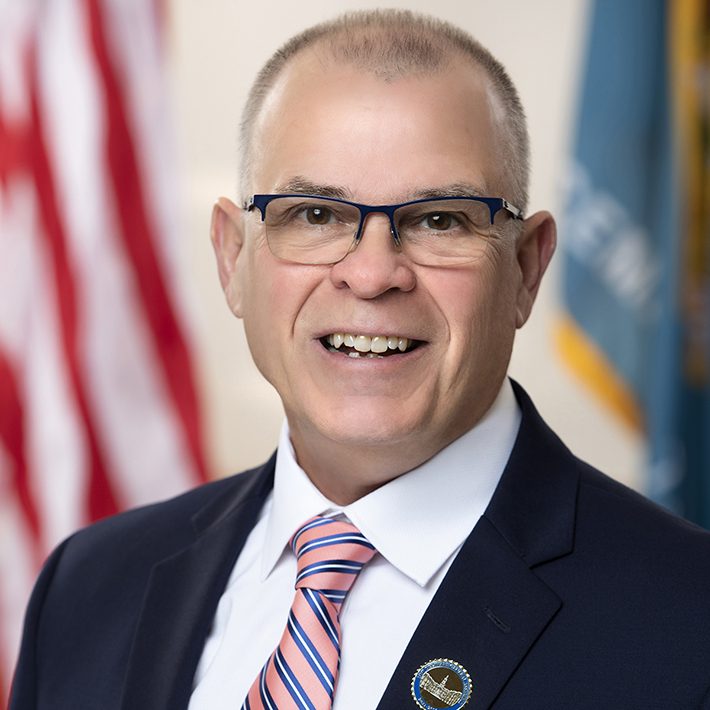
Rep. Ed Osienski
Sponsored bills
This bill clarifies that the reviews of child abuse and neglect deaths and near deaths are confidential and should not be used in any proceedings. It ensures that the committees and panels who do the work on behalf of the Child Protection Accountability Commission are protected. Finally, the bill clarifies that any duties of the State for public disclosure in these cases under the federal Child Abuse Prevention and Treatment Act will not be fulfilled by these confidential reviews conducted by the Commission as Delaware’s Citizen Review Panel.
This bill establishes the Behavioral Health Consortium that will provide oversight and coordination of the State’s private and public bodies to address behavioral health issues in Delaware.
This act establishes the Addiction Action Committee as a means to establish a comprehensive, coordinated strategy to address addiction in Delaware. The committee is authorized to make recommendations on a comprehensive approach to address and monitor the addiction crisis.
This Act, which shall be known as the Coastal Zone Conversion Permit Act, makes changes to the Coastal Zone Act (“CZA”), which has not been significantly updated since its enactment almost a half century ago. The CZA, enacted in 1971, has enabled Delaware to preserve and protect our coastline, one of Delaware’s greatest natural resources. However, the CZA has also allowed property that has been in use by heavy industry for nearly 50 years, most suitable for similar industrial uses, to go unused unless the owner is willing to engage in the same heavy industry use or to use the property for manufacturing. This Act establishes a procedure to allow for the responsible, productive reuse of the 14 existing sites of heavy industry use within the coastal zone. Specifically, this Act provides that the Secretary of the Department of Natural Resources and Environmental Control (“Secretary”) may issue a conversion permit entitling the owner, operator, or prospective purchaser of an existing heavy industry use site operate an alternative or additional heavy industry use at a heavy industry use site. A conversion permit may also be sought for a heavy industry use site that had a docking facility or pier for a single industrial or manufacturing facility at the time the original CZA was passed in 1971, to engage in the bulk transfer of products produced in or used by a facility in the coastal zone. Agricultural products in bulk may also be transferred without regard to origin or destination pursuant to a conversion permit. Liquefied natural gas terminals or transfers are not allowed under this provision. The CZA already contains an exception from the definition of “bulk product transfer facility” for “a docking facility or pier for a single industrial or manufacturing facility for which a permit is granted or which is a nonconforming use,” and that exception is maintained in this Act. A person applying for a conversion permit must submit a written application including all of the information currently required for a permit under the CZA in addition to the following: (1) the environmental impact and economic effect of the existing or previous heavy industry use or uses, (2) the environmental impact and economic effect of the alternative or additional heavy industry use or bulk product transfer activity, (3) the net environmental improvement, economic improvement, or both, inherent in the additional or alternative heavy industry use or bulk product transfer activity as compared to the most recent heavy industry use, (4) evidence of compliance with the Delaware Hazardous Substance Cleanup Act (“HSCA”) and other environmental laws, (5) a sea-level rise plan, (6) an offset proposal required to more than offset the negative environmental impacts of an activity, consistent with regulations, (7) a timetable for the conversion from the existing heavy industry use to the alternative or additional heavy industry use or bulk product transfer activity, and (8) evidence of financial assurances. Together, these additional requirements will ensure the coastal zone is protected while providing more flexibility for viable economic use to these 14 existing sites of heavy industry use. This Act specifies that the Secretary may not grant a conversion permit to operate any oil refinery, basic cellulose pulp paper mill, incinerator, basic steel manufacturing plant, or liquefied natural gas terminal not in existence on June 28, 1971. All conversion permit applications under this Act are subject to a public hearing. The Secretary must respond to an application for a conversion permit within 90 days of receiving an application.

This legislation adopts the NAIC’s Corporate Governance Annual Disclosure Model Act, and requires Delaware-domiciled insurers to provide to the Commissioner on an annual basis a summary of the insurer’s or insurance group’s corporate governance structures, policies and practices to permit the Commissioner to gain and maintain an understanding of the insurer’s corporate governance framework.
This Act replaces existing Chapter 83 of the Delaware Insurance Code and sets forth the permissible uses of credit information in rating personal insurance. This Act also prohibits insurance companies from increasing rates on current customers solely for having reached the age of 75 or above or for having a change in marital status due to the death of a spouse. This Act is substituted for House Bill No. 80 and differs from House Bill No. 80 by removing the required and optional rating-factors lists and the required offering of a good driver discount plan in lieu of provisions which more clearly define how insurance companies may use credit information and insurance scores in calculating their rates.
This bill eliminates the sunset provision on the “at-store” recycling program for plastic bags. The program established in 2009 included a sunset provision until 2014. In 2014, the General Assembly extended that sunset provision to 2017. This bill eliminates the sunset provision permanently to encourage the continued routine for consumers to recycle plastic bags through “at-store” programs. The bill will also require all stores subject to the requirements of this section to register by June 30, 2018, and provide information to DNREC regarding compliance on a form to be provided by DNREC.
This Act extends the Office of Foreclosure Prevention and Automatic Residential Foreclosure Mediation Program an additional two years, from January 18, 2018 until January 18, 2020. The Office of Foreclosure Prevention and the Automatic Residential Foreclosure Mediation Program were originally scheduled to sunset on January 18, 2014, two years after their enactment. The sunset date was extended to January 18, 2018 (six years) in 2013 via 79 Del. Laws c. 27 (House Bill No. 40, as amended by Senate Amendment No. 1, 147th General Assembly).
This bill would require that a resident 65 years of age or older claiming a tax credit against school taxes must be a resident of the state for at least 10 years before qualifying for such credit. The current requirement is only for 3-year residency. This bill makes a conforming change in the Code provision governing reimbursements from the General Fund. It also eliminates language related to 2001 taxes, which is no longer relevant. This change will be effective for tax and fiscal years after January 1, 2017. Those residents who would have become eligible over the last three years under the prior version of the statute will remain eligible.