This Act creates the following new tax brackets: at $125,000, with a rate of 7.10% and at $250,000, with a rate of 7.85%.
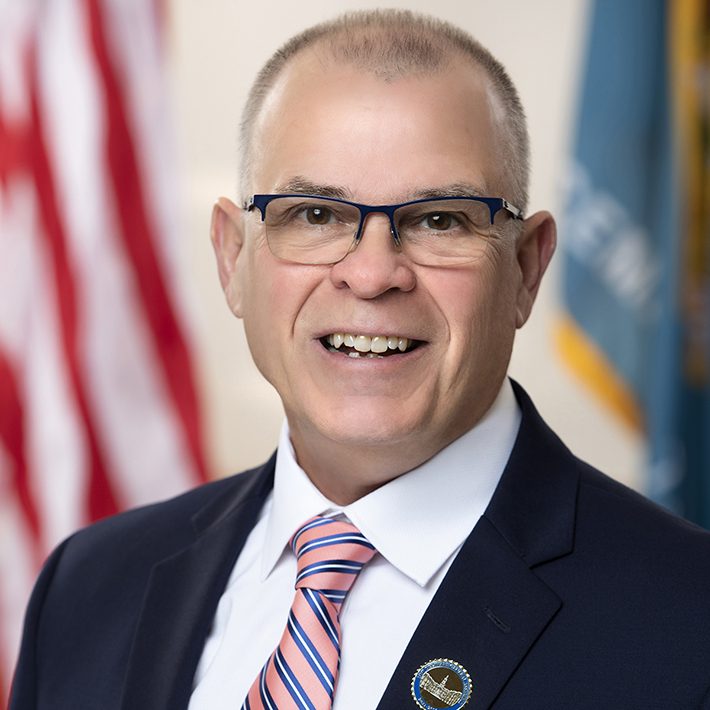
Rep. Ed Osienski
Sponsored bills
This Concurrent Resolution recognizes the valuable contributions that the Lions Club International makes to our local communities, as well as the world at-large, by designating April 9, 2019 as "Delaware State Lions Day" in the State of Delaware.
This House Concurrent Resolution designates April 2, 2019 AS "EQUAL PAY DAY" in the State of Delaware.
This Act establishes the Focus on Alternative Skills Training Program ("FAST"). FAST will provide tuition, up to $9,000, to Delaware residents who have obtained a high school diploma, Diploma of Alternate Achievement Standards, or a Delaware secondary credential, which includes earning a GED, and have enrolled in an approved non-degree credit certificate program. The Workforce Development Board will create a list of non-degree credit certificate programs approved for the FAST program.
This Concurrent Resolution recognizes March 29, 2019 as "National Vietnam War Veterans Day" in Delaware.
Act enacts the National Popular Vote compact, which changes the Electoral College from an institution that reflects the voters’ state-by-state choices into a body that reflects the voters’ nationwide choice. Currently, state statutes require that electoral votes are controlled by the plurality of the voters in the state but this system is not required by the U.S. Constitution or federal law. The National Popular Vote compact requires that each member state award its electoral votes to the presidential candidate who received the largest number of popular votes in all 50 states and the District of Columbia. The National Popular Vote compact becomes effective when it is enacted by states collectively possessing a majority of the electoral votes. When the National Popular Vote compact takes effect, the presidential candidate receiving the most popular votes in all 50 states and the District of Columbia would be guaranteed enough electoral votes in the Electoral College to be elected to the Presidency. Specifically, this Act does the following: Section 1. Adopts The Agreement Among the States to Elect the President by National Popular Vote ("National Popular Vote compact") and provides for notice regarding when the National Popular Vote compact is in effect and governs a presidential election. Section 2. Revises the wording of § 4303(b) so that it correctly addresses how electors must vote in any presidential election. This is not a substantive change to current law, which governs when the National Popular Vote compact is not applicable to an election, because the electors nominated by the political party that received the plurality of vote of the voters of this State are the electors who are appointed. Section 3. Corrects a typographical error in § 5711. Section 4. Revises § 5711 to govern when the National Popular Vote compact governs a presidential election. Both versions of § 5711 will appear in the Delaware Code with a note at the top of each version stating if that version governs the next presidential election. Section 5. Revises § 7704 of Title 15 regarding the election of delegates to a state constitutional convention to ratify proposed amendments to the U.S. Constitution so that it remains unchanged by the National Popular Vote compact. The statute currently provides that delegates are elected "in the same manner as in the case of the election for electors for President and Vice President." Because the National Popular Vote compact changes how electors are selected, § 7704 is revised so that delegates to a national constitutional convention are nominated and elected in the current manner, regardless of whether the National Popular Vote compact governs the next presidential election. Section 6. Clarifies the effective date of this Act and when Section 1 of this Act governs a presidential election.
This Act establishes a mental health services unit for Delaware elementary schools. The unit is at a ratio of 250 full-time equivalent students grades K-5 for a full-time school counselor, school social worker, or licensed clinical social worker. Additionally a unit ratio of 700 full time equivalent students for grades K-5 for employment of a full-time school psychologist. This Act defines “mental health services” as prevention, response, and coordination services delivered to students in elementary schools. Mental Health disorders are the most common health problem for school aged youth. According to the National Institute of Mental Health (NIMH), one in five youth are affected by a mental health disorder. Additionally, 50% of lifetime mental illnesses begin by age 14. Untreated mental illness leads to negative outcomes including increased risk of dropout, homelessness, substance abuse, other chronic illnesses, incarceration, and possibly suicide. According to the National Alliance on Mental Health, ninety percent of people who have taken their own life have had an underlying mental health condition, and suicides are on the rise. According to the Center for Disease Control and Prevention, suicides are now the second leading cause of death for youth ages 10-14. Delaware schools need trained and experienced mental health professionals to provide prevention and support programs and services to students. Currently, as reported by Delaware school districts, 86% of elementary schools do not employ a school social worker, and ratios of students to school counselors and school psychologists far exceed national best practices. This bill will lower ratios and increase access to mental health services for elementary school students.

This Resolution recognizes April 2019 as Child Abuse Prevention Month in Delaware.
This bill provides State funding to kindergarten through third grade for basic special education. State funding already occurs for intensive and complex special education during these grades. Currently the basic special education funding runs from fourth through twelfth grade. This bill is an effort to promote earlier identification and assistance for basic special education needs which should then mitigate costs over the long term. Pursuant to its terms, funding for K-3 special education will be phased in gradually over 4 years.
This Act authorizes a 1-time tax credit in the amount of a fee for a new license under Title 24 for an individual who is 25 years or younger, or whose income is equal to or less than 130% of the federal poverty guideline. The tax credit eases the financial burden on young and low-income workers entering licensed occupations. The tax credit applies only to initial, or first-time, licenses, and in the tax year in which the fee is charged. It does not apply to other fees, such as license renewal, reciprocity, late payment, or a request for change of status.