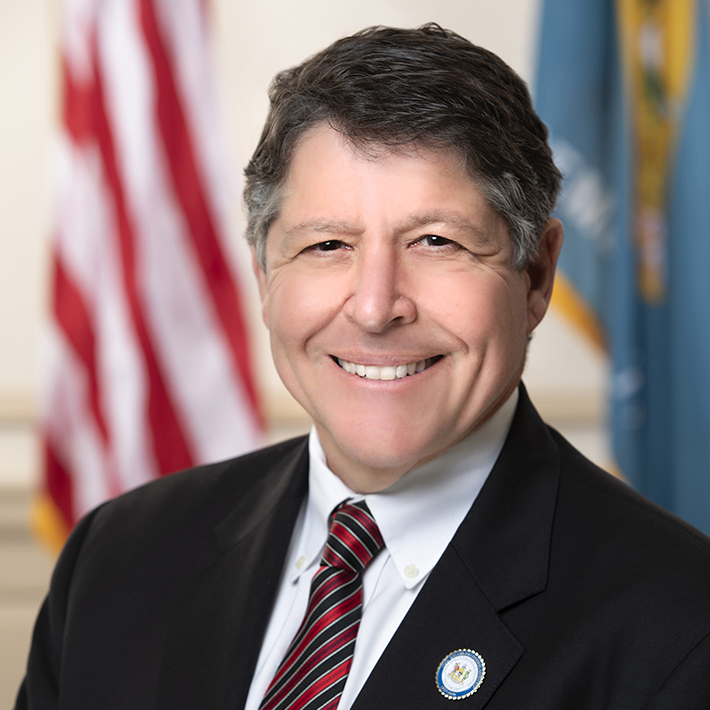
Photo of Paul Baumbach
D Delaware House · District 23

Rep. Paul Baumbach

Contact Email
Compare
Total votes
2,122
all sessions
Attendance
99%
14 missed
Higher than 95% of chamber peers
With party
99%
of cast votes
Near the chamber average
Bipartisan score
0%
crosses aisle rarely
Near the chamber average
Sponsored
1,430
bills & resolutions
Higher than 88% of chamber peers
Committees
0
assignments
1,430 bills and resolutions

Sponsored bills

Total
1,430
Primary
633
Co-sponsor
797
This page
1,430
matching current filters
Co-sponsor HB 23
Signed into law · Delaware House · Co-sponsor
AN ACT TO AMEND TITLE 30 OF THE DELAWARE CODE RELATING TO PERSONAL INCOME TAX.

This bill will add a new check-off donation box on the Delaware personal income tax return whereby individuals may choose to donate a portion of their tax refund, or designate an amount in addition to the tax they owe that will be transferred by the Division of Revenue to the Pediatric Cancer Research Fund held by the Delaware Community Foundation, who in turn will deposit the funds to the Andrew McDonough B+ Foundation.

Signed into law Jun 5, 2019 1 co-sponsor
Co-sponsor HB 171
In committee · Delaware House · Co-sponsor
AN ACT TO AMEND TITLE 11 OF THE DELAWARE CODE RELATING TO THE ESTABLISHMENT OF CERTIFICATES OF REHABILITATION.

This bill creates certificates of rehabilitation, an essential resource states can offer to support reentry, and promote public safety, by lifting statutory bars to jobs, licenses or other necessities such as housing that result from a conviction history. Certificates may be used to provide a way for qualified people with criminal records to demonstrate rehabilitation or a commitment to rehabilitation. At least six states currently have laws authorizing certificates of rehabilitation or other similar means of removing legal barriers arising from a criminal record separate and apart from seeking a governor pardon. This bill creates certificates of rehabilitation to restore the rights of people with criminal records who have paid their debt to society.

In committee Jun 3, 2019 1 co-sponsor
Co-sponsor SB 130
In committee · Delaware Senate · Co-sponsor
AN ACT TO AMEND TITLE 11 OF THE DELAWARE CODE RELATING TO ELECTRONIC RECORDATION OF CUSTODIAL INTERROGATIONS.

Confessions are powerful evidence of guilt. This Act adopts the Uniform Law Commission's Uniform Electronic Recordation of Custodial Interrogations Act to promote truth-finding, promote efficiency, and protect constitutional values. The scope of recording required under the Uniform Act, and the exceptions to the recording requirement, are consistent with the requirements set by the Attorney General in the Attorney General’s Custodial Interrogation Model Policy, available at: https://attorneygeneral.delaware.gov/law-enforcement/custodial-interrogation-policy-2018/. Specifically, this Act mandates audio recording or audio and video recording of the custodial interrogation process by law enforcement when the interrogation relates to a crime, as crime is defined under the Delaware Criminal Code. Recognizing that a blanket requirement of recording electronically all interrogation is not feasible, this Act provides 6 exceptions to the recording mandate: (1) exigent circumstances, (2) an individual's refusal to be recorded, (3) interrogations occurring in other jurisdictions, (4) when the interrogator reasonably believes that the offense involved is not one the Act mandates must be recorded, (5) when the interrogator or interrogator's supervisor reasonably believes electronic recording would reveal a confidential informant's identity or jeopardize the safety of the officer, the person interrogated, or another individual, and (6) equipment malfunctions. Further, this Act requires the prosecution to notify the defense of an intention to introduce an unrecorded statement and of the exception that permitted the lack of recording. This Act requires the prosecution to prove by a preponderance of the evidence that an exception applies. This Act also prescribes remedies for violations of the electronic recording requirement, including the giving of a cautionary instruction to the jury. Finally, this Act requires the Attorney General to adopt rules to implement this Act, which are to be enforced by each law enforcement agency.

In committee May 31, 2019 1 co-sponsor
Co-sponsor SB 39
In committee · Delaware Senate · Co-sponsor
AN ACT TO AMEND TITLE 10, TITLE 11, AND TITLE 21 OF THE DELAWARE CODE RELATING TO FINES, FEES, COSTS, PENALTIES, AND FORFEITURES.

In 2017, 44,889 failure to pay capias issued for people who did not pay a fine, fee, cost, assessment, or restitution imposed for a non-felony offense. In the first 6 months of 2018, there were a total of 5,807 admissions to detention at all Level V facilities. Of these admissions, 129 were for failure to pay only and 595 were for failure to pay and another charge. When a capias is issued for nonpayment of a fine, courts currently may and do impose fees to cancel the warrant. When defendants are late paying their fines, the courts’ clerks also must forward the defendant’s name to the Department of Transportation’s Division of Motor Vehicles for license suspension. This Act prohibits a court or the Department of Transportation from suspending a driver’s license for nonpayment of a fine, fee, cost, assessment, or restitution and from charging a penalty, assessment, or fee to a defendant for the cancellation of a warrant issued due to the defendant’s nonpayment of a fine, fee, cost, assessment, or restitution. This Act also prohibits a court from imposing an additional fee on a defendant for payments that are made at designated periodic intervals or late, or when probation is ordered to supervise a defendant’s payment. Nothing in this Act precludes the court from filing contempt charges against defendants who willfully fail to pay their fines imposed after their ability to pay hearing. Further, this Act permits a court, before imposing a fine, fee, cost, or assessment, to consider a defendant’s ability to pay the fine, fee, costs, or assessment, whether an adult or a juvenile, is able to pay the fine, fee, cost, or assessment. This Act also provides the courts with discretion to waive, modify, suspend, costs, assessments, fines, and fees even if otherwise deemed mandatory by the Code. Additionally, this Act requires state, county, and municipal law enforcement agencies and volunteer ambulance companies to calculate and report the total sum they receive from fines, fees, costs, assessments and restitution and make a public report of these totals. This Act also creates the Criminal Legal System Imposed Debt Study Group to review the impact court imposed financial obligations have on defendants and survivors of crime and make recommendations to promote access, fairness, and transparency in the imposition and collection of court imposed financial obligations. Finally, this Act makes technical corrections to conform existing law to the standards of the Delaware Legislative Drafting Manual.


In committee May 31, 2019 1 co-sponsor
Co-sponsor HB 8
In committee · Delaware House · Co-sponsor
AN ACT TO AMEND TITLE 30 OF THE DELAWARE CODE RELATING TO DELAWARE TAX CREDITS.

Employment for formerly incarcerated individuals is a major barrier to transitioning and re-entering the community. The National Institute of Justice estimates that 60% of ex-offenders are jobless one year after their release. Improving access to employment opportunities for ex-offenders helps lower the State’s recidivism rates and will improve public safety and reduce taxpayer spending on prisons. This Act seeks to improve access to employment for formerly incarcerated individuals by establishing the Ex-Offender Employment Opportunity Tax Credit that offers a tax credit to employers hiring qualified ex-offenders in an amount equal to 10% of that individuals wages, with a maximum credit of $1500.

In committee May 30, 2019 1 co-sponsor
Primary SB 12
Signed into law · Delaware Senate · Lead sponsor
AN ACT TO AMEND TITLE 26 OF THE DELAWARE CODE RELATING TO GENERATING SYSTEMS WITH THE NEW SOCIETY OF AUTOMOTIVE ENGINEERS ELECTRIC SAFETY STANDARD.

This Act facilitates electric vehicle and grid-integrated electric vehicle interconnection by including the Society of Automotive Engineers industrial safety standard, J3072, which sets safety requirements for electric vehicles that provide power from their batteries back to the electric grid. This Act also makes technical corrections to conform existing law to the standards of the Delaware Legislative Drafting Manual.
Signed into law May 29, 2019 0 co-sponsors
Co-sponsor HB 55
Signed into law · Delaware House · Co-sponsor
AN ACT TO AMEND TITLE 29 OF THE DELAWARE CODE RELATING TO FINAL AVERAGE COMPENSATION FOR THE STATE EMPLOYEES' PENSION PLAN FOR RECIPIENTS OF CERTAIN AWARDS.

This Act includes the dollar amount of an Educational Support Professional of the Year award received by a State employee when determining the final average compensation used to compute the State employee's pension. This Act also makes technical corrections to conform existing law to the standards of the Delaware Legislative Drafting Manual.

Signed into law May 29, 2019 1 co-sponsor
Co-sponsor SB 50
Signed into law · Delaware Senate · Co-sponsor
AN ACT TO AMEND TITLE 14 AND TITLE 29 OF THE DELAWARE CODE RELATING TO THE ESTABLISHMENT OF A COMMUNITY COLLEGE INFRASTRUCTURE FUND.

Delaware's statewide community college system, operated by Delaware Technical and Community College (“the College”), plays a critical role in the State's economy by providing workforce development, vocational training, and transfer education that connects Delawareans with good paying jobs within the State and region. This Act gives the College’s Board of Trustees the authority to issue bonds to finance the cost of major and minor capital improvements, deferred maintenance, and the acquisition of related equipment and educational technology and establishes the Community College Infrastructure Fund (“the Fund”) to pay the principal and interest on such bonds. Any promissory notes or bonds must be approved separately prior to issuance by the General Assembly in a bond and capital improvement act. This Act is a substitute for and differs from Senate Bill No. 50 by deleting the property tax component and instead provides that it is the intent of the General Assembly to appropriate at least $10 million for deferred maintenance for the next 5 years to be deposited to the Fund together with such other funds as may be deposited by the College from sources including, but not limited to, tuition and fees, private funds, non-state grants and federal support. This Act also provides a mechanism, but not an obligation, for the state to provide matching funds for minor capital improvement projects consistent with existing matching provisions for public education. This Act also makes technical corrections.

Signed into law May 16, 2019 1 co-sponsor
Showing 1,111 to 1,120 of 1,430 bills