This bill updates the members of the Childhood Lead Poisoning Advisory Committee to include additional stakeholders, and directs the Committee to report to the General Assembly on the effectiveness of the Act, ways to improve the Act, and other measures that should be taken by the State of Delaware to prevent lead poisoning in children.
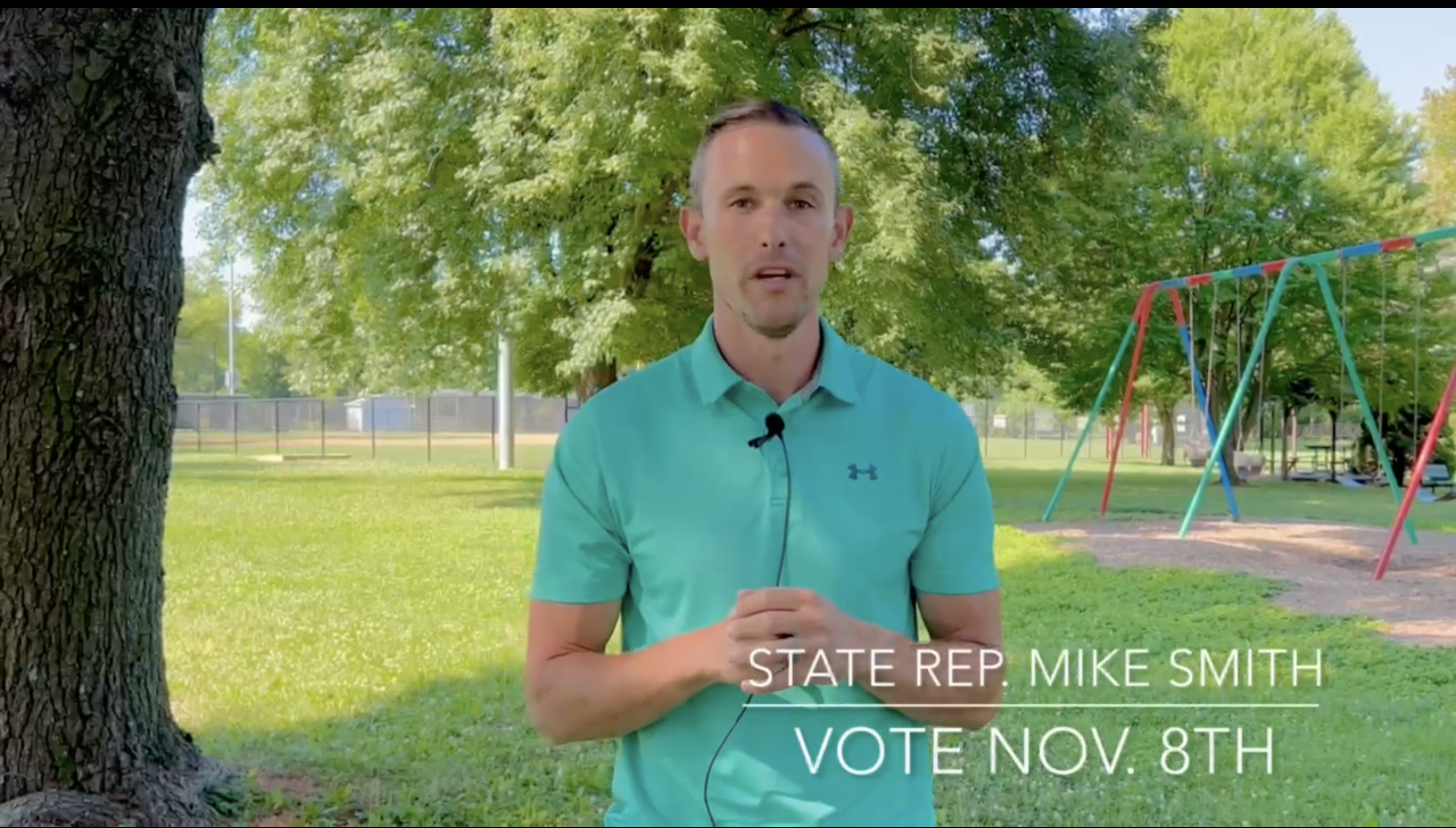
Rep. Mike Smith
Sponsored bills
This Act is the first leg of a Constitutional Amendment reflecting the recommendations of the Advisory Panel to the Delaware Economic and Financial Advisory Council (DEFAC) on Potential Fiscal Controls and Budget Smoothing Mechanisms established as per House Joint Resolution 8 of the 149th General Assembly (Panel). This Act would build upon the State’s existing appropriation limit methodology by moving the Budget Reserve Account into a newly defined Budget Stabilization Fund, defining rules for deposits to and withdrawals from said Budget Stabilization Fund, and adding a check of the appropriation limit against an index comprised of relevant indicators of growth of the State’s economy. The Panel further recommended that any final adoption of the structural budget reforms included in this Act be accompanied by statutory enactment of structural reforms to the Personal Income Tax by broadening the tax base as initially recommended by the DEFAC Advisory Council of Revenues report dated May 2015 and further detailed in the Panel’s report dated June 1, 2018.
This resolution designates May 8, 2019 as "4-H Day" in the State of Delaware and calls upon Delaware's citizens to recognize the many contributions of the State's 4-H programs.
This Act allows nurse practitioners and physician assistants to recommend medical marijuana for patients. This Act also makes technical corrections to conform existing law to the standards of the Delaware Legislative Drafting Manual.
This amendment to the House Rules requires a three-fifths vote of the members of the House in order to suspend the House Rules. The primary purpose of the House Rules is to establish a reasonable and orderly process for the consideration of legislative proposals to be addressed by the House of Representatives. Suspension of Rules should only be necessary in unusual situations and should not be the norm. This change will require a broad consensus (three-fifths) of all members of the House of Representatives in order to suspend rules. Since a three-fifths requirement cannot be done via a simple voice vote, and must be performed with a roll call, this change will also increase transparency by ensuring that every legislator will have their vote on the action recorded and available for public review.
This Act exempts veterans with 100% service-connected, permanent and total disability from paying State income taxes.
This is the first leg of a constitutional amendment creating a "Crossover Day" deadline for each House of the General Assembly to send legislation over to the other House. The annual budget appropriation act, grants-in-aid act, bond and capital improvements act, and resolutions are excluded from this deadline. Currently 26 states, including Maryland, have crossover day deadlines for passing legislation between their two legislative chambers.
This Bill requires all statewide and other candidates that may appear on the general election ballot to disclose whether or not all their State and Federal personal income tax returns are filed and any tax due has been paid and whether or not all their real property taxes have been paid.
This Act is the first leg of a constitutional amendment that would ensure that legislative business is conducted at a reasonable time during a special session to enable the public to monitor and participate in the legislative process. Specifically, this Act: (1) Prohibits the regular session of the General Assembly from extending beyond 7:00 p.m. on the last day of June, unless the session is recalled by the Governor or the presiding officers of both Houses. This changes the time beyond which a regular session of the General Assembly may not extend from midnight on June 30 to 7:00 p.m., which changes the time at which the presiding officers of both Houses must act to recall the General Assembly into special session. This change negates the Supreme Court’s ruling in Opinion of the Justices, 405 A.2d 694 (Del. 1979), that “the General Assembly, by operation of law, is required to stop its session at midnight of June 30th annually and it cannot continue by Legislative initiative unless ‘the session is recalled by . . . the mutual call of the presiding officers of both Houses.’” (2) Requires that a session of a special session adjourn or recess to the call of the chair not later than 11:59 p.m. on June 30, unless otherwise provided by a resolution passed by a 2/3 vote of all members elected to both Houses. (3) Prohibits a session of a special session from being called to order before 9:00 a.m. on any other calendar day or being adjourned or recessed to the call of the chair later than 9:00 p.m. on any other calendar day, unless otherwise provided by a resolution passed by a 2/3 vote of all members elected to both Houses. This Act does not change the date of or process for “final adjournment,” as defined in Opinion of the Justices, 175 A.2d 543, 545 (Del. 1961) (“‘[F]inal adjournment’ . . . means the adjournment sine die of the second regular session, or, in the absence of such adjournment, the extinguishment of the particular General Assembly by reason of expiration of the terms of office of the members.”). In addition, this Act contemplates that the General Assembly will continue its traditional practice of recessing to the call of the chair to enter a temporary recess of a special session, from which a presiding officer may then recall the officer’s House at that officer’s pleasure.

This concurrent resolution establishes the Non-Acute Patient Medical Guardianship Task Force to study and make findings and recommendations regarding the needs and options of non-acute hospital patients in need of medical guardianship services. A recent study concluding in 2017 found that hospital patients who did not have acute medical needs were often abandoned in hospitals. These patients often lack financial means to pay for a guardian to make medical decisions. The Office of Public Guardian does not have sufficient resources to intervene to make timely medical decisions for such non-acute patients. In addition to harming these non-acute patients with prolonged hospital stays, patients with acute medical needs are not timely and adequately served because hospital beds are occupied by such non-acute patients. This concurrent resolution establishes a task force to study and make recommendations on these issues.