This bill requires that inadvertent out-of-network services be included in individual and group health insurance policies as well as group and blank health insurance policies. This bill defines inadvertent out-of-network services are those services that are covered under a policy or contract of health insurances, but are provided by an out-of-network provider in an in-network facility, or when in-network health care services are unavailable or not made available to the insured in the facility. Inadvertent out-of-network services also includes laboratory testing ordered by an in-network provider but performed by an out-of-network laboratory.
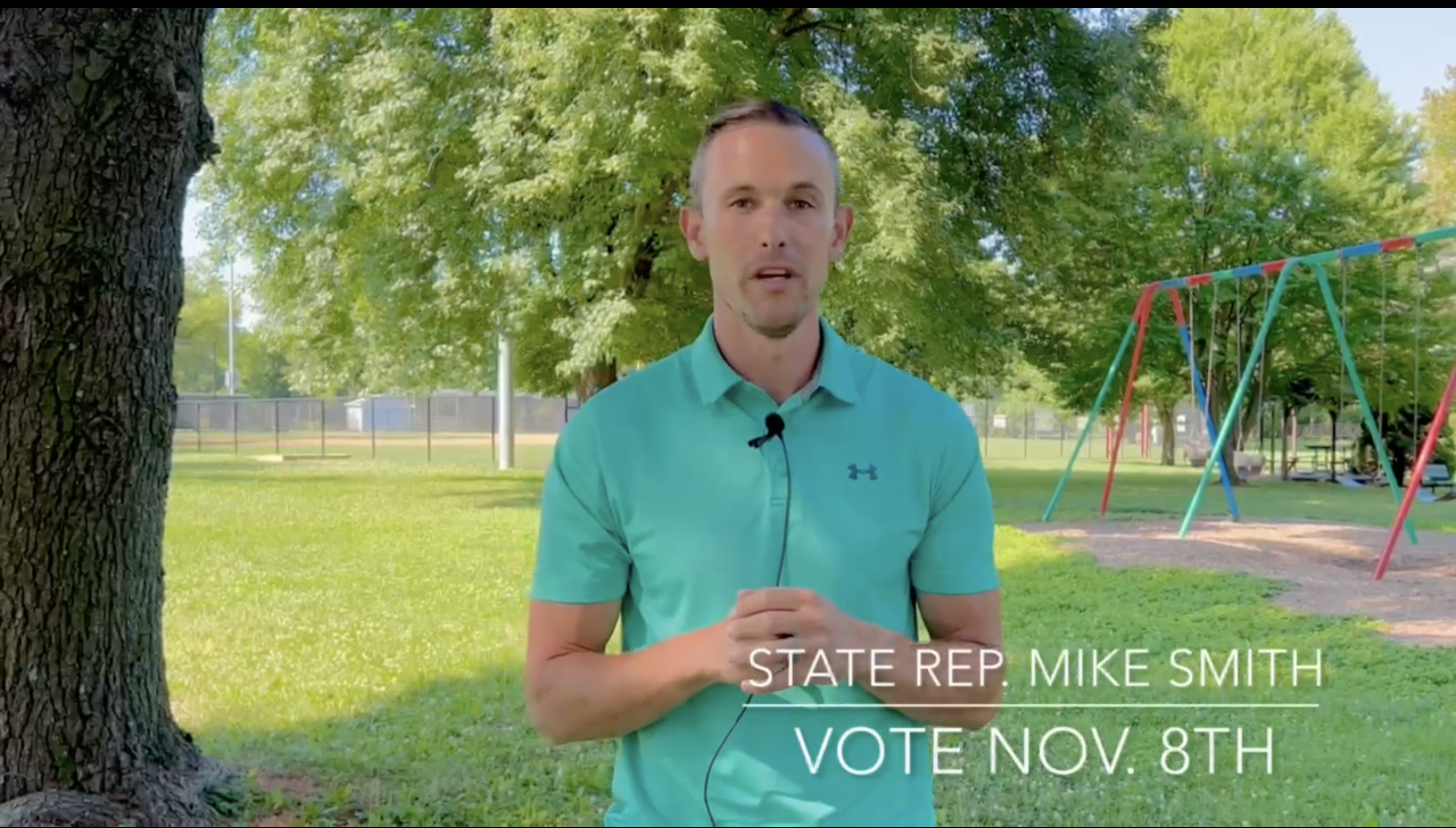
Rep. Mike Smith
Sponsored bills
This Act increases the non-refundable income tax credit from $400 to $500 for active members of Delaware volunteer fire, ambulance, or rescue service company or its auxiliary. This Act also makes technical changes to conform existing law to the standards of the Delaware Legislative Drafting Manual.
This Act adopts the Uniform Civil Remedies for Unauthorized Disclosure of Intimate Images Act. This Act addresses an increasingly common form of abuse that can cause severe and often irreversible harm: the disclosure of private, sexually explicit images without consent. Much of the abuse is carried out electronically through internet websites, social media, email, or text messages, making it an interstate problem that is particularly suited for treatment by uniform state laws. This Act provides a uniform, comprehensive, clear, fair, and constitutionally sound definition of this harmful conduct and remedies for the harm it causes. Some intimate images disclosed without consent were originally created with consent or obtained within a confidential relationship. In other cases, the images were originally created or obtained without consent through surreptitious recording devices or other forms of voyeurism, or through theft, computer hacking, coercion, bribery, fraud, or force. Like many existing privacy laws, this Act applies only to sensitive content created or obtained under circumstances in which the individual had a reasonable expectation of privacy. Also similar to existing privacy laws, the Act includes limited exceptions for certain disclosures, including those made in the course of law enforcement, legal proceedings or education, medical treatment, or investigations of misconduct. This Act also includes an exception for disclosures relating to matters of public concern or public interest and disclosures reasonably intended to assist the victim. The Act further notes federal statutory limitations on the liability of providers and users of interactive computer services. The Act is narrowly drafted to avoid imposing liability on a discloser who lacks the requisite awareness of any of these elements: (1) that the image was created or obtained under circumstances in which the individual had a reasonable expectation of privacy or that the image was obtained through theft, bribery, false pretenses, voyeurism, or other wrongful acts, (2) that the individual shown in the image did not consent to the disclosure, or (3) that the individual shown was identifiable.
Presently, a legal process does not exist for a Delaware hospital to seek the appointment of a guardian for a non-acute patient who has been a patient at the hospital for an extended period, after having been abandoned by family. This bill authorizes a hospital to petition for a court-appointed guardian for such a patient after providing two notices to the patient, the patient's surrogate, or the patient's family if there is no surrogate, of the need to seek a guardian for the patient.
This Act eliminates the requirement that movie theaters selling alcohol have video cameras in each auditorium and the requirement that an employee must pass through each auditorium during a movie showing.
This Act requires that individual, group, and State employee insurance plans cap the amount an individual must pay for insulin prescriptions at $100 a month and must include at least 1 formulation of insulin on the lowest tier of the drug formulary developed and maintained by the carrier.
This Act creates a CBD-Rich card medical marijuana card to treat anxiety in adults. This Act also requires that a registry identification card state the type of card that is issued to clearly identify qualifying adult patients, qualifying pediatric patients, designated caregivers, and CBD-Rich patients. This Act also makes technical corrections to conform existing law to the standards of the Delaware Legislative Drafting Manual.
Time is money. The time and delay associated with the review of land use projects is often a factor in determining whether a potential employer will come to Delaware. This Act, the Bring New Jobs to Delaware Act, is intended to provide an expedited review process for projects likely to have significant economic impact and make Delaware more attractive to potential new employers. This Act applies to new office, manufacturing, and industrial uses (that is, uses which provide significant numbers of new jobs), and excludes new residential projects and commercial (i.e. retail) projects, which typically involve more community review, input, and comment and are not as much in need of an expedited review process. Under this Act, New Castle, Kent, and Sussex Counties each must adopt, by March 1, 2021, an expedited review process for land use plans for a property with an office, business park, manufacturing, or industrial zoning classification and that involves either of the following: (1) More than 75,000 square feet of new space. (2) The creation or addition of at least 60 new, full-time, permanent jobs in the county in which the plan is submitted. The expedited review process must include a timeline that allows for review, final approval, and, if required, recordation of a land use plan within 6 months of the plan’s submission, if all non-county permits and approvals necessary for county approval have been obtained. Residential or commercial retail projects are not eligible for the expedited review process. The expedited review process begins when the plan is submitted for review to the Office of State Planning under Chapter 92, Title 29. A plan under expedited review has priority over a plan that is not under expedited review. An applicant that qualifies is not required to apply for an expedited review. To assist in defraying additional costs associated with an expedited review, a county may charge a 1-time fee of up to $15,000 in addition to other plan review fees. And, if the Office of State Planning requires it, an applicant may be required to pay the Office of State Planning a 1-time fee of $5,000, to be disbursed to the appropriate state agencies. The 1-time, $5,000 fee is in addition to other plan review fees that state agencies may charge. State agencies that are involved in the approval process must use best efforts to timely review and comment on an expedited review.

Over 80% of pharmaceuticals in the United States are purchased through pharmacy benefits manager (“PBM”) networks. PBMs serve as intermediaries between health plans, pharmaceutical manufacturers and pharmacies, and PBMs establish networks for consumers to receive reimbursement for drugs. Given the scope of PBMs in the healthcare delivery system, this Act is designed to provide enhanced oversight and transparency as it relates to PBMs. Specifically, this Act does the following: (1) If a PBM denies an appeal for a reimbursement subject to maximum allowable cost pricing, requires the PBM to provide the national drug code number of wholesalers in Delaware that have the drug in stock below maximum allowable cost. (2) Authorizes a pharmacist or pharmacy to decline to dispense a prescription drug or provide a pharmacy service to an insured if the amount reimbursed by a PBM is less than the pharmacy acquisition cost. If a pharmacist declines to provide a drug or service, the pharmacist must inform the insured that the pharmacist did this because of the costs of providing the drug or service and provide the insured with a list of pharmacies in the area that may provide the drug or service. (3) Requires PBMs to provide a reasonably adequate and accessible pharmacy benefits manager network. (4) Increases transparency by requiring PBMs to provide reports to the Insurance Commissioner on network adequacy and the amount of rebates received by PBMs and distributed to insurers or insured. (5) Prohibits PBMs from engaging in certain conduct, such as spread pricing, false advertising, and reimbursing a pharmacist or pharmacy in an amount less than the PBM reimburses itself or an affiliate for the same drug or service. If a PBM engages in prohibited conduct, the Insurance Commissioner is authorized to deny, suspend, or revoke the PBM’s registration under § 3355A of Title 18 or impose penalties or take other enforcement action under § 3359A of Title 18. Finally, this Act makes technical corrections to conform existing law to the standards of the Delaware Legislative Drafting Manual.
This Act limits the use of certain Class B firefighting foams (“Class B foams”) in Delaware. Class B foams are used to put out fires caused by flammable liquids like gasoline, oil, and jet fuel, and can be divided into 2 categories: those with PFAS chemicals and those without. PFAS chemicals include a range of chemistries with differing properties, which have been widely-used for decades in products other than Class B foams, like food packaging, carpets, and other household items, and in firefighting foam. The use of firefighting foams containing PFAS chemicals, however, is an emerging public health challenge to avoid future contamination and reduce exposure to firefighters and Delawareans. Firefighting foam containing PFAS chemicals can get into water wells and drinking water supplies, and expose firefighters and others to the chemicals. More studies into the effects of PFAS chemicals are emerging; some of the health effects of exposure to certain PFAS chemicals include pregnancy complications, liver damage, and high cholesterol. The PFAS chemicals in firefighting foams must be weighed against their particularly-effective nature in fighting liquid fires when mixed with water. To that end, this Act prohibits the use of Class B foams containing intentionally-added PFAS chemicals unless the use is for fire prevention or emergency firefighting. Further, this Act permits the use of such foam for training and testing only if the facility in which the training or testing occurs has implemented containment, treatment, and disposal measures to prevent releases of Class B foams containing PFAS chemicals. This Act also makes technical changes to Part IV of Title 16, to more accurately reflect its current structure.