

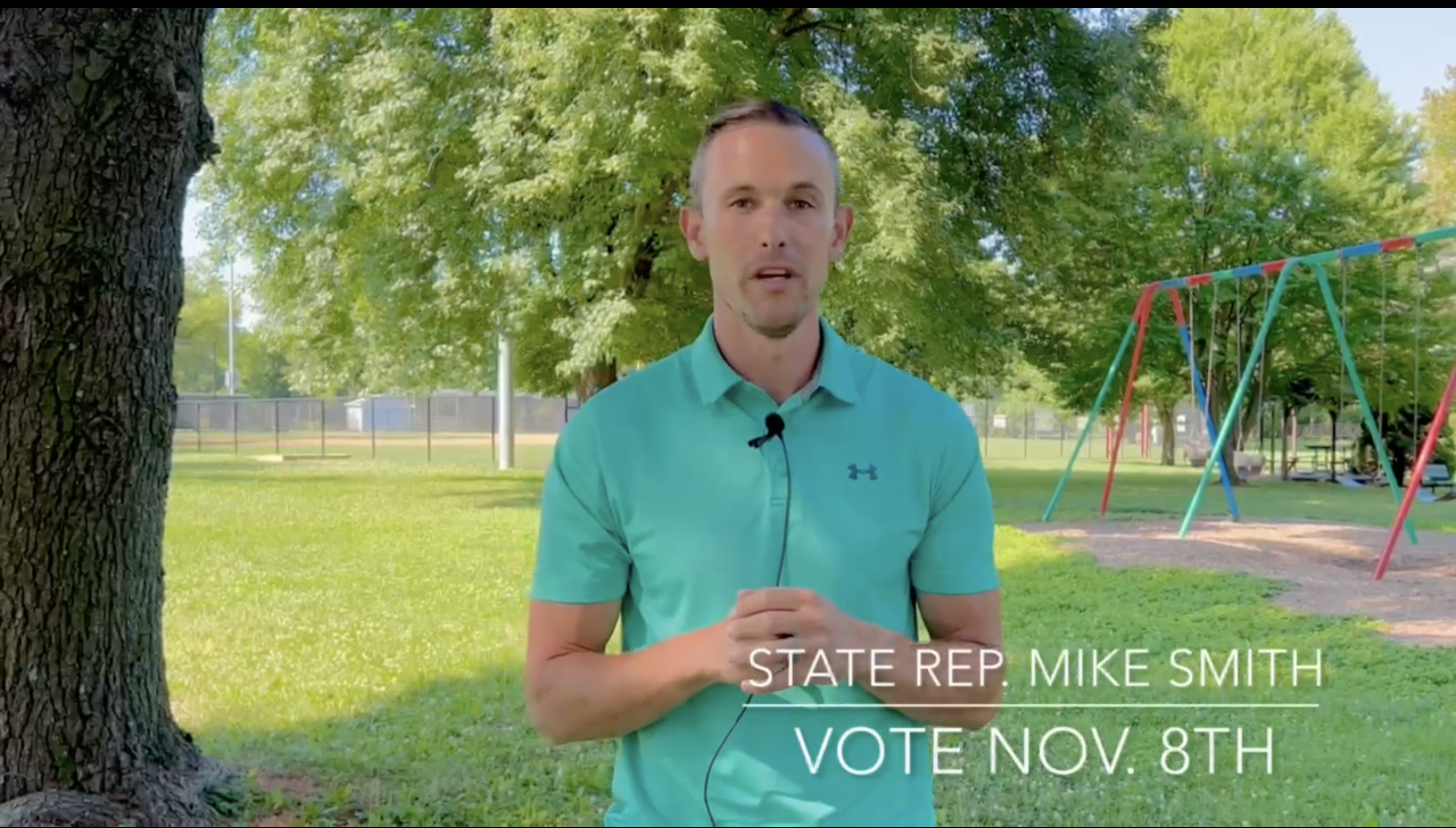
This bill closes a loophole in existing Delaware law by making it a crime for a person who is not otherwise legally eligible to own, possess, or purchase a firearm or ammunition to attempt to obtain same through fraud, deceit, or deception.
Rep. Mike Smith
Sponsored bills
Food and drink establishments suffered great losses since March, 2020 due to the pandemic including millions of dollars in lost sales and the loss of an tens of thousands of jobs in this State. This Act extends the provisions contained in HB 349 from the 150th General Assembly until March 31, 2022 with the goal of continuing the efforts to try and mitigate the losses this industry has suffered. This bill extends the following provisions in HB 349: (1) Allowing an entity that has a valid on-premise license to sell alcohol to continue to alcoholic beverages as part of transactions for take-out, curbside, or drive-through food service so long as certain conditions are met; (2) Allowing a licensee to continue to use outdoor seating for serving of food and drinks so long as the licensee satisfies certain conditions; (3) Allowing the Commissioner to temporarily suspend a license only if the Commissioner has reasonable grounds to believe that public's safety is at risk and there has been a violation of the law; and (4) Allowing the Commissioner to hold hearings by electronic, telephonic, or remote means.
This Senate Concurrent Resolution requests that the United States Congress propose and send to the states for ratification a constitutional amendment to make clear that Congress and the states have the power and authority to regulate and limit the amounts of money collected and spent in elections and for referendums and ballot measures.
This Concurrent Resolution requests that the budget bill prepared by the Joint Finance Committee keep the Senior Property Tax Credit at its statutorily enacted level of the lesser of 50%, or $500, rather than lower the maximum credit amount through epilogue language, until such time as a means-tested program can be implemented.
This Act prohibits the import, export, sale, transport, distribution, or propagation of any plant identified by the Secretary of the Department of Agriculture, with the advice of the Delaware Native Species Commission, as an invasive plant. This Act also requires that plants identified as potentially invasive be sold with a tag that identifies the plant as potentially invasive. A violation of this Act may result in a civil penalty of $50 to $500, but only after the person has had the opportunity for an administrative hearing and the opportunity to come into compliance with this Act. This Act takes effect July 1, 2022.
House Bill No. 292 of the 149th General Assembly established a 3 year pilot program (“program”) to implement the recommendations in the 2015 Autism Educational Task Force report. The pilot program revised the Delaware Autism Program toward a system where the statewide Director works in collaboration with a team of experts to provide technical assistance and training to districts and educational entities. This Act makes the pilot program permanent and revises the program as follows: 1. Requires the Department of Education ("Department") to administer the program, including hiring the Director. 2. Revises the terminology in the qualifications for the Director to include autism spectrum disorder (“ASD”). 3. Requires the Department to hire 5 training specialists instead of the current hiring requirement that is based on the number of students with an educational classification of ASD. 4. Renames the Parent Advisory Committees to clarify that they are statewide. 5. Revises the responsibilities of the Peer Review Committee to conduct reviews without a request of the Department, to include behavioral procedures in the review, and at the request of the Department, review procedures and programming for students with other educational classifications served in the program. This Act takes effect on July 1, 2021. This Act also makes technical corrections to conform existing law to the standards of the Delaware Legislative Drafting Manual.
This Act is intended to promote, maintain, and bolster the public’s confidence in the integrity of State government, particularly as it relates to the employment of former members of the General Assembly within State government. This Act achieves this goal by prohibiting a former member of the General Assembly from being appointed to or employed in a position in a State agency for 1 year after the former member’s final term of office if either of the following applies: (1) The position was created during the former member’s final term of office. (2) The compensation for the position was increased, other than by an appropriation by the General Assembly that applies to all similarly situated State employees, during the former member’s term of office and the former member did not hold the position during the former member’s term of office. Existing law provides that a former member who knowingly or wilfully violates this Act is guilty of a misdemeanor and may be punished by imprisonment of not more than 1 year and by a fine not to exceed $10,000.
Most commonly, persons accused of subsection (a) of this section – panhandling – are homeless. Transferring such matters to the Court of Common Pleas allows persons so accused increased access to social services not available to them at the Justice of the Peace Court.
This bill establishes a 2-year residential drinking water purification system pilot program to be administered through the Department of Health and Social Services with funding through the Drinking Water State Revolving Fund.
Requesting the Division of Research, the Office of Management and Budget, and the Delaware Department of Technology & Information to cooperate in creating a detailed and implementable plan to stream audio and video of all floor and committee action of the House of Representatives and Senate; record all such material; and make these recordings available to the public via an online archive. The resolution further requests the 151st General Assembly and the governor to approve and act on the finished plan and authorize the funding needed to implement it.