

Currently, blood lead level screening and testing rates are well below what the Division of Public Health would expect them to be based on the risk factors that determine when screening or testing is necessary. This Act simplifies the requirements and process for health-care providers and eliminates confusion that may be causing the low compliance rate for screening or testing. Specifically, this Act does the following: (1) Defines “screening” and “testing” for clarity. (2) Mandates screening, defined as a capillary blood test, at or around 12 and 24 months of age. (3) Clarifies insurance coverage for the costs of compliance with the Act. (4) Directs the Division of Public Health to report on elevated blood lead levels to the General Assembly annually and to develop regulations to implement and enforce the Act within 12 months of being enacted. (5) Makes technical corrections to conform existing law to the standards of the Delaware Legislative Drafting Manual.
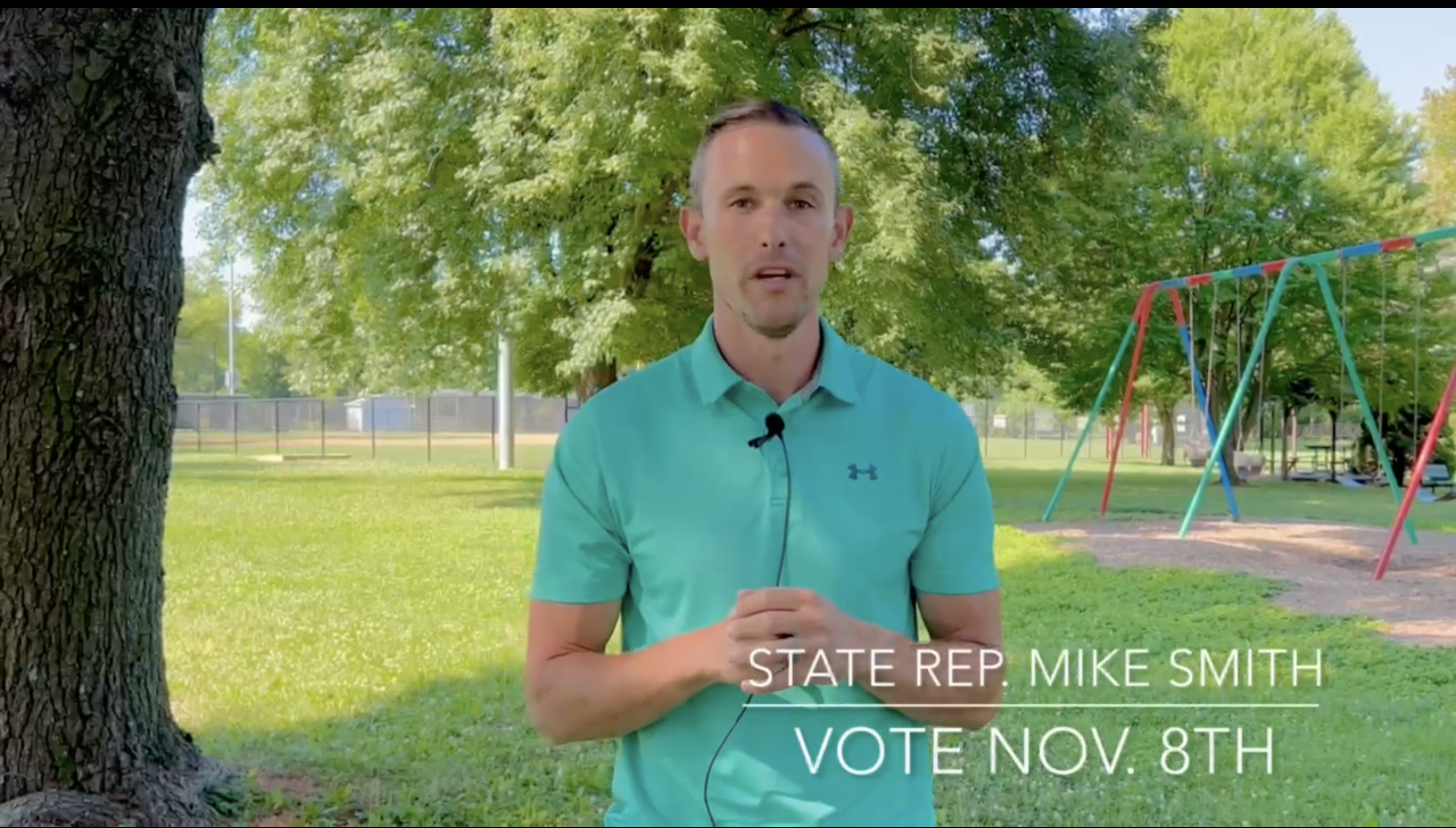
Rep. Mike Smith
Sponsored bills
Senate Substitute No. 1 for Senate Bill No. 243 (150th General Assembly) enacted § 10006A of Title 29, which allows an advisory body to hold a virtual meeting, if there is an anchor location that is open to the public, allows any public body to hold public meetings during a state of emergency, and clarified that public bodies must allow a member with a disability to attend a meeting electronically as a reasonable accommodation under § 4504 of Title 6, unless doing so would present an undue burden. Senate Substitute No. 1 for Senate Bill No. 243 sunsets on June 30, 2021. During the last year, citizens and members of public bodies have become comfortable with virtual meetings and attendance and participation in public meetings has increased because virtual meetings are more convenient and accessible to many citizens. Thus, this Act makes permanent changes to the Freedom of Information Act (“FOIA”), Chapter 100 of Title 29, that allow any public body to hold a virtual meeting if there is a physical anchor location where the public can attend the meeting in person and other notice and access requirements are met. Specifically, this Act does all of the following: 1. Repeals the current video-conferencing provision of § 10006 of Title 29 and the temporary provisions of § 10006A of Title 29 and replaces these sections with permanent virtual meeting requirements. 2. Maintains the requirement that a public body must allow a member with a disability to attend a meeting electronically as a reasonable accommodation except if doing so imposes an undue burden on a public body whose members are all elected by the public. 3. Requires that a virtual meeting conform to all requirements under FOIA, including adequate notice that includes information on how the public may view and provide comment, if public comment is accepted. 4. Provides that during a state of emergency, or to prevent a public health emergency, all public bodies may hold virtual meetings without an anchor location. This Act also makes technical corrections to conform existing law to the standards of the Delaware Legislative Drafting Manual. This Act requires a greater than majority vote for passage because § 1 of Article IX of the Delaware Constitution requires the affirmative vote of two-thirds of the members elected to each house of the General Assembly to amend a charter issued to a municipal corporation.
This Act makes changes to House Bill 202 from the 150th General Assembly creating a pilot program for the Red Clay School District to use external camera systems on their school buses to catch motorists that fail to stop when a school bus is stopped and displaying flashing lamps to take on or discharge school children and assess a civil penalty as punishment. The changes in this bill are necessary to make clear that the Act, which mirrors 21 Del. C. § 4101(d), the State’s Electronic Red Light Safety Program, only creates a civil, not a criminal penalty.
This Resolution: 1) Celebrates Senate Bill No. 56 and the immediate investment of targeted funding for student needs; 2) Describes the need for additional action from the General Assembly to update and modernize remaining underlying education funding issues; 3) Requires the Department of Education to report information to help illuminate systemic inequities in the current education funding system to inform future legislative proposals.
This Act does the following: (1) Removes the requirement that applicants for initial and continuing educator licenses obtain a passing score on an approved performance assessment. (2) In place of the performance assessment requirement, requires professional development and mentoring activities include a focus on acquisition of pedagogical knowledge and the ability to apply that knowledge to meet student needs and requires the Department of Education (Department) to establish a committee of stakeholders to gather input and make recommendations on how to achieve professional development and mentoring activities that satisfy the requirements. (3) Removes requirements related to performance assessments, including reporting requirements and rulemaking requirements, from Chapter 12 of Title 14. (4) Allows individuals who serve in educator roles that are not teaching positions to receive their Delaware educator license by changing "teaching experience" to "experience as an educator" in § 1210(d) of Title 14 and § 1211(c) of Title 14. (5) Requires the Department to ensure there are a variety of professional development opportunities across different modes that meet a high standard of quality, including evidence-based programs. (6) In place of the performance assessment requirement for participants in alternative routes for teacher licensure and certification programs and participants in alternative routes to certification programs for teachers of students with disabilities, requires an assessment of program participants' abilities to apply pedagogical skills to meet the needs of students and requires the Department to establish a committee of stakeholders to gather input and make recommendations on how to assess the pedagogical skills of program participants. (7) In place of a performance assessment requirement, requires that educator preparation programs assess prospective educators' ability to apply pedagogical skills to meet student needs and requires the Department to establish a committee of stakeholders to gather input and make recommendations on how to assess the pedagogical skills of program participants. (8) Makes corrections, including standardizing references to the educator evaluation system and changing "certificate" to "license" in places where improperly used. This Act also makes technical corrections to conform existing law to the standards of the Delaware Legislative Drafting Manual.
This Act allows one excused absence per school year for students grades 6 through 12 to attend civic engagements such as visits to the United States Capitol, Legislative Hall, and sites of political and cultural significance, or participation in a rally, march, protest, or walkout. For a student to attend a civic engagement event, the student’s parent or guardian must provide written permission no later than 3 school days prior to the student’s planned absence. The school shall determine what is acceptable as written permission. If the principal or another school or school district official does not confirm receipt of written permission with the parent or guardian prior to the student’s planned absence, permission for the student to attend the civic engagement event as an excused absence is presumed.
This Act codifies the Opportunity Fund, an additional source of educational funding for Delaware public schools intended to support the increased needs of low income and English learner students, and establishes the parameters for how the funding is to be distributed to school districts and charter schools.
This Resolution establishes the Behavioral Health Crisis Care Task Force to study and make findings and recommendations regarding creating a behavioral health crisis care system in this State.
This resolution honors the life of Sean Locke and recognizes all loss survivors of suicide. It further urges increased awareness of the need for more mental health resources for those suffering from depression and increased support for the loss survivors. This resolution further honors the life and memory of Sean Locke.
This Concurrent Resolution establishes the Subdivision Street Funding Task Force to study and make findings and recommendations regarding funding and implementing the needed maintenance and reconstruction of subdivision streets identified by the Department of Transportation in the “Subdivision Street Report and Analysis” provided in response to House Concurrent Resolution No. 4 (151st General Assembly).