In a case of first impression, the Superior Court ruled, contrary to "common knowledge" of Delaware Criminal laws, that criminal impersonation requires proof that a real person (a human being who has been born and is alive) has been impersonated; in other words, one cannot impersonate a fictitious person. Evans v. State, Del. Super., June 5, 2019. This Act provides that criminal impersonation occurs when one impersonates a real or fictitious person.
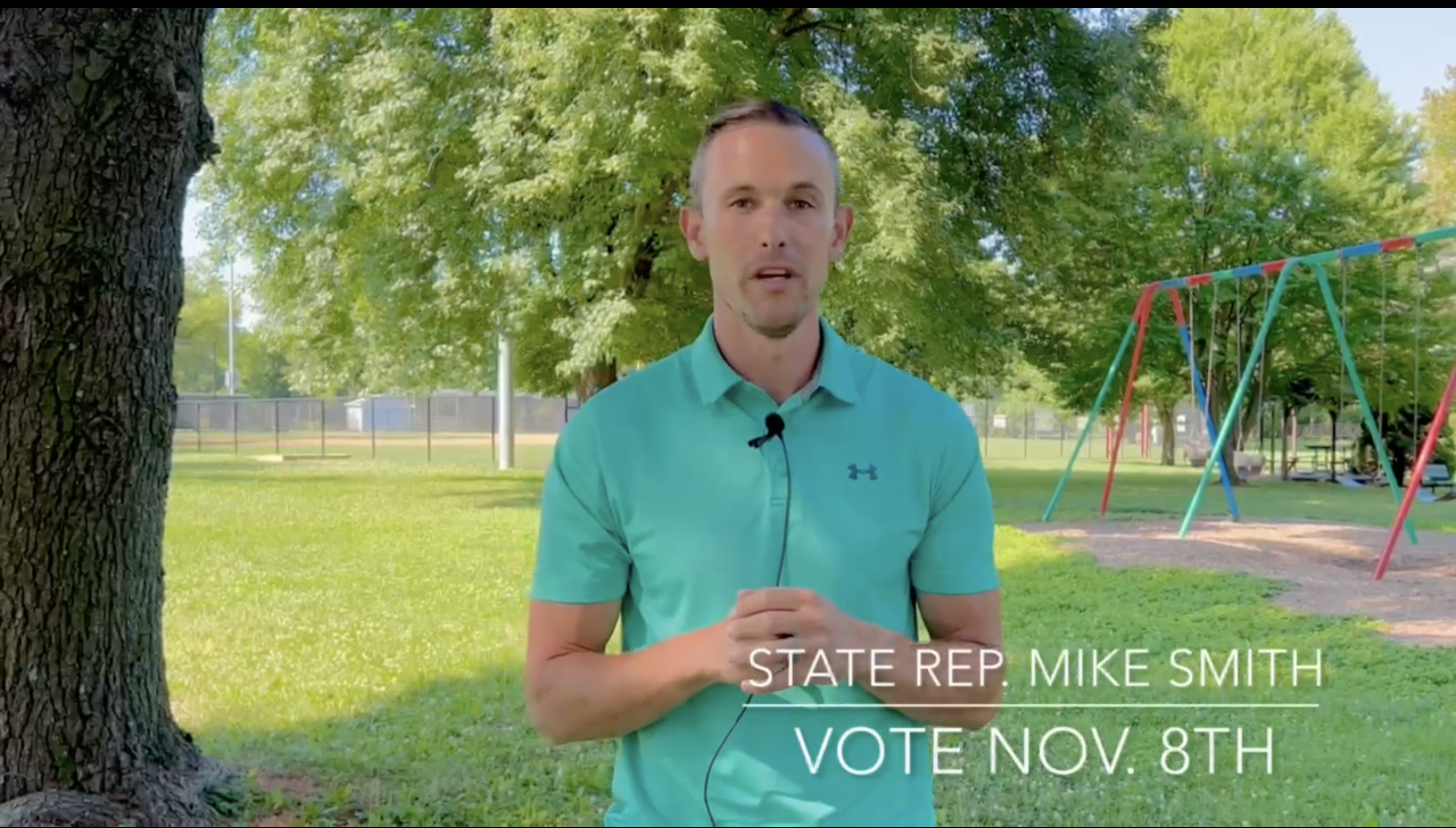
Rep. Mike Smith
Sponsored bills
This Concurrent Resolution recognizes November 2022 as "Autoimmune Disease Awareness Month" in the State of Delaware.
This concurrent resolution establishes the Long-Term Care and Memory Care Task Force.
This Concurrent Resolution recognizes September 2022 as "Prostate Cancer Awareness Month" in the State of Delaware
This concurrent resolution proclaims Thursday, October 6, 2022, as “National Coaches Day” in the State of Delaware.
This legislation imposes a new, elective entity-level tax on the income of partnerships and S-corporations, each of which are commonly referred to as “pass-through entities” for tax purposes. Prior to this legislation, the income of a pass-through entity was subject to the personal income tax of the owner in proportion to the ownership interest in the entity. In 2017, federal tax law reduced from an unlimited amount to $10,000 the amount an individual can claim as an itemized deduction for state and local taxes paid on an individual taxpayer’s annual tax return. State and local income taxes are commonly referenced to for tax purposes as “SALT” taxes. This 2017 federal limitation on the itemized deduction for SALT taxes included state taxes paid on the income of a pass-through entity and, as a result, materially limited the federal tax benefit of state income taxes paid personally by an owner on the taxable income of a pass-through entity. Consistent with guidance from the United States Department of the Treasury and the Internal Revenue Service as published in Internal Revenue Service Notice 2020-75, 2020-49 I.R.B. 1453, this legislation will enable the pass-through entity, rather than the owners of a pass-through entity, to take a federal tax deduction for SALT taxes elected to be paid by the pass-through entity. Accordingly, this legislation, conceptually similar to legislation enacted in more than 25 other states, will mitigate the new federal limitation on the personal itemized deduction for SALT taxes that otherwise would have been paid personally by an owner on the taxable income of a pass-through entity. Generally, the approach undertaken by this legislation follows a two-step process. First, an eligible pass-through entity that elects to pay the new entity-level tax, computes and pays Delaware income tax on income taxable in the State, which income, in the absence of the election, would have been subject to Delaware income tax at the individual level for each member of the entity. All income tax elected to be paid by the pass-through entity is taxed at 8.7%. Second, the electing pass-through entity allocates modified income to its members in proportion to their ownership interest in the entity, for which allocation each member is entitled to a reduction from federal adjusted gross income for individual State income tax purposes.

This Act establishes an independent and nonpartisan Office of the Inspector General (OIG) and the position of the Inspector General. The OIG will protect the health and safety of Delaware residents, assist in the recovery of misspent or inappropriately paid funds, and strengthen government integrity and the public trust in government operations by doing all of the following: 1. Investigate the management and operation of state agencies to determine if there has been waste, fraud, abuse, mismanagement, corruption, or other conduct that is harmful to the public interest. 2. Coordinate with other agencies, recommend corrective actions and statutory revisions, and, if necessary, make referrals to law enforcement. 3. Provide reports to the Governor, Attorney General, and General Assembly, and these reports will be available to the public on the OIG website. The Inspector General will be selected through a process that requires a Selection Panel to provide 3 names to the Governor for consideration. The Governor will select a nominee from these 3 names for appointment as Inspector General and submit the nominee for confirmation by the Senate. Under this Act, the Selection Panel work must begin upon enactment and the work of the Office of the Inspector General must begin by March 1, 2023.
This bill creates the Grants-In-Aid Committee. The Committee is a joint committee of the Senate and House of Representatives. The purpose of the Committee is to view applications for grants-in-aid and to develop and recommend to the Joint Finance Committee the grants-in-aid appropriations bill.
This Act decreases by 1% the rate of realty transfer tax to be received by the State, thereby returning to the rate that was applicable prior to August 1, 2017. This will be effective for documents recorded after July 1, 2022.
This Act provides state employees 30 days of leave with pay to attend training camp or special duty on orders as members of the military reserve of the United States or the National Guard. This is an increase from 15 days leave with pay currently provided.