

This Bill amends Title 11 to require that custodial interrogations of children, at a place of detention, by a law enforcement officer, be electronically recorded. The Bill requires the law enforcement officer to prepare a written explanation if the interrogation is not electronically recorded. No electronic recording is required if the child refuses to be interrogated if the interrogation is recorded. The Bill contain an exception if the safety of the child, law enforcement officer or informant would be jeopardized. The prosecution has the burden of proving one of the Bill's exceptions for the admission of a child's statement that was not electronically recorded. Both law enforcement officer and agency have civil immunity for implementing and enforcing provisions of Bill. This Bill will become effective 6 months after enactment.
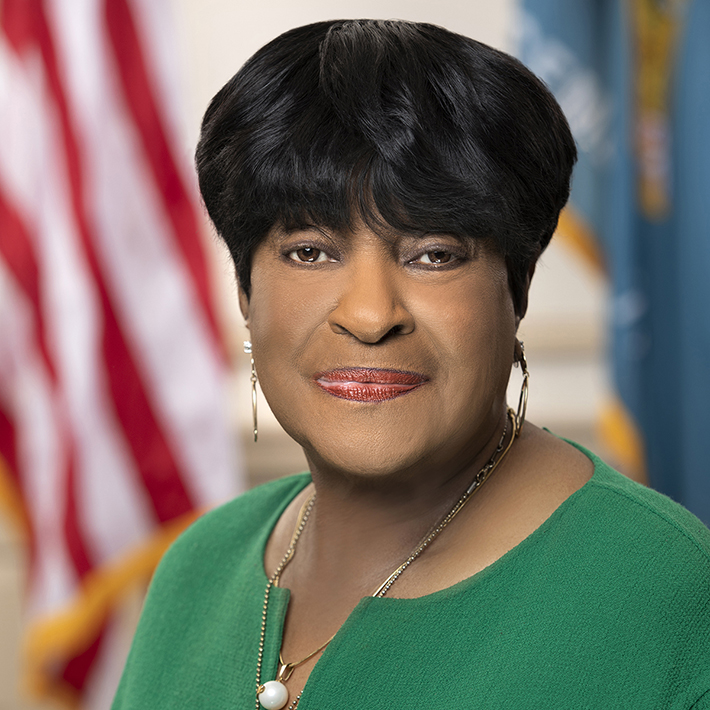
Rep. Stephanie Bolden
Sponsored bills
This Act mandates that the Department of Health and Human Services, in conjunction with the Department of Natural Resources and Environmental Control to establish Maximum Contaminant Levels for specific contaminants found in drinking water in this state. Such contaminants include PFOA and PFOS, which are man-made chemicals that have been used in industries in this state. These chemicals were found to be associated with increased risks of chronic diseases. The Environmental Protection Agency, thus far, has not established a maximum contaminant levels, but only health advisories. The establishment of maximum contaminant levels is essential in order to protect the health and safety of all Delawareans from dangerous contaminants in drinking water.
This Resolution proclaims June 25th, 2020 as “Korean War Remembrance Day”.
In January of 2015, the Office of Civil Rights & Public Trust was created by the Attorney General to establish a centralized office within the Department of Justice for the investigation of matters concerning civil rights enforcement and the prosecution of matters concerning violations of the public trust. This office must remain an independent entity within the Department of Justice to avoid conflicts with other Department of Justice duties and thus effectively enforce laws protecting the public trust and civil rights. Thus, this Act creates the Division of Civil Rights and Public Trust within the Department of Justice which will be separate from the other Divisions within the Department of Justice and have a Director who reports directly to the Chief Deputy Attorney General, to avoid conflicts of interest with the work of the other Divisions. This Act also clarifies the current scope of the Department of Justice’s ability to investigate and bring civil rights actions to protect the civil rights of all Delawareans.
This bill defines and regulates electric bicycles. Section 1 adds electric bicycles to the definitions contained in Title 21. Section 2 includes electric bicycle operators and passengers as vulnerable users when on a highway, crosswalk, road shoulder or sidewalk and prescribes rights and responsibilities attendant to the operation of electric bicycles. Section 3 adds electric bicycles to the definition of vehicle.
This bill amends Chapter 33, Title 18 of the Delaware Code by adding a new § 3370D to require coverage of an annual behavioral health well check. This bill also amends Chapter 35, Title 18 of the Delaware Code by adding a new § 3571X to require coverage of an annual behavioral health well check. This bill also amends Chapter 5, Title 31 of the Delaware Code by adding a new § 528 to require coverage of an annual behavioral health well check. This bill also amends Chapter 52, Title 29 of the Delaware Code by adding a new § 5212 to require coverage of an annual behavioral health well check.
This bill permits the owner of a beer garden or food establishment to permit leashed dogs on licensed outdoor patios of food establishments and in beer gardens.
This bill requires all public and charter schools which have students in grades 6-12 to provide free feminine hygiene products in 50% of the bathrooms used by students who can have a menstrual cycle. This bill also requires schools to publish on its website and post in its common areas the locations of the bathrooms where the hygiene products are provided. Finally, this bill provides that each school must consult with its school nurse regarding the products to be provided.
In 2014, the General Assembly created an ignition interlock device program under §§ 4177C and 4177G of Title 21 of the Delaware Code (“IID program”). The IID program provides individuals whose license or driving privileges have been revoked following a conviction for driving under the influence of alcohol or drugs the ability to drive during their revocation period while putting measures in place to protect the public. This Act closes a loophole in the IID program that allows a person to avoid installing an IID in certain circumstance and makes changes to §§ 4177C and 4177G to ensure the provisions are consistent and operate in harmony with each other. This Act also adds a provision clarifying the process for the reinstatement of an individual’s license or driving privileges after the individual has been disqualified from the IID program. Finally, this Act makes numerous technical corrections to conform existing law to the standards of the Delaware Legislation Drafting Manual, including to ensure consistency of language throughout the provisions included in this Act.
This Act enables Sussex County to establish ordinances, rules, and regulations regarding property maintenance and penalties for violations of said ordinances, rules, and regulations.