

It is an unfortunate reality that many offenders have difficulty re-entering society. Without the ability to provide for themselves and their families through gainful employment, 67.8% of released prisoners are rearrested within three years of release nationally. One of the reasons that offenders have difficulty is because they often face the unrealistic requirement to pay off large fees and fines, which grow with interest if not paid, at the same time as they have to pay for housing, food, care for children, or other necessities of life. Failure to pay can result in the offender found to be in violation while on probation or being denied a pardon. Furthermore, most offenders tend to be non-affluent, and the state spends resources chasing fines and fees it will not recover. Unlike motor vehicle fines under Title 21, which generate large sums of revenue, fees and fines under Title 11 and 16 are modest and collection costs are high. The social costs in terms of impacting rehabilitation and successful re-entry are even higher. To address this problem and to give the Department of Correction a positive incentive to reward participation in work programs in its facilities or in the community, this Act authorizes the Department of Correction to give minimum wage to inmates to pay off fees or fines by participating in an earned credit program established by the Department of Correction. The court would establish how many hours need to be worked in order to discharge this financial obligation by computing the hours based on the then prevailing state minimum wage hourly rate. The Department of Correction will establish an earned credit program and certify to the court when the individual has completed the required number of hours. The earned credit program cannot be used to discharge other financial obligations owed, such as restitution, child support obligations, or bail.
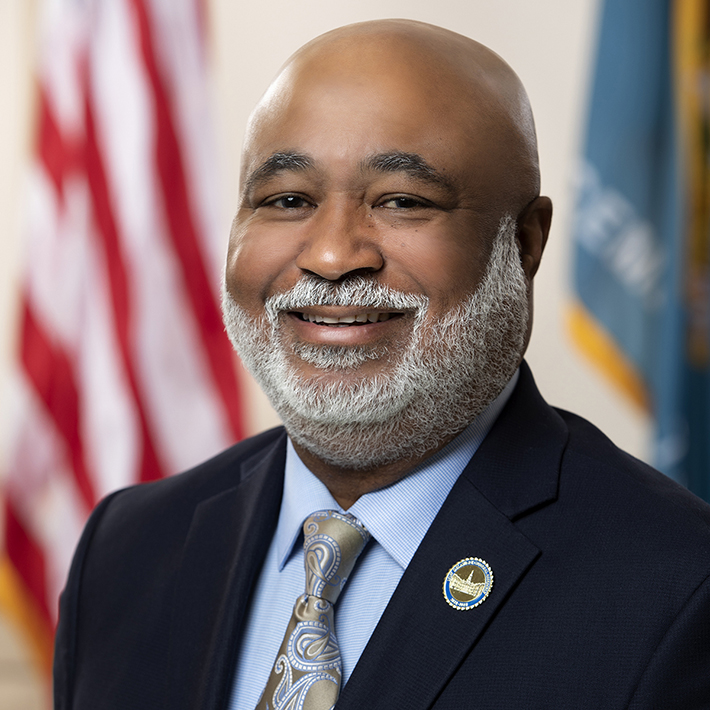
Rep. Frank Cooke
Sponsored bills
This Bill clarifies language allowing for the direct deposit of child support owed and collected by employers from individuals under a support order from the Family Court. In addition, this Bill requires employers who have 50 or more employees to send payments to the Division of Child Support Services by electronic funds transfer and allows employers with less than 50 employees to do the same. Finally, the bill requires payments made via electronic transfer to be made before or at the time the employee is paid.
United States Supreme Court case law and scientific research has changed how we think about juvenile delinquency. We know now that an adolescent’s brain is not fully developed until the mid-twenties which makes juveniles especially prone to poor decision-making. In the landmark case of Miller v. Alabama, in which the United States Supreme Court prohibited mandatory life sentences without parole for juveniles on the rationale that children are inherently different than adults, the Court relied not only scientific research but on common sense and what any parent knows: kids will be kids. Children in Delaware have minimum ages set for many things: getting a driver’s license, enlisting in the military, applying for a loan or opening a credit card, using a tanning bed, drinking alcohol, and buying tickets to an R-rated movie. This legislation sets a minimum age at which a child may be prosecuted, except for the most extreme offenses. This Bill prohibits the prosecution of children under the age of 12. It also bars the transfer of juvenile prosecution to the Superior Court unless the child is aged 16 or older. The exception to the prohibition on prosecuting children under 12 and transfer to Superior Court for children under 16, is only for the most serious of charges: murder in the first degree, murder in the second degree, rape in the first and rape in the second degree. However, the bill allows for the prosecution of children under 12 for title 11 violent felonies and misdemeanor crimes of violence until January 1, 2021, when prosecution of such children will expire and thereafter children under the age of 12 who are suspected of committing a Title 11 violent felony or misdemeanor violent felony will be referred to the Juvenile Offender Civil Citation Program.
This Act clarifies that the Department of Services for Children, Youth and Their Families (DSCYF) has exclusive jurisdiction over a juvenile's care, custody, and control for any juvenile until at least their 18th birthday. Further, this Act stipulates that juveniles found guilty and sentenced to a Superior Court offense shall remain in the custody, care, and control of DSCYF until they turn 18. Youth with Superior Court terms of confinement which extend beyond their 18th birthday shall be transferred to the custody of the Department of Correction for the remainder of their sentence after they turn 18. This Act also clarifies that Family Court is permitted to retain jurisdiction in some cases and Family Court may require DSCYF to provide services and supervision for non-incarcerated persons aged 18-21. Finally, the Act allows individuals charged in in Family Court before they turn 18 to be held by DSCYF until they turn 19.
This Bill requires the Department of Services for Children, Youth and Their Families ("DSCYF'') to have exclusive jurisdiction over all aspects of a child’s care, custody and control when a child is convicted of a Superior Court offense. The Act establishes that from a date certain, no more juveniles would be transferred to the custody of the Department of Correction upon their adjudication and Level V sentence in Superior Court.
This resolution proclaims June 19, 2019 as Juneteenth Independence Day in Delaware and encourages the people of Delaware to reflect upon the significant roles and many contributions of African Americans and to celebrate this day with appropriate activities and events.
This joint resolution is designed to establish a task force to study and make findings concerning the recruitment and retention of volunteer firefighters.
Step therapy protocols are a mechanism by which health insurance companies require patients to try one or more prescriptions drugs before coverage is provided for the actual drug prescribed by the patient’s health care provider. This Act creates a Step Therapy Exception Process whereby patients who are required by their insurance company to go through step therapy protocols can, under certain circumstances, bypass step therapy to obtain the initially-prescribed medication. This Act does not apply to state or federal governmental plans.
This resolution honors USO Delaware for their important and inspiring work supporting military members and their families.
This bill defines Street Rods to correspond with the same age requirement as used for antique motor vehicles, and would remove a fender requirement. Historically Street Rods are open-wheeled vehicles. Additionally, no equipment shall be required on a Street Rod if such equipment was not a condition of sale when the vehicle was manufactured unless such equipment is specifically required by this section.