

A 2019 study found the following: (1) Black women are 80% more likely to change their natural hair to meet social norms or expectations at work. (2) Black women are 50% more likely to be sent home or know of another Black woman sent home from work because of her hair. (3) Black women are 30% more likely to be made aware of a formal workplace appearance policy. Delaware law prohibits discrimination on the basis of race in a variety of settings. This Act makes clear that race also includes traits historically associated with race, including hair texture and a protective hairstyle, which includes braids, locks, and twists. This Act also makes technical corrections to conform existing law to the standards of the Delaware Legislative Drafting Manual.
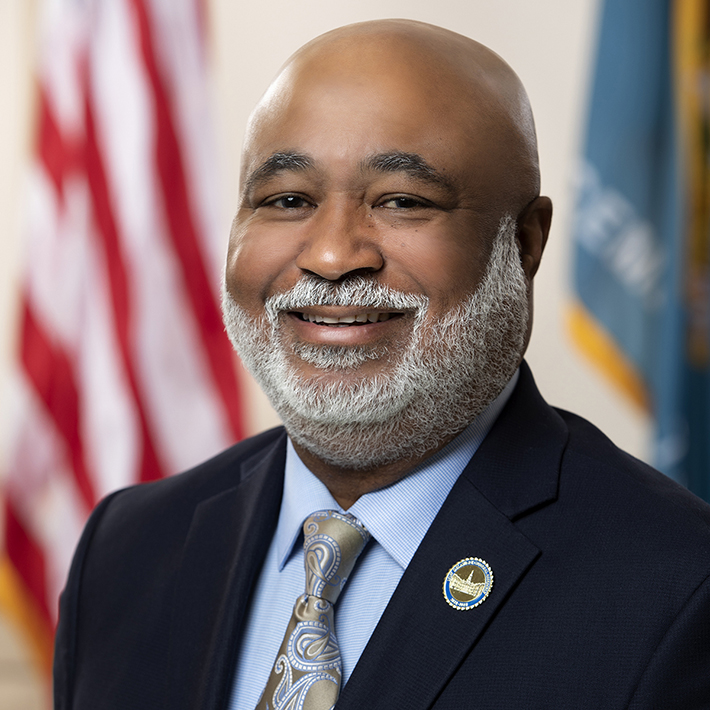
Rep. Frank Cooke
Sponsored bills
This bill requires all public and charter schools which have students in grades 6-12 to provide free feminine hygiene products in 50% of the bathrooms used by students who can have a menstrual cycle. This bill also requires schools to publish on its website and post in its common areas the locations of the bathrooms where the hygiene products are provided. Finally, this bill provides that each school must consult with its school nurse regarding the products to be provided.
This Act limits the use of certain Class B firefighting foams (“Class B foams”) in Delaware. Class B foams are used to put out fires caused by flammable liquids like gasoline, oil, and jet fuel, and can be divided into 2 categories: those with PFAS chemicals and those without. PFAS chemicals include a range of chemistries with differing properties, which have been widely-used for decades in products other than Class B foams, like food packaging, carpets, and other household items, and in firefighting foam. The use of firefighting foams containing PFAS chemicals, however, is an emerging public health challenge to avoid future contamination and reduce exposure to firefighters and Delawareans. Firefighting foam containing PFAS chemicals can get into water wells and drinking water supplies and expose firefighters and others to the chemicals. More studies into the effects of PFAS chemicals are emerging; some of the health effects of exposure to certain PFAS chemicals include pregnancy complications, liver damage, and high cholesterol. The PFAS chemicals in firefighting foams must be weighed against their particularly-effective nature in fighting liquid fires when mixed with water. To that end, this Act prohibits the use of Class B foams containing intentionally-added PFAS chemicals unless the use is for fire prevention or emergency firefighting. Further, this Act permits the use of such foam for training and testing only if the facility in which the training or testing occurs has implemented containment, treatment, and disposal measures to prevent releases of Class B foams containing PFAS chemicals. This Act also makes technical changes to Part IV of Title 16, to reflect its current structure more accurately.
This Act requires each school district and charter school to establish and implement a curriculum on Black History for students in grades K through 12. This Act incorporates contemporary events into discussions of Black History and the tools of experience.
Most commonly, persons accused of subsection (a) of this section – panhandling – are homeless. Transferring such matters to the Court of Common Pleas allows persons so accused increased access to social services not available to them at the Justice of the Peace Court.
This bill establishes a 2-year residential drinking water purification system pilot program to be administered through the Department of Health and Social Services with funding through the Drinking Water State Revolving Fund.
This Act prohibits the seller of consumer goods or services from refusing to accept cash payment, except in limited circumstances. It creates graduated civil penalties for violations and provides consumers a private right of action to recover double damages, including consequential damages, for a second violation of the law and triple damages for subsequent violations. The Division of Consumer Protection has authority to enforce the law.
This bill provides COVID-19 related relief to both claimants receiving unemployment benefits and employers who are assessed unemployment taxes, and extends the end date of the Secretary of Labor’s COVID-19 related rulemaking authority. Section 1 waives the 13-week waiting period for the state to "trigger on" to pay extended unemployment benefits in periods of high unemployment. Section 2 establishes the 2021 new employer assessment rate, average industry assessment rate, and average construction industry assessment rate at the same rate as 2020 in order to avoid an increase in these rates as a result of the increase in unemployment claims due to COVID-19. Section 3 extends the provisions in H.B. 352 from the 150th General Assembly authorizing the Delaware Secretary of Labor to issue emergency rules amending the Delaware Unemployment Insurance Code to deal with the effects of COVID-19 and implement federal programs providing unemployment benefits to respond to COVID-19. Section 4 exempts unemployment compensation benefits received in 2020 from the calculation of Delaware adjusted gross income so that unemployment claimants will not have to pay state taxes on the benefits they received during the pandemic.
This Act is the second leg of a constitutional amendment to add race, color, and national origin to § 21 of Article I of the Delaware Constitution to explicitly declare that protection against discrimination based on race, color, and national origin is one of Delaware's fundamental rights. The first leg of this constitutional amendment was Senate Bill 191 of the 150th General Assembly, published in Chapter 287 of Volume 82 of the Laws of Delaware. On passage of this second leg by this General Assembly this amendment will become part of the Delaware Constitution. Since the 14th Amendment to the United States Constitution was adopted on July 9, 1868, with Delaware ratifying it in 1901, at least 15 states have added a provision to their state constitution that prohibits the denial or abridgement of equal rights under the law based on race, color, or national origin. In 2019, Delaware amended the state constitution to prohibit the denial or abridgement of equal rights under the law based on sex, but no such prohibition exists as to race, color, or national origin. This Act requires a greater than majority vote for passage because § 1 of Article XVI of the Delaware Constitution requires the affirmative vote of two-thirds of the members elected to each house of the General Assembly when the General Assembly amends the Delaware Constitution.
This resolution honors Vice President-elect Kamala D. Harris for her service and dedication to the United States of America and the inspiration she provides to women and people of color, and offers appreciation and support for her historic Vice Presidency.