

Recognizing that a criminal charge can have lasting collateral consequences for a juvenile on employment and education opportunities, this bill raises the age in which a juvenile’s information, such as their name and mug shot, may be released by the state. The bill also seeks to address issues related to the release of such information on publicly-maintained social media pages. This bill seeks to balance both the rights of juveniles and the public’s right to know by saying that the names and photos of juveniles who have been charged and/or found delinquent of Class A misdemeanors, and Title 11 felonies, may only be released when the offending juvenile is 16 or older. This legislation also adds clarifying language to prevent the inadvertent release of sensitive information online that could have lasting impacts on a juvenile long after they have been charged, and in some cases, acquitted, of a crime.
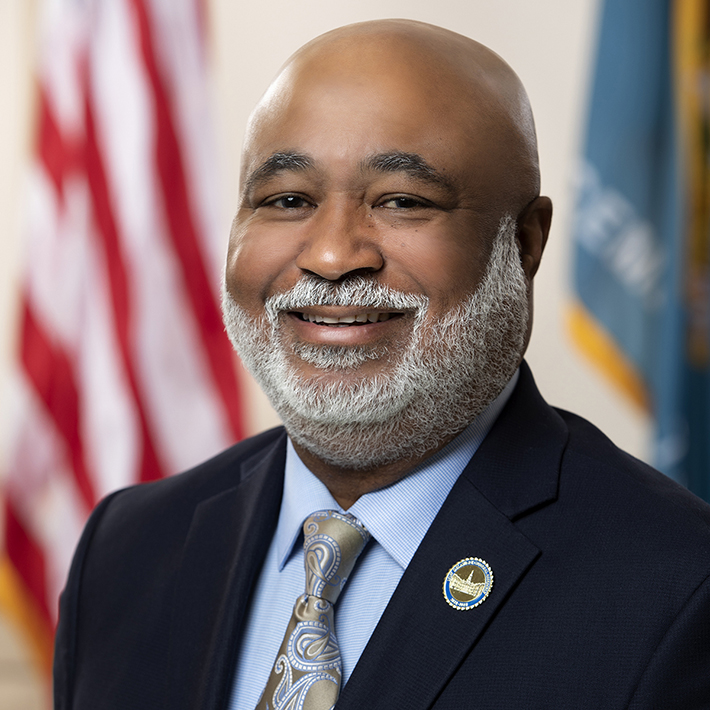
Rep. Frank Cooke
Sponsored bills
Currently, there is ambiguity whether a person who is 14 or 15 years of age can be employed by restaurants, hotels, or dining facilities that serve alcoholic liquors. This bill removes that ambiguity and makes it clear that persons 14 and 15 years of age can be employed in such places where alcoholic liquors are served, but cannot be involved in the sale or service of alcoholic liquor.
This resolution recognizes the Easterseals/CAI Volleyball Challenge occurring May 14 at William Penn High School, an event that raises funds for an organization providing services and support to Delawareans with disabilities and senior citizens and their families.
The Act, which shall be known as the 2022 Delaware Relief Rebate Program, creates a “relief rebate” which is a one-time direct payment of $300 per Delaware resident taxpayer. This relief is intended to help Delawareans grappling with significant inflation at the grocery store and gas pump. Payment of the $300 will be made by the Delaware Department of Finance to resident individual income taxpayers who filed a 2020 personal income tax return. This payment will be made to each taxpayer, including those who jointly filed. No action on the part of a taxpayer is required to receive the $300. In order to quickly provide this payment to Delaware taxpayers, provisions pertaining to tax intercepts by other government entities and Delaware State agencies shall not apply. The amount received by individual taxpayers will not be subject to Delaware income taxes. Any written protest for the disallowance of the payment of the $300 relief rebate under this Act shall be processed consistently with existing provisions in Title 30. Records of the Department with respect to the provisions of this Act are subject to existing protections from disclosure under Delaware laws. A timely filed tax return includes extensions. This Act also temporarily suspends the limitation on refunds of taxes under Title 29 of the Code until DEFAC refund estimates include the 2022 Delaware Relief Rebate Program. Costs associated with the administration and issuance of payments under this Act will be funded by delinquent tax revenue authorized to be retained by the Department of Finance in the annual budget act. Finally, this Act requires the Department of Finance to establish a process to provide the relief rebate to resident adults who did not file a 2020 state income tax return by identifying adult residents through existing databases held by other state agencies, such as the Division of Motor Vehicles. The Department of Finance will then work with the Department of Technology and Information to implement a process by which eligible residents who have not been identified by other means can apply for and receive the relief rebate, subject to verification of their identity and eligibility.
This Act repeals the outdated requirement for the Department of Services for Children, Youth & Their Families (DSCYF) to seek approval before “mixing” youth who have been adjudicated delinquent with youth who do not have a delinquency history in the same facility. The mixing statute was codified in 1987, and since then, DSCYF has developed rigorous safety protocols and uses evidence-based assessments to determine appropriate placements for children in the care of the department. The current practices of DSCYF have eliminated the need for mixing approval, which in some cases require DSCYF to seek a court order. In addition, the Family Court conducts regular review hearings for youth in DSCYF custody, allowing opportunities for the department, the child’s attorney, the child (if age appropriate), and the judicial officer to monitor many factors relating to the child’s placement, including safety. This Act retains the prohibition on dependent or neglected children being placed in a detention facility unless charged with or found to have committed a delinquent act.
This Act prescribes specific fines for violating § 4134 of Title 21. Previously, a violation of § 4134 would have been subject to the penalties outlined in § 4205 of Title 21. The amount of the penalties in § 4205 are as follows: for a first offense, a fine of not less than $25 nor more than $75. For each subsequent like offense, a fine of not less than $57.50 nor more than $95. Section 4205 is a general penalty provision that establishes penalties for violations of Chapter 41 of Title 21 or Chapter 42 of Title 21 in the event that the penalties are not otherwise prescribed. This Act also makes technical corrections to conform existing law to the standards of the Delaware Legislative Drafting Manual.
This Act removes the exemption in § 543(d)(4) of Title 4 (reduced distance requirements based on population growth) to the prohibition against granting a license for the sale of alcoholic liquor if there is an existing licensed establishment of similar type within either of the following: (1) A ½ mile by accessible public road or street in any incorporated city or town. (2) Within 3 miles by accessible public road or street in any unincorporated or rural area. This Act permits the Commissioner to grant a new license if all of the following apply: (1) The licensee desires to move the location of the license due to the destruction of the building, loss of lease, diversion of highway traffic pattern, or similar reason beyond the control of the licensee. (2) The application meets the requirements of § 543(d) of Title 4 of the Delaware Code and the other requirements of Title 4. (3) The new license does not result in the licensee moving the location more than 500 feet in an incorporated city or town or a ½ mile in an unincorporated or rural area.
This Senate Concurrent Resolution honors the Meals on Wheels program for providing invaluable and irreplaceable service to our aging population. Additionally, the Modern Maturity Center in Kent County is the program's backbone, delivering nutritious meals to seniors and individuals with disabilities at significant risk of hunger and isolation.
A disability pension for Delaware State Police officer and County and Municipal police officers and firefighters is only for those first responders who suffer injuries on the job such as being shot or assaulted while effecting an arrest or getting burned while putting out a fire. Many who suffer these injuries while doing their job protecting the citizens of this State are unable to return to their jobs as police officers or firefighters. Under the current law, these officers and firefighters who receive a disability pension and have not reached normal retirement date must report total earnings from any gainful employment or business each year. If the officer or firefighter receives earnings over the current base pay of the officer’s or firefighter’s rank at the time of the disability, such excess must be deducted from the disability pension. However, such provision does not apply to officers and firefighters who have reached normal retirement date. This bill treats officers and firefighters who have not reached normal retirement date the same as those who have by removing the provision that requires a deduction in disability benefits if the officer or firefighter earns more than what the officer’s or firefighter’s base pay was at the time of disability.
This Concurrent Resolution encourages Delaware sports organizations to utilize services offered by the U.S. Center for SafeSport. This Concurrent Resolution describes the authority of SafeSport and its initiatives to protect athletes in every sport.