

This Act defines certain facilities which will require an applicant seeking a permit for a new facility, or expansion of an existing facility, or renewal of an existing permit, located in an overburdened community, as defined in the Act, to provide an environmental justice impact report. Facility includes the following commercial or industrial business: (1) Manufacturer of animal food, meat, seafood, tobacco, manufactured home, chemicals, pharmaceuticals, petroleum, asphalt, ready-mix concrete, primary metal, nonmetallic mineral products, ammunition or transport equipment; (2) pulp, paper, paperboard and sawmills; (3) rail or water freight dock; (4) landfill, transfer station, resource recovery, scrap metal or recycle center or compost operator; (5) sewage treatment center, animal waste processor or sludge processor; (6) commercial livestock and poultry growers; (7) medical waste incinerator (with the exception of those attendant to a hospital or university intended to process self-generated medical waste); and (8) commercial or industrial businesses not contained in (1)-(7) that currently contribute or upon permit approval would contribute to the cumulative pollution in an overburdened community, as identified by the Department in conjunction with the Environmental Justice Board. For all permit applications, the environmental justice impact report would be required at least 60 days before a required public hearing. Under the Act an “overburdened community” is defined as any census tract, as delineated in the most recent U.S. Census, in which one or more of the following applies: (1) 35% of the residents are below 185% of federal poverty level. (2) At least 25% or more identify as minority or member of a state or federally recognized tribal community or immigrant. (3) 25% or more have limited English proficiency as defined by U.S. Census Bureau. (4) Geographic locations that potentially experience harms and risks as determined by the Environmental Justice Board. The Department would be required to create and post on its website a list of “overburdened communities” and update the list every 2 years. The Act establishes the Environmental Justice Board to review and make recommendations on the environmental justice impact reports, conduct public hearings, and other measures to help the Department fulfill the purpose of this chapter. The public hearing on the permit would be required to provide an opportunity for meaningful public participation by the overburdened community. Following the public hearing the Secretary would be required to consider the recommendation of the Environmental Justice Board and the testimony presented at the public hearing. The Secretary could impose conditions to the permit that may be necessary to reduce the adverse impact to the public health or to the environment in the overburdened community. The Secretary would have the authority to deny a permit application in an overburdened community upon a finding that the cumulative impact imposed by the new or expanded facility would constitute an unreasonable risk to the health of the residents of the overburdened community or to the environment in that community. The Act requires the Department to establish rules and regulations to implement the Act, in consultation with the Environmental Justice Board, within 6 months after its enactment.
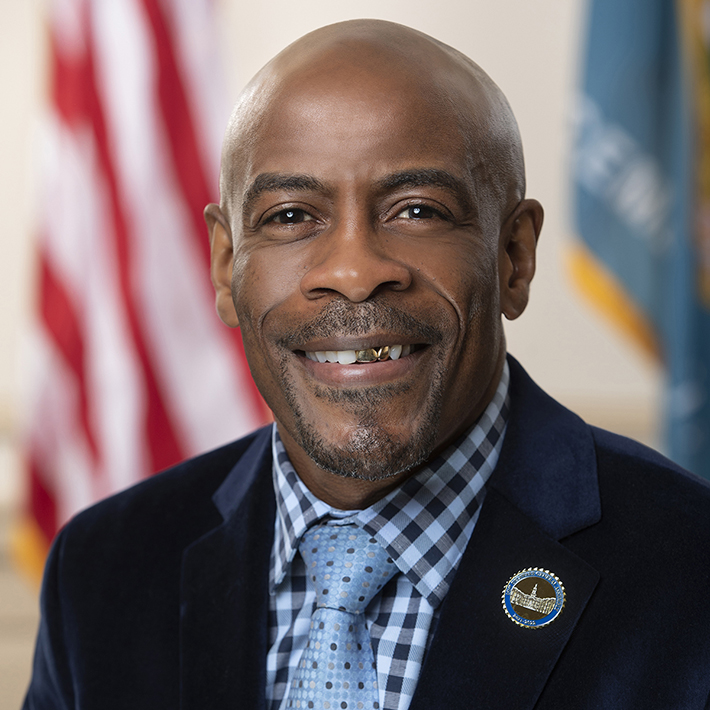
Rep. Nnamdi Chukwuocha
Sponsored bills
This Act provides that Downtown Development Districts are limited in area based on the size of the municipality or unincorporated area in which they are located. Currently, while the Delaware Office of State Planning Coordination (OSPC) limits the size of Downtown Development Districts, those limitations are not set forth in the Delaware Code. This Act adopts and codifies the limits set by the OSPC for jurisdictions with a population of 9,000 or fewer persons and for jurisdictions with a population of 9,001 to 30,000 persons. It increases the limit currently set by OSPC for jurisdictions with more than 30,000 persons from 250 acres to 400 acres and codifies that increased limitation.
This Act removes all penalties for possession of 1 ounce or less of marijuana, except for those who are under 21 years of age. Possession of more than 1 ounce of marijuana and public consumption remain unclassified misdemeanors. The Act also removes language referencing search and seizure authority. This Act also adds a provision to the Uniform Controlled Substances Act that provides that there will be no criminal or civil penalty for transfers of 1 ounce or less of marijuana between persons who are 21 years of age or older without remuneration.
This concurrent resolution reconstitutes DESPAC and establishes a stakeholder educational equity Council to provide independent oversight for the ombudsman program, and to support the effectiveness of Delaware’s data system for the purpose of enhancing educational equity
This Act does the following: (1) Authorizes the bundling of unimproved or vacant real property for sale at sheriff's sale by this State or any political subdivision when the real property is subject to a writ of venditioni exponas filed by this State or a political subdivision due to an outstanding lien or judgement. (2) Authorizes a land bank to acquire unimproved or vacant real property at sheriff's sale by submitting a final apex bid in the amount of the outstanding liens or judgements that are of record 5 days before the date of the sheriff sale, which has the effect of ending a sheriff's sale and selling the real property at issue to the land bank. The owner can redeem the real property by paying the land bank the amount of the final apex bid within 60 days of the approval of the sale to the land bank.
This bill is the Cover All Delaware Children Act. This Act directs the Department of Health and Social Services to develop and operate a medical coverage program for children in Delaware who are not otherwise covered, including children who are not documented. A child resident in the state whose family income is low enough that they would qualify on that basis for Medicaid or CHIP coverage, but is not eligible for Medicaid or other federally funded coverage, is eligible for coverage and medical care under this Act. This Act takes effect January 1, 2023.
The Delaware Marijuana Control Act regulates and taxes marijuana in the same manner as alcohol. Section 1: Amends Chapter 47 of Title 16 to provide that the offenses and penalties under Uniform Controlled Substances Act do not apply to marijuana-related conduct allowed under the Delaware Marijuana Control Act or the Delaware Medical Marijuana Act, Chapter 49A of Title 16. Section 2: Makes technical corrections to Chapter 47 of Title 16 and excludes industrial hemp from the definition of marijuana. Section 3: Amends § 4902A of Title 16 so that the definition of a registered safety compliance facility includes not just marijuana produced for medical use but also marijuana produced under the Delaware Marijuana Control Act. Section 4: Amends Chapter 4 of Title 4 to expand the Division of Alcohol and Tobacco Enforcement’s duties and powers to include enforcement of the Delaware Marijuana Control Act. Section 5: This section creates the Delaware Marijuana Control Act. Subchapter I contains definitions and general provisions. This section of the Act permits individuals over age 21 to possess, use, purchase, or transport 1 ounce (28 grams) or less of marijuana, no more than 5 grams of which may be concentrated, by individuals 21 years of age or older if the individuals are in compliance with this chapter. It permits the operation of marijuana businesses if they operate under licenses granted under the Marijuana Control Act, but imposes the same limits on hours and holiday sales as apply to sales of alcohol. It prohibits the use of marijuana in public, by drivers or passengers in vehicles, and prohibits the smoking of marijuana anywhere that smoking tobacco or e-cigarettes is not permitted. Marijuana may not be sold in an establishment licensed to sell alcohol. It delineates the rights of property owners with respect to marijuana possession and consumption. There are penalties as with alcohol sales, for individuals under the age of 21 using false identification to purchase marijuana, and for businesses that fail to verify the age of marijuana consumers. This Delaware Marijuana Control Act Oversight Committee is created. This Oversight Committee will coordinate the implementation of this Act with the Medical Marijuana Program, the Division of Public Health, the Division of Substance Abuse and Mental Health, and the public. The Oversight Committee will review the effectiveness of the Delaware Marijuana Control Act in regard to the safe operation of facilities licensed under this Act, the impact of this Act on public safety, and the impact of this Act on public health. The Commissioner must submit an annual report to the Governor and the members of the General Assembly setting forth all matters of interest and all statistics concerning marijuana regulation and control in the State including: the number of licenses of each variety issued with the State; including the name and address of each person licensed to cultivate, manufacture, or sell marijuana or marijuana products in the State; the amount of marijuana and marijuana products sold within the State; the number of licenses of each kind granted and the number cancelled during the year, and the outcomes and effective of the issuance of social equity licenses. This subchapter includes a provision protecting public officers, employees, contractors or volunteers who are acting in accordance with the provisions of this Act as part of their duties and requiring the State indemnify them in any civil or criminal proceedings that may arise from carrying out duties imposed under this Act. Subchapter II creates the position of Marijuana Commissioner and an Appeals Commission. The Commissioner has the power to establish health and safety regulations for marijuana cultivation that are consistent with applicable rules and regulations established by the Department of Natural Resources and Environmental Control and the Department of Agriculture. The Commissioner must consult with the Division of Alcohol and Tobacco Enforcement before adopting or establishing policies that concern enforcement. Finally, they must coordinate with the Division of Small Business, Development, and Tourism so that potential businesses licensed under this Act have access to programs, particularly those that support small businesses owned by minorities, women, and veterans. Subchapter III sets up the regulations and licenses under the Delaware Marijuana Control Act. The Marijuana Commissioner has the authority to adopt regulations to implement this Act and includes specific requirements that marijuana establishments must meet to obtain licenses. Regulations must require that products containing marijuana use of a symbol and a standard measurement to be used on all marijuana products so they are easily identified as containing marijuana and consumers can identify the amount of marijuana in different products; be in opaque, child-resistant packaging; and contain a warning label explaining evidence-based harms from consuming marijuana, including the impact on developing brains. The regulations must also contain security requirements, testing requirements, advertising restrictions, and require that food products comply with State food safety laws. There are separate licensing requirements for retail marijuana stores, marijuana testing facilities, marijuana cultivation facilities, and marijuana product manufacturing facilities. Licensing requirements also differ between open licenses, social equity licenses, and microbusiness licenses. There is a $10,000 biennial fee for most open licenses, with reduced licensing fees for microbusinesses and social equity licenses. Cultivation licenses are determined square footage of the grow rates. As part of the competitive scoring process the Commissioner will use to determine which applicant may obtain licenses to operate each type of marijuana establishment, applicants for open licenses will submit a business plan, an environmental and sustainability plan, as well as attestations affirming that (1) the applicant has a project labor agreement with a bona fide labor organization, and (2) the applicant has or will utilize a project labor agreement. Subchapter III establishes the criteria for social equity and microbusiness licenses, requires the Commissioner to develop a financial assistance and technical assistance programming to aid social equity applicants. Subchapter VII provides the Commission the authority to refuse approval of changes in the ownership, officers, or directors, financial interest or lease in connection with any license. The subchapter also details the requirements when there is a change in ownership of a license or licensee, a change in officers and directors, and changes in the financial interest of a license or licensee. Subchapter VIII creates the Marijuana Regulation Fund and the Justice Reinvestment Fund. The Regulation Fund will consist of fees collected, penalties imposed, and taxes collected under this Act. It creates the marijuana control enforcement tax on retail marijuana in the amount of 15%. 7% of the tax revenue collected will be allocated to the Justice Reinvestment Fund, under the management of the Department of Justice where it will be used for projects to improve quality of life for communities most impacted by the prohibition of marijuana and “war on drugs” era policies. Sections 6 and 7: Create a State tax deduction for all ordinary and necessary expenses paid or incurred by a marijuana establishment to reflect the inability of a business licensed under this Act to deduct these expenses from federal taxes and thus state taxes. This creates a more level playing field with other businesses. Section 8: Allows the Division of Revenue to share records with the Marijuana Commissioner for purposes of tax compliance. Section 9: Exempts tax paid on marijuana products from the gross receipts tax. Section 10: Removes possession of marijuana from the list of activities that prohibits a person from at the same time possessing a handgun. Section 11: Requires regulations to be finalized within 12 months of the effective date of this Act. Section 12: Makes the provisions of the bill severable.
It has been the case for several decades that when a juvenile is arrested or charged with certain crimes, the child's school is notified with an "Attorney General's letter" regardless of whether the crime occurred on school property or had anything at all to do with school. Children can then face disciplinary consequences in school, including being placed in an alternative setting, or even expelled. Since they face consequences in the justice system, this creates the possibility of double punishment. This Act codifies the notification process, limiting notifications to violent felonies, crimes that occur on school property or at a school event, or where the alleged victim attends the same school. It also requires that when an Attorney General’s report is sent, the Attorney General must send a follow-up report within 2 business days letting the school know how the case was resolved. Under this Act, schools may not take disciplinary action against a child while the charge is pending, and may take disciplinary action after case resolution only where it is necessary to protect the health and safety of the school community. Children who are separated from the school environment unnecessarily are likely to become more involved with the justice system. Schools may offer or require counseling or other services for students who are the subject of an Attorney General’s report. When the alleged victim is at the same school, the school may take safety steps as appropriate. The Act specifies that when a child has an IEP or 504 plan, their disability must be considered in the course of any disciplinary proceedings. Finally, the Act requires Attorney General’s reports be handled confidentially and retained past the case resolution only in specified circumstances.
This Act, the Healthy Delaware Families Act, creates a statewide paid family and medical leave insurance program. Delaware employees can access up to 12 weeks of paid family and medical leave through the State's paid leave trust fund for a qualifying event, including for the following: (1) To address a worker's own serious health condition. (2) To care for a family member with a serious health condition. (3) To bond and care for a new child. (4) To address the impact of a family member's military deployment. This Substitute to Senate Bill No. 1 differs from Senate Bill No. 1 with regard to the eligibility determination process, covered relationships, length of leave, forms of leave covered, cumulative leave, eligibility criteria, implementation timeline, appeal process, departmental powers, and not requiring participation from certain smaller businesses. This Substitute differs from Senate Substitute No. 1 to Senate Bill No. 1 by making technical corrections, clarifying intent and providing greater statutory detail with regard to appeals, coordination of benefits, definitions, private plans, and departmental powers, and providing temporary flexibility regarding implementation.
The Department of Services for Children, Youth and Their Families (DSCYF) is charged with providing transitional and independent living services for youth ages 14 to 21. The Division of Family Services (DFS) contracts for case management services for youth ages 16 to 21, with services designed to promote self-sufficiency and responsible living for young adults who are aging out of foster care. Participants receive life skills training and personal development, mentoring, tuition assistance, and support with transitional housing. Participants may also qualify to receive needs-based stipends through ASSIST (Achieving Self Sufficiency & Independence through Supported Transition) to help with living expenses. DFS recently changed the name of the Independent Living Program to the “Transitional and Independent Living Program” to better reflect the comprehensive nature of services offered to youth. This bill updates references to the program to include “transitional” and independent living services. During the COVID-19 pandemic, the federal government provided additional funding to support young adults who were eligible for independent living services until age 27. The intent was to provide additional support for youth and mitigate the impact of the pandemic on their housing and employment status. DFS exercised this additional funding authority via a mandatory directive from the DFS Director. While the mandatory directive provision expanding services expired in October 2021, DFS decided it would continue providing independent living services for youth until age 23 because of the success observed on behalf of youth. This mandatory directive provision will expire in September 2022, and this bill will grant DFS the statutory authority to continue providing transitional and independent living services for youth until age 23. Expanding independent and transitional living services from age 21 to age 23 better aligns with case management requirements of housing assistance programs, will support youth with transitioning from post-secondary education programs into the workforce, and will help maintain a longer connection to youth required to complete federal reporting for DFS.