Maddy summaryHCR 88 is a ceremonial resolution recognizing January 2026 as "National Mentoring Month" in Delaware. It does not create new laws or affect any specific individuals or groups; it simply makes a symbolic acknowledgment of mentoring efforts. The resolution was passed unanimously by both the House and Senate in early 2026. This type of resolution serves to highlight a cause but has no binding policy impact.
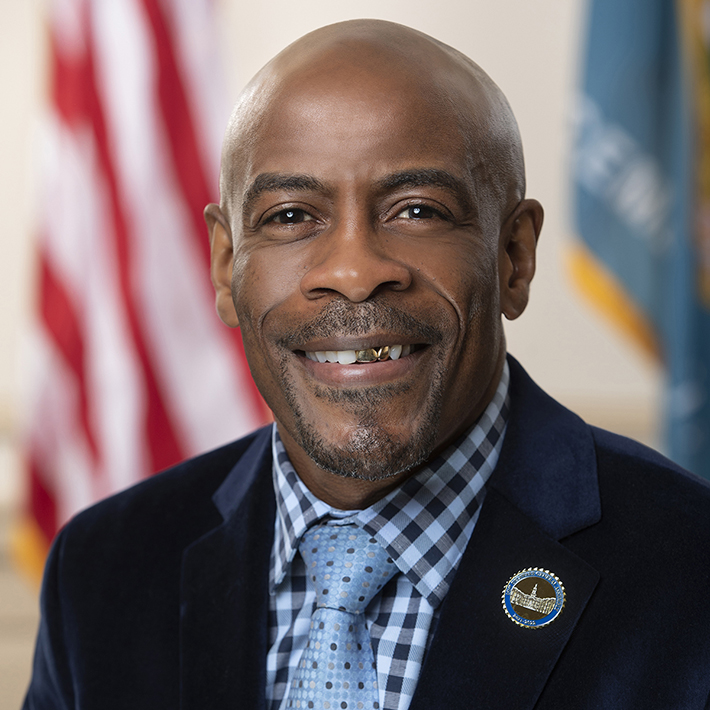
Rep. Nnamdi Chukwuocha
Sponsored bills
This Act creates the crime of “discharging a firearm at a dwelling, place of worship, vehicle, or place of business.” The offense is a class E felony. The offense contains a provision that provides that a person may not be convicted of both a violation of this section and reckless endangering 1st or 2nd with regard to the same conduct. It also exempts a shooting range from the businesses covered by the statute.
This Act requires the tax collecting authority of each county, in the first tax year following a general reassessment, to allow the payment of school taxes under a payment plan of at least 3 equal installments for a residential taxpayer, in a primary residence, whose tax bill increases by $300 or more over the prior year. No late fees, interest, or penalties may be assessed to a taxpayer who enters and complies with a payment plan. The Act also reduces late payment penalties for school taxes in New Castle County to 1% per month, the current penalty for late payment in Kent and Sussex. This Act sunsets 3 years after its enactment into law.
This Act exempts from state child care licensing requirements a military family child care provider that serves only children eligible for Department of Defense subsidized care that is either located on a military base or federal property, certified as a family child care provider by a branch of the U.S. Department of Defense or the U.S. Coast Guard, or both.
This Act is intended to supplement protections under federal law for members of the military, their families, and veterans by adding “military status” as a protected class for purposes of the State’s public accommodations, housing, insurance, education, and employment laws. Technical corrections are also made to existing statutory language to conform with the requirements of the Legislative Drafting Manual. This House Substitute No. 1 adds language to clarify that distinctions or differential treatment based on military status that are allowed by State law or regulation, federal law or regulation, or government contract, are not unfair or discriminatory practices. It also updates existing statutory language that was changed by 84 Del. Laws c 429.
This Act prohibits the issuance of an open license for a retail facility upon the expiration of a conversion license if the location of the retail facility would be in violation of the law of a municipality under § 1351 of this title.
This Concurrent Resolution commends the 2025 Delaware Behavioral Health Professional of the Year, Jaclyn Durant and all of the District/Charter Network Behavioral Health Professionals of the Year.
This Resolution recognizes the pertinent work of social workers throughout Delaware and the entire country, encourages the creation and expansion of Social Work programs, and recognizes March 2025 as Social Work Month in the State of Delaware.
This bill modifies the Delaware Commission of Veterans’ Affairs employee requirements to make the Executive Director an exempt position, and to allow the hiring of non-veteran employees when needed. This will positively impact veteran families by reducing the wait for interment in state veterans’ cemeteries. These changes also make technical corrections and clarify the commission’s authority to accredit claims representatives to support veterans in accessing their earned benefits.
On military installations subject to exclusive federal jurisdiction, the investigation and prosecution of juveniles for alleged violation of federal crimes is conducted in the federal court system. The federal court system often tries juveniles as adults and it lacks juvenile-focused resources. Federal law, however, permits the State to accept concurrent jurisdiction over juvenile matters on military installations if a request is made by a United States official and the Governor, via Executive Order, accepts the request. This Act provides the statutory authority for the State to accept concurrent jurisdiction over crimes or delinquent acts involving juveniles on military installations located in the State. According to this Act, if the Governor accepts a request for concurrent criminal juvenile legislative jurisdiction from a United States official, a State agency or local government agency may enter into a memorandum of understanding with any federal agency for coordination and designation of responsibility related to the concurrent criminal juvenile legislative jurisdiction. This Substitute bill adds “delinquent acts” to those juvenile matters the Family Court has jurisdiction to adjudicate within a military installation. It also clarifies that offenses within a military installation that are adjudicated in Family Court must have been committed while the child was under the age of 18. This Substitute bill also provides concurrent jurisdiction for those criminal offenses involving a child in which the child has been determined to be amenable to prosecution as an adult in Superior Court. This Substitute bill also makes technical corrections to conform existing law to the standards of the Delaware Legislative Drafting Manual.