

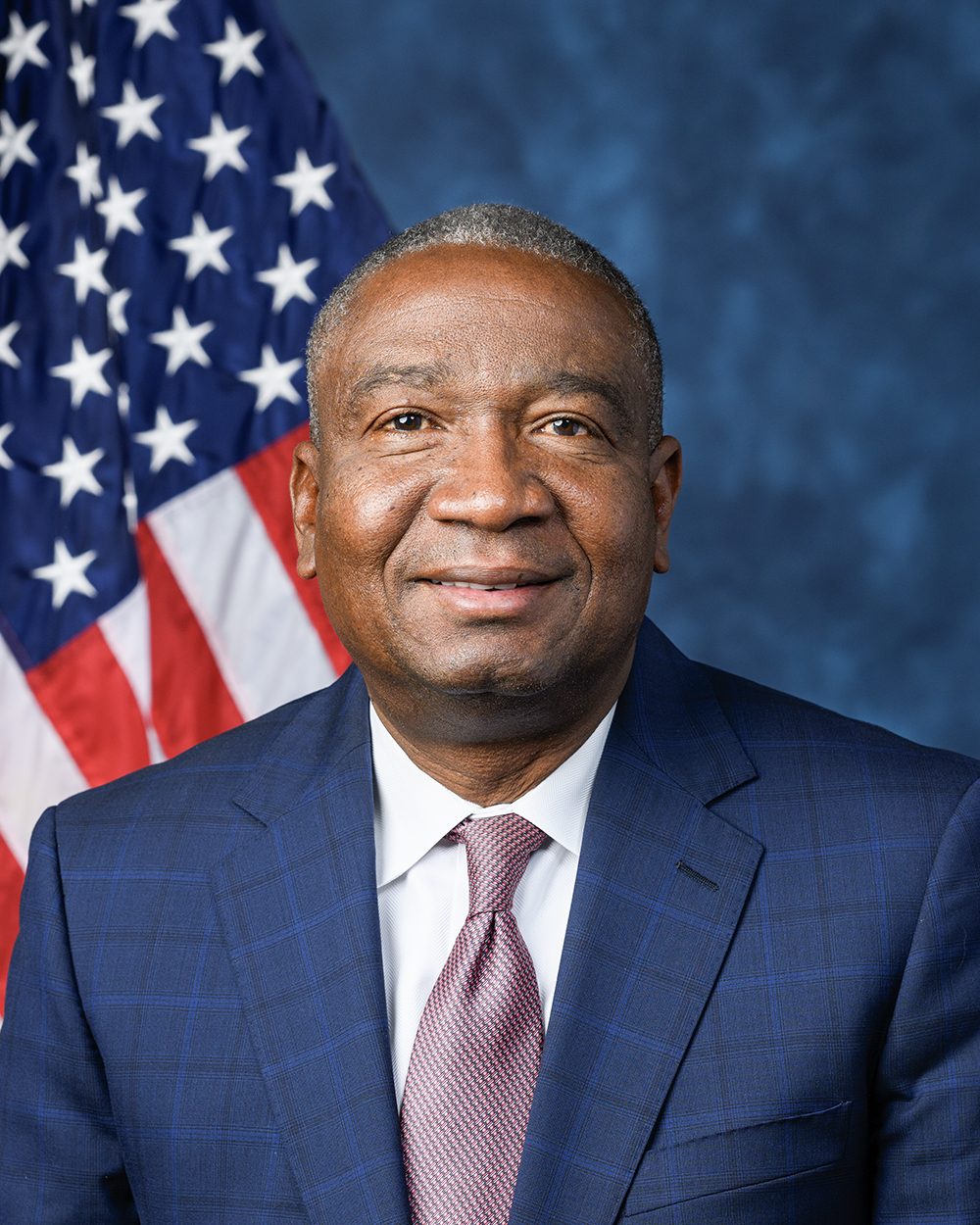
Photo of Cleo Fields
D United States House · District 6 · Louisiana

Rep. Cleo Fields

Compare
Total votes
650
all sessions
Attendance
97%
20 missed
Near the chamber average
With party
98%
of cast votes
Higher than 75% of chamber peers
Bipartisan score
1%
crosses aisle rarely
Lower than 76% of chamber peers
Sponsored
381
bills & resolutions
Near the chamber average
Committees
4
assignments
381 bills and resolutions

Sponsored bills

Total
381
Primary
9
Co-sponsor
372
This page
381
matching current filters
Co-sponsor HR 1988
In committee · Connecticut House · Co-sponsor
Pay Federal Workers and Servicemembers Act

Maddy summaryThis bill (HR 1988) provides unemployment benefits eligibility for certain federal workers and military members during government shutdowns. It deems eligible employees - such as military personnel, NOAA Commissioned Corps members, and excepted civilian workers performing emergency duties - as "totally separated from federal service" during funding gaps. This allows them to access unemployment benefits immediately, without waiting periods, for weeks of unemployment starting March 14, 2025. The bill directly affects federal employees who remain on duty but are unpaid due to shutdowns.

In committee Mar 10, 2025 1 co-sponsor
Co-sponsor HR 1966
In committee · Connecticut House · Co-sponsor
Mamas and Babies in Underserved Communities Act of 2025

Maddy summaryThis bill provides federal grants to public or nonprofit health care providers serving minority, low-income, or medically underserved communities to expand maternal and infant health services. It specifically funds prenatal, postnatal, and postpartum care while requiring grantees to offer culturally appropriate services and limit administrative costs to 10% of grant funds. Priority is given to organizations led by or located within the communities they serve, aiming to reduce racial and economic disparities in care access and health outcomes. The funding is authorized for fiscal years 2026-2030, with grantees required to coordinate with other federal maternal health programs to avoid duplication.

In committee Mar 6, 2025 1 co-sponsor
Co-sponsor HR 1954
In committee · Connecticut House · Co-sponsor
Do No Harm Act

Maddy summaryHR 1954, the "Do No Harm Act," amends the Religious Freedom Restoration Act (RFRA) to clarify that RFRA does not override specific federal laws protecting against harm. It explicitly exempts provisions related to anti-discrimination (like the Civil Rights Act), workplace protections (wages, leave, collective activity), child safety, and healthcare access from RFRA's requirements. The bill ensures RFRA cannot be used to challenge government programs or contracts that provide these essential protections. It also clarifies that RFRA applies only to disputes involving government as a party, not private disputes between individuals. This change preserves existing legal safeguards while modifying RFRA's scope.

In committee Mar 6, 2025 1 co-sponsor
Co-sponsor HR 1855
In committee · Connecticut House · Co-sponsor
National Amusement Park Ride Safety Act

Maddy summaryHR 1855, the National Amusement Park Ride Safety Act, clarifies that permanently fixed amusement rides (like stationary roller coasters) are excluded from the definition of "amusement ride" under the Consumer Product Safety Act. This amendment shifts regulatory focus to portable rides (like carnival equipment) by directing $5 million annually for non-permanently fixed rides and $6.5 million for permanently fixed rides to the Consumer Product Safety Commission. The bill directly affects amusement parks with portable rides and the CPSC’s enforcement scope, without creating new safety standards. It specifically revises existing definitions and funding allocations under the Consumer Product Safety Act.

In committee Mar 5, 2025 1 co-sponsor
Co-sponsor HR 1877
In committee · Connecticut House · Co-sponsor
Protecting Americans’ Social Security Data Act

Protecting Americans’ Social Security Data Act This bill prohibits political appointees and special government employees from accessing Social Security data systems that contain personally identifiable information about Social Security beneficiaries. Specifically, political appointees and special government employees may not access systems maintained by the Social Security Administration (SSA) that issue or record Social Security account numbers, that are used to determine eligibility for or to pay Social Security benefits, or that otherwise contain personally identifiable information about individuals receiving or applying for benefits.  The bill also establishes a civil right of action for an individual whose information was negligently accessed or disclosed in violation of these provisions. The individual may bring suit against the United States if the violator was a U.S. employee or officer, or against the violator if they were not a U.S. employee or officer. Such a claim must be brought within two years of the affected individual’s discovery of the violation. Upon a finding of liability, defendants are liable for specified monetary damages.  If an individual is criminally charged or subject to proposed disciplinary or adverse action by a federal or state agency for having accessed or disclosed information in violation of these provisions, SSA must notify the individual whose information was accessed or disclosed of the violation as soon as practicable.  Finally, the bill requires the SSA Office of the Inspector General to investigate and report to Congress on any unauthorized access to or disclosure of information in a beneficiary data system.

In committee Mar 5, 2025 1 co-sponsor
Co-sponsor HR 14
In committee · Connecticut House · Co-sponsor
John R. Lewis Voting Rights Advancement Act of 2025

Maddy summaryThis bill strengthens the Voting Rights Act of 1965 by clarifying how to prove voting discrimination and expanding requirements for preclearance of voting changes. It establishes new standards for determining when voting practices dilute minority voting strength or deny/abridge voting rights, requiring plaintiffs to show specific conditions for vote dilution claims and including factors like historical discrimination and racial polarization in court analyses. The bill modifies the criteria for determining which states and political subdivisions must seek preclearance for voting changes, and adds new transparency requirements for jurisdictions to publicly disclose changes to voting qualifications, polling locations, and election districts. It directly affects states and local governments that implement voting policies, particularly those with a history of voting rights violations or that make changes to voting qualifications, procedures, or district boundaries. The bill aims to prevent discriminatory voting practices by providing clearer standards for courts and requiring greater transparency in voting rule changes.

In committee Mar 5, 2025 1 co-sponsor
Co-sponsor HR 1835
In committee · Connecticut House · Co-sponsor
MERIT Act

Maddy summaryHR 1835 (MERIT Act) provides reinstatement or compensation to federal employees who were terminated during a specific mass layoff period (January 20, 2025, through the bill’s enactment date). Affected probationary employees - newly hired workers on a trial period or not yet permanent - can choose to return to a similar position with matching benefits or receive a lump-sum payment covering the pay difference between their terminated role and any new federal job they held during the layoff period. Agencies must notify affected employees within 30 days and offer reinstatement or payment within 90 days, with employees required to accept or decline within 30 days to avoid losing eligibility. The bill defines "mass termination" as 15+ separations in a 30-day period by a single agency.

In committee Mar 4, 2025 1 co-sponsor
Co-sponsor HR 1822
In committee · Connecticut House · Co-sponsor
ACRE Act of 2025

Maddy summaryThis bill adds a new tax provision (Section 139J) to the Internal Revenue Code, excluding interest income from certain rural and agricultural loans from taxable income for qualifying lenders. It directly affects banks, insurance companies, and farm credit entities that provide loans secured by rural or agricultural property (including qualifying single-family homes in rural areas), while excluding loans to foreign adversary entities (like those linked to China, Russia, or Iran). The law requires lenders to report on how this tax exclusion impacts loan interest rates, with a Treasury report due to Congress within five years. The policy change aims to reduce lenders' tax burden on these specific loans, potentially lowering costs for borrowers in rural communities.

In committee Mar 4, 2025 1 co-sponsor
Co-sponsor HRES 181
In committee · Connecticut House · Co-sponsor
Original Black History Month Resolution of 2025

Maddy summaryHRES 181 is a symbolic resolution recognizing Black History Month by highlighting the historical and ongoing contributions of Black labor to the U.S. economy and society. It commemorates Black labor from slavery through modern times, including agricultural work, unionization efforts (like A. Philip Randolph’s Brotherhood of Sleeping Car Porters), and contemporary issues like the racial wage gap (where Black workers earned $878 weekly vs. $1,059 for others in 2023). The resolution does not create new laws or policies but formally acknowledges these contributions to raise public awareness. It is sponsored by 70+ House members and aligns with the 2025 Black History Month theme focused on "African Americans and Labor." As a commemorative resolution, it has no direct effect on individuals or legislation.

In committee Mar 3, 2025 1 co-sponsor
Co-sponsor HR 1788
In committee · Connecticut House · Co-sponsor
Fair Grocery Pricing Act

Maddy summaryHR 1788, the Fair Grocery Pricing Act, prohibits food producers from using data analytics services (coordinators) to facilitate tacit price coordination among competitors. It directly affects food manufacturers and the data companies that provide pricing coordination services, making it unlawful for producers to contract with such services or for coordinators to enable price-fixing agreements. The bill empowers the Federal Trade Commission and Department of Justice to enforce these rules under existing antitrust laws and allows consumers to sue for triple damages plus legal fees if harmed by violations. It also invalidates pre-dispute arbitration agreements for these cases, ensuring affected consumers can pursue legal action.

In committee Mar 3, 2025 1 co-sponsor
Showing 321 to 330 of 381 bills
Previous 1 32 33 34 39 Next