

Maddy summaryThis bill restricts the availability of accelerated rehabilitation programs for defendants charged with certain animal cruelty offenses. It specifically excludes from eligibility individuals charged with serious felonies, crimes causing death, family violence, drug-related offenses, and other specified violations. The law takes effect on October 1, 2026, and aims to limit the use of this diversion program for cases involving animal cruelty while maintaining it for other qualifying offenses.
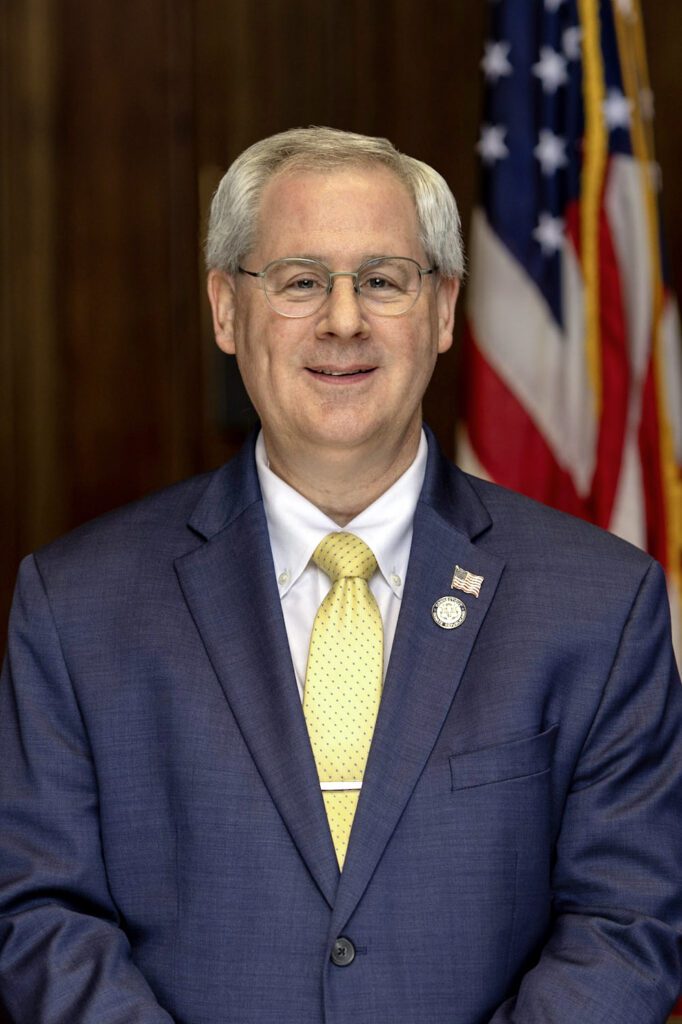
Sen. Jeff Gordon
Sponsored bills
Maddy summarySB 388 establishes the "Mashantucket Pequot and Mohegan Fund" as a permanent state fund to manage payments received from Connecticut's Mashantucket Pequot Tribe and Mohegan Tribe. The bill requires transferring $152.38 million annually from Connecticut's General Fund to this new fund starting July 1, 2026, using revenue from tribal agreements. Funds will be distributed to Connecticut towns through the Office of Policy and Management following existing grant guidelines (Section 3-55j), with payments made in three installments each year. This directly affects Connecticut towns receiving these grants, which were previously managed under a different funding mechanism.
Maddy summaryHB 5164 changes how Connecticut allocates funds from its Tobacco Settlement Fund. Starting July 1, 2026, it requires $12 million annually (until 2025) and $32 million annually (from 2027 onward) to be directed to the Tobacco and Health Trust Fund for tobacco prevention and control programs. The remaining funds from the settlement are allocated to the state’s General Fund. This aligns with CDC-recommended funding levels for tobacco control initiatives, directly affecting public health programs aimed at reducing tobacco use.
Maddy summaryThis bill requires the Department of Social Services to increase Medicaid reimbursement rates for healthcare providers starting July 1, 2026, with the goal of reaching at least 75% of Medicare rates by June 30, 2029. The law establishes a five-state benchmark using average rates from Maine, Massachusetts, New Jersey, New York, and Oregon to determine increases for services without corresponding Medicare rates. Additionally, the bill mandates annual rate adjustments after 2029 based on Medicare rate comparisons, the five-state benchmark, or changes in the Medicare Economic Index to account for inflation. A separate oversight council must review provider reimbursement rates annually and report to the legislature with recommendations on necessary funding to maintain adequate compensation for healthcare providers.
Maddy summaryHB 5221 reestablishes a permanent Legislative Program Review and Investigations Committee as a standing body of the General Assembly. The committee, composed of six Senate members (appointed by leadership) and six House members (appointed by leadership), will review state agency programs for effectiveness and conduct investigations into matters referred to it. It can access state records, recommend policy changes, and issue annual reports to the legislature. This procedural bill directly affects the legislature and state departments by creating a formal mechanism for oversight, without changing substantive policies or impacting citizens.
Maddy summarySB 144 requires Connecticut's Siting Council to include local representation during reviews of proposed facilities like waste plants or utilities. For each project, the council must add four members appointed by the affected municipality (three local residents and one from a neighboring area) plus one additional local elector appointed by the municipality. These members serve as nonvoting participants to provide community perspective during siting decisions. The bill directly affects municipalities where new facilities are proposed, ensuring local voices are heard in the review process. It becomes effective October 1, 2026.
Maddy summaryHB 5167 requires laboratories testing private residential wells and semipublic wells (like those serving schools or community centers) to report water quality results to local health authorities and the state Department of Public Health within 30 days of testing. It removes the previous requirement for the Commissioner of Public Health to approve disclosures, allowing direct sharing of results with well owners, adjacent property owners, and prospective buyers who have signed purchase contracts. The bill takes effect October 1, 2026, and applies to all such wells in Connecticut. This change streamlines access to water quality information for affected property owners and buyers without altering confidentiality protections for other uses.
Maddy summarySB 285 creates a tax credit for family caregivers who provide unpaid care to eligible relatives. It allows caregivers with incomes under $50,000 (individual) or $100,000 (couple) to claim a credit covering 50% of qualifying expenses - such as home modifications, medical equipment, hiring aides, or respite care - up to $2,000 annually. Expenses like general home repairs (e.g., painting, plumbing) are excluded, and the total credit pool is capped at $1.8 million per year. The credit is nonrefundable, meaning it only reduces tax liability but cannot result in a cash refund.
Maddy summarySB 100 reduces the two lowest personal income tax rates for eligible taxpayers. It eliminates the 2% tax rate for single filers earning under $100,000 annually and lowers the 4.5% rate to 3% for those in that bracket. Similarly, it removes the 2% rate for married couples filing jointly earning under $200,000 and reduces the 4.5% rate to 3% for them. The bill directly affects low-to-moderate income earners by decreasing their tax burden on the lowest income levels. These changes apply to taxable income falling within the specified thresholds under the state's income tax code.
Maddy summarySB 105 eliminates specific fees for occupational and professional licenses, permits, certifications, and registrations. It directly affects speech-language pathologists (removing their license fees), professionals regulated by the Department of Consumer Protection (removing their license, permit, certification, and registration fees), and teachers (removing teaching certificate fees). The bill removes these fees by amending general statutes to delete the associated charges. This is a concrete policy change focused solely on reducing costs for these regulated professions, as stated in the bill's purpose.