

Maddy summarySB 105 eliminates specific fees for occupational and professional licenses, permits, certifications, and registrations. It directly affects speech-language pathologists (removing their license fees), professionals regulated by the Department of Consumer Protection (removing their license, permit, certification, and registration fees), and teachers (removing teaching certificate fees). The bill removes these fees by amending general statutes to delete the associated charges. This is a concrete policy change focused solely on reducing costs for these regulated professions, as stated in the bill's purpose.
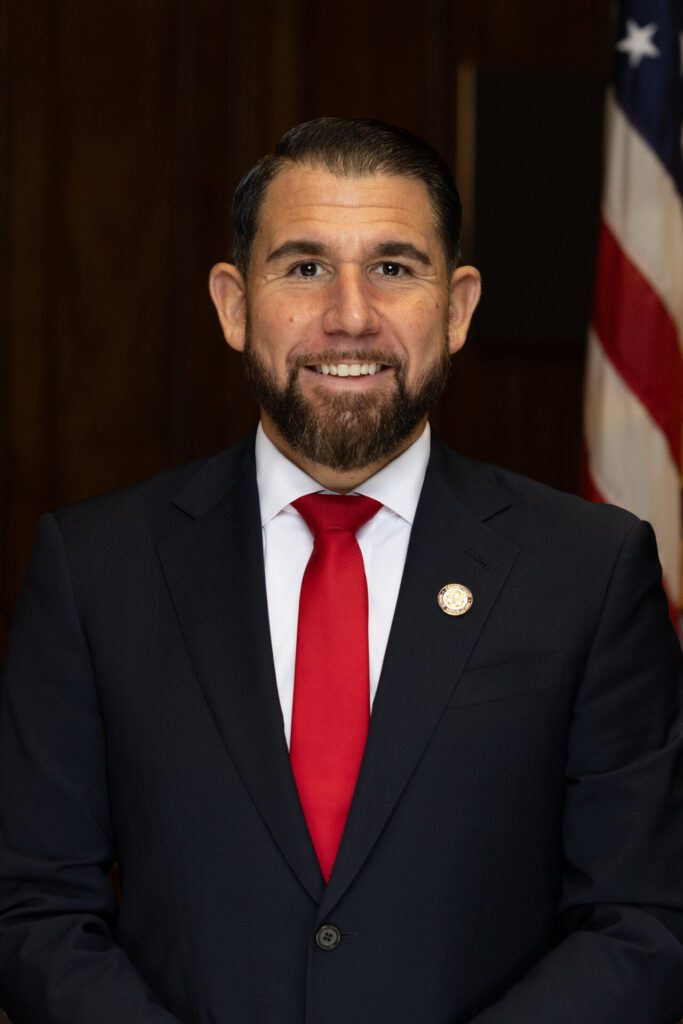
Sen. Paul Cicarella
Sponsored bills
Maddy summarySB 181 directs $330.8 million from the state's Budget Reserve Fund to the General Fund to provide refunds of personal income tax actually paid by taxpayers who filed federal tax returns for the 2025 tax year. The Department of Revenue Services will calculate individual refunds based on actual tax paid. This one-time refund affects taxpayers who filed federal returns for 2025, using existing state funds rather than changing tax rates or laws. The bill does not create new tax obligations or alter future tax policy.
Maddy summaryHB 5176 allocates $150,000 from the General Fund to the Department of Social Services for fiscal year 2027. This funding provides a grant-in-aid directly to the Spanish Community of Wallingford. The bill specifies the funds must support education, public health, social services, and job training programs within that community. The appropriation is targeted for the 2027 fiscal year and requires the Department of Social Services to administer the grant.
Maddy summarySB 99 creates a refundable tax credit against personal income tax equal to the motor vehicle property tax paid by qualifying taxpayers. It directly affects low-to-moderate-income individuals: single filers with adjusted gross income under $100,000 and married couples filing jointly with income under $200,000. The credit is refundable, meaning eligible taxpayers receive cash back even if the credit exceeds their income tax liability. The bill specifically applies to motor vehicle property tax, not home property tax (though the text references a separate residence tax limitation, which is unrelated to this vehicle credit). This is a concrete policy change that reduces the tax burden for vehicle owners meeting the income thresholds.
Maddy summaryThis bill establishes tax credits for developers building new grocery stores in designated low-income areas with limited grocery access. It directly affects grocery store developers planning to construct in these underserved neighborhoods. The key provision offers financial incentives through tax credits to encourage new store development. The policy aims to improve grocery access in communities currently lacking sufficient retail food options.
Maddy summarySB 43 replaces Connecticut's existing machinery and equipment tax credit with a new 50% credit for corporations spending on such equipment installed in state facilities. It directly affects corporations that purchase and install machinery/equipment in Connecticut, removing previous employee-based restrictions. The bill requires equipment to be used in the facility for at least five years, and corporations must repay the full credit amount if this minimum use period is not met. This creates a simpler credit structure with a mandatory five-year usage requirement and repayment obligation for non-compliance.
Maddy summarySB 46 authorizes the state to issue up to $3.5 million in bonds to fund the restoration of Wallingford's historic train station. The funds would be provided as a grant to Wallingford's Economic Development Commission through the Department of Economic and Community Development. The bill specifically directs the money toward restoring and converting the station for community use, aiming to support local economic development. This bill directly affects Wallingford residents and its local economic development efforts.
Maddy summarySB 10 appropriates $4.7 million from the General Fund for the 2027 fiscal year to increase compensation for court-appointed conservators (guardians for vulnerable individuals) handling indigent cases. This funding aligns conservator pay with the state's minimum wage increase, as recommended by a working group. The bill directly affects conservators managing cases involving low-income individuals who cannot afford legal representation. It provides a specific, concrete funding mechanism to update compensation rates without altering broader legal procedures.
Maddy summarySB 44 increases the income thresholds for taxpayers to claim the full deduction of Social Security benefits from their state personal income tax. Specifically, it raises the limit to under $100,000 for unmarried individuals and those filing separately, and under $150,000 for heads of households and married couples filing jointly. This change directly affects state taxpayers who receive Social Security benefits and file income tax returns. The bill modifies the existing deduction rules by expanding the income range where the full benefit is applied, without altering the deduction amount itself. It does not change the tax rate or eligibility for the deduction, only the income level at which the full deduction applies.
Maddy summarySB 14 provides $500,000 in state funding from the General Fund to the Department of Emergency Services and Public Protection for the state-wide narcotics task force during the 2026-2027 fiscal year. This funding directly supports efforts to combat illegal fentanyl manufacturing and sales in Hartford, New Haven, Bridgeport, and Waterbury. The bill’s key mechanism is a specific fiscal appropriation to the designated state agency, with no new regulations or program changes beyond the allocated budget. It focuses on resource allocation for existing task force operations targeting fentanyl distribution in those four cities.