

Maddy summaryThis bill updates laws regarding how drivers must behave when passing school buses and introduces new technology to enforce these rules. It requires all vehicles to stop at least ten feet away from a school bus with flashing red lights, while allowing traffic on divided highways to proceed without stopping. The legislation also permits municipalities and school districts to install digital camera systems on school buses that automatically record and report violations to police. If a violation is detected, the system can trigger a fine of $250, and the bill outlines how these fines can be used to pay for the monitoring equipment and services. Additionally, the law mandates that these cameras only record license plates to protect the privacy of passengers and other people nearby.
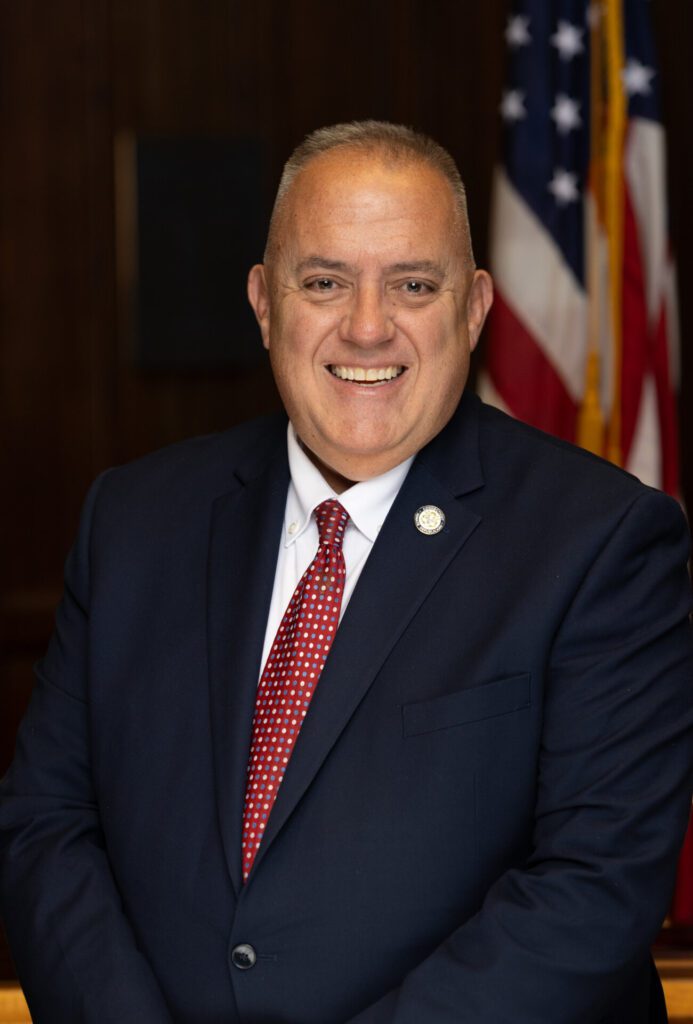
Sen. Eric Berthel
Sponsored bills
Maddy summaryHB 5190 updates Connecticut's historic home rehabilitation tax credit program to provide a 30% tax credit for owners who renovate eligible historic buildings. To qualify, the home must be listed on the National or State Register of Historic Places, and the owner must spend at least $15,000 on approved construction costs while pledging to live there as their primary residence for five years. The Department of Economic and Community Development will administer the program by reviewing renovation plans before work begins and issuing vouchers based on verified expenses after completion. This bill replaces the previous version of the law and will take effect on January 1, 2025.
Maddy summaryHB 5235 updates the legal definitions of key terms within Connecticut's cannabis and drug control statutes to ensure clarity for law enforcement and regulators. The bill specifically amends the definition of "cannabis-type substances" to include various chemical compounds similar to cannabinoids while explicitly excluding mature stalks, fiber, oil, cake, and hemp as defined by federal standards. Additionally, the act clarifies the meanings of related terms such as "abuse of drugs," "distribute," and "dispense" to align with current regulatory practices. These changes directly affect the Department of Consumer Protection and other agencies responsible for enforcing state drug laws by providing a more precise framework for identifying controlled substances.
Maddy summaryThis bill requires colleges and universities to inform students about their policies on scholarship displacement, which occurs when a student's financial aid is reduced because they receive an outside scholarship. Institutions must include this information in the initial financial aid package given to current and prospective students. Additionally, each school must submit a written report on its specific policies to the state's higher education committee by January 1, 2025. The law aims to increase transparency regarding how outside funding affects a student's total financial aid award.
Maddy summaryThis bill updates the rules for when Connecticut financial institutions must share customer financial records with government officials. It specifically requires banks and similar institutions to provide records to the Commissioner of Social Services or their designated agents within twenty calendar days of receiving a formal request. The law also clarifies that failing to comply with these specific disclosure mandates will no longer be treated as a criminal misdemeanor. Additionally, the bill outlines other situations where financial records can be legally shared, such as in response to court orders or requests from tax authorities.
Maddy summaryThis bill modifies the eligibility requirements for Connecticut's Workforce Housing Opportunity Development Program by adjusting the mix of rental units in new housing projects. Specifically, it changes the rule so that 50% of the units in a project must be rented to the workforce population, while 40% must be rented at market rates, reversing the previous allocation. The legislation also updates the legal definition of a "business firm" to include various regulated industries and clarifies what constitutes "substantial rehabilitation" for existing buildings. These changes directly affect developers, nonprofit housing organizations, and municipalities that apply for funding to build or renovate affordable rental housing.
Maddy summaryThis bill requires municipal tax collectors to waive interest on delinquent property taxes if the delay is caused by an error made by the tax assessor or tax collector, rather than by the taxpayer. To qualify for this waiver, the tax collector and assessor must jointly confirm the error, and the decision must be approved by a vote of the municipality's legislative body. The law also mandates that tax collectors provide clear public notice regarding due dates, delinquency dates, and the applicable interest rate before taxes become late. Effective October 1, 2024, this change ensures that taxpayers are not penalized with interest when the government agency makes a mistake in calculating or collecting their taxes.
Maddy summaryThis bill establishes a temporary task force to study how hate speech affects the mental and physical health and school performance of children. The group will be composed of representatives from various organizations focused on child well-being, pediatric care, and anti-discrimination efforts, alongside state officials in health, education, and mental health. Members appointed by legislative leaders must represent specific areas such as race, religion, sexual identity, gender identity, or disability, while the task force is required to submit its findings and recommendations to the General Assembly by January 1, 2025.
Maddy summaryThis bill, HB 5058, adopts the Nurse Licensure Compact into Connecticut law to allow nurses to hold a single license that permits them to practice in any other state that has also joined the agreement. Starting in October 2025, the state will issue multistate licenses to qualified nurses, eliminating the need to apply for separate permits in each neighboring jurisdiction. The agreement establishes a system where nurses must meet uniform standards and allows state boards to share information about disciplinary actions or investigations to protect public safety. While the bill simplifies the process for nurses to work across state lines, it also ensures that any violations of nursing laws in one participating state can be enforced by the boards in all other member states.
Maddy summaryThis bill creates a new Office of Dyslexia and Reading Disabilities within the state Department of Education to ensure teacher training programs and new educators are qualified in scientifically-based reading instruction. It also establishes a Center for Literacy Research and Reading Success to oversee statewide reading plans, provide coaching to schools, and report on how districts implement reading curricula. Additionally, the legislation requires the department to study the feasibility of a statewide advanced course program that prioritizes students from low-income families. The bill also directs the State Board of Education to develop a model policy on the use of mobile devices in schools, considering the varying needs of different age groups. These changes aim to improve educational outcomes by strengthening literacy instruction and expanding access to advanced coursework.