

Maddy summaryHB 5409 creates a state program to help military members transition to civilian careers. It requires the Labor Department to provide career counseling and maintain an online hub listing job training resources, veteran-friendly employers, and state transition programs. The state military leadership must develop a follow-up program tracking veterans' education and employment outcomes after discharge, while the Veterans Affairs department will host an annual job fair connecting veterans with employers. The bill directly affects active-duty personnel, reserves, National Guard members, and veterans seeking civilian workforce opportunities.
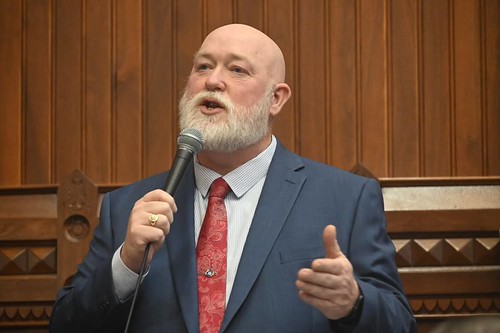
Rep. Billy Buckbee
Sponsored bills
Maddy summarySB 245 eliminates tax exemptions for new data center projects in the state by ending eligibility for tax breaks under Chapters 203 and 219 of the law. It directly affects data center owners, operators, or colocation tenants planning to establish new facilities after July 1, 2026. The bill repeals a provision allowing applications for tax exemptions, making such applications ineligible after the effective date. Existing agreements remain unaffected, as the change only prohibits new applications starting July 1, 2026. This is a procedural tax code adjustment with no new funding or programs.
Maddy summaryHB 5417 allows children of veterans to use their parent's unused tuition waivers at Connecticut State Community Colleges, expanding eligibility beyond the veterans themselves. It directly affects dependent children of veterans who served in wartime (as defined in state law) but never claimed the waiver. The bill requires the state to fund these waived tuition costs through the Connecticut State Community College Operating Fund, ensuring colleges receive state appropriations instead of absorbing the cost. This policy change removes the previous barrier where veterans had to personally claim the waiver before it could extend to their children.
Maddy summarySB 144 requires Connecticut's Siting Council to include local representation during reviews of proposed facilities like waste plants or utilities. For each project, the council must add four members appointed by the affected municipality (three local residents and one from a neighboring area) plus one additional local elector appointed by the municipality. These members serve as nonvoting participants to provide community perspective during siting decisions. The bill directly affects municipalities where new facilities are proposed, ensuring local voices are heard in the review process. It becomes effective October 1, 2026.
Maddy summaryHB 5363 allows tenants in set-aside housing developments to continue renting at affordable rates for up to three years after their income temporarily exceeds the development's income thresholds (60% or 80% of median income), provided the development does not use federal low-income housing tax credits. This applies specifically to existing tenants who initially qualified under the 30% set-aside requirement for affordable units. The bill modifies existing rules to prevent sudden rent increases for qualifying tenants who experience short-term income growth, without changing the initial income eligibility criteria for new applicants.
Maddy summaryHB 5410 creates a state program to provide free prefabricated housing to eligible veterans who are impoverished and homeless. It directly affects veterans meeting two criteria: income below the federal poverty line and having been without permanent housing for at least 90 days prior to application. The program will offer 500-square-foot structures with two bedrooms, a kitchen, and bathroom on VA property in Rocky Hill, administered jointly by Housing and Veterans Affairs Commissioners. Applications must be processed within 10 days, with approvals valid for one year and annual reporting required to the legislature starting in 2028.
Maddy summaryHB 5320 requires Connecticut's Commissioner of Economic and Community Development to study the feasibility of creating a Connecticut Bridge Authority, which would oversee funding and construction of a bridge connecting Connecticut to Long Island. The commissioner must complete this study and submit a report to relevant legislative committees by January 1, 2027. This bill does not establish the authority itself but mandates a formal assessment to inform future legislative decisions. The study directly affects the commissioner's office and the General Assembly committees overseeing commerce and transportation.
Maddy summaryHB 5309 requires healthcare providers to provide specific counseling to minors (under 18) seeking abortion services, including explaining pregnancy alternatives, birth control resources, and the option to involve parents. The bill mandates that providers give at least 48 hours' written notice to one parent or legal guardian before performing an abortion, unless the minor reports abuse by a parent/guardian - then notice may go to a sibling, stepparent, grandparent, or other adult over 21. Providers must document the counseling and notice process in a signed form kept with the minor's medical record. This law directly affects minors seeking abortion care in Connecticut and the healthcare providers who treat them.
Maddy summarySB 77 would create a personal income tax deduction of up to $60,000 for individuals paying full-time home health care costs. It directly affects residents who cover expenses like in-home medical services and medical supplies for themselves or a dependent. The bill amends tax law to allow these costs to reduce taxable income, lowering the amount of tax owed. This is a concrete policy change focused on reducing tax liability for specific health care expenses, without altering eligibility or benefit amounts.
Maddy summaryHB 5074 appropriates additional funds from the General Fund to the Department of Energy and Environmental Protection for farmland preservation during the 2026-2027 fiscal year. The bill directly affects farmland preservation programs by increasing available funding for land conservation efforts. Key provision: It allocates specific budget resources to support the state's existing farmland preservation initiatives. This is a funding measure, not a new policy, aimed at strengthening current conservation work without altering program rules.