

Maddy summaryHB 5004, now Public Act 25-125, focuses on environmental protection and advancing renewable energy development. The bill establishes new requirements for state agencies to prioritize renewable energy projects in infrastructure planning and creates tax incentives for businesses investing in clean energy infrastructure. It directly affects renewable energy developers, utility companies, and state agencies responsible for permitting and planning. The law became effective upon the governor's signature on July 1, 2025. (Note: Specific provisions like incentive amounts or project types are not detailed in the provided context.)
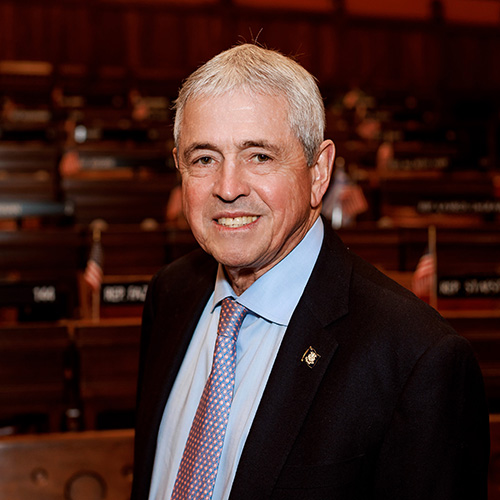
Rep. Hector Arzeno
Sponsored bills
Maddy summaryHB 7174 establishes a legislative working group to study how to strengthen protections for vegetated riparian buffers (vegetation along waterways) in Connecticut. The group, including representatives from environmental groups, homebuilders, farmers, municipalities, and water utilities, will review other states' approaches, assess current state programs, and examine legal implications by January 15, 2026. It will recommend specific changes to statutes or regulations to improve watercourse health while balancing private property rights and climate goals. This bill does not enact new protections but creates a process for future policy development.
Maddy summaryThis bill requires the Department of Developmental Services to file annual reports by January 15, 2026, detailing abuse and neglect investigations, including complaint numbers, substantiation rates, and actions taken. It also mandates quarterly spending reports starting September 30, 2025, tracking how funds for disability services are used and waiting lists for those services. Additionally, the bill creates two working groups: one to study Southbury Training School operations and another to examine an interagency case team for young adults with disabilities, both due to report by February 1, 2026. These provisions aim to improve transparency, accountability, and service planning for individuals with autism and intellectual disabilities.
Maddy summarySB 1, now Public Act 25-93 after being signed by the governor on June 23, 2025, increases state funding and resources for public schools, students, and special education programs. It directly affects school districts, educators, and students requiring specialized support by providing additional financial resources. The bill's key mechanism is allocating new state funds to expand support services, including hiring specialized staff and improving learning materials for students with disabilities. This legislation became law after passing both chambers and receiving gubernatorial approval.
Maddy summaryHB 5003 creates an online portal for parents and childcare providers to access real-time information about available childcare slots, including free or subsidized options, and to apply for subsidies. It requires the Office of Early Childhood to establish this portal by July 2028, with mobile and web access, and to manage payments for childcare subsidies through a new prospective payment system by July 2027. The bill also updates eligibility rules for childcare providers, requiring them to submit detailed information like provider identities, health data, and business structures to remain eligible for state reimbursement. Additionally, it mandates studies on childcare insurance costs and background check processing times, with reports due by 2026. This bill directly affects parents seeking childcare, licensed childcare providers, and state agencies administering subsidies.
Maddy summaryHB 5001, now Public Act 25-67, updates Connecticut's standards for special education services to improve quality and accessibility. It directly affects students with disabilities, their families, and school districts by establishing new requirements for service delivery and accountability. The bill includes specific provisions for individualized education program (IEP) reviews, staff training, and parent communication protocols. While the exact mechanisms aren't detailed in the provided context, the law mandates these structural changes to enhance support for students. As a substantive law, it replaces prior requirements for special education services across Connecticut public schools.
Maddy summaryHB 6883 protects the addresses of domestic violence and sexual assault victims living in shelters or transitional housing. It prohibits housing providers from disclosing these locations without the victim’s explicit consent. This law directly affects victims seeking safety and their housing providers, preventing abusers from locating them through address sharing. The key provision requires confidentiality around housing addresses to enhance victim safety. The bill became law after Governor’s signature on June 23, 2025.
Maddy summaryHB 5019 requires battery manufacturers to fund and manage the recycling of consumer batteries after they are discarded, shifting responsibility from taxpayers and local governments. It directly affects battery producers and retailers selling consumer batteries within the state. Key provisions mandate producers to establish collection systems, cover recycling costs, and meet specific recycling rate targets. The bill became law (Public Act 25-34) after the governor signed it on June 10, 2025.
Maddy summaryHB 7042 requires firearm manufacturers, distributors, and sellers (referred to as "firearm industry members") to implement "reasonable controls" to prevent sales to prohibited individuals, straw purchasers, or firearm traffickers. It prohibits knowingly directing marketing that promotes unlawful sales or risks to public safety and mandates compliance with state and federal firearm laws. Individuals harmed by violations, municipalities, or the state can sue for damages, injunctions, or penalties in superior court starting October 1, 2025. The bill does not change firearm permit requirements for ordinary gun owners but focuses on holding industry members accountable for unsafe practices.
Maddy summarySB 9 requires municipalities and state agencies to develop climate action plans focused on reducing emissions and adapting to climate impacts. It also bans the sale and use of neonicotinoid pesticides (harmful to bees) and second-generation anticoagulant rodenticides (toxic to wildlife) for public and private use. These provisions directly affect local governments, state agencies, and businesses selling or applying these pesticides. The law, now enacted as Public Act 25-33, mandates concrete policy changes in environmental planning and pesticide regulation.