

Maddy summaryHB 6232 authorizes municipalities to create rules governing tree cutting on all properties within their borders. This bill directly affects property owners (residential, commercial, and others) by requiring them to comply with local tree-cutting regulations. The key provision gives local governments the authority to establish oversight processes and potentially mandate tree replacement to maintain the urban tree canopy. The bill itself does not create specific rules but enables municipalities to develop their own standards for tree management.
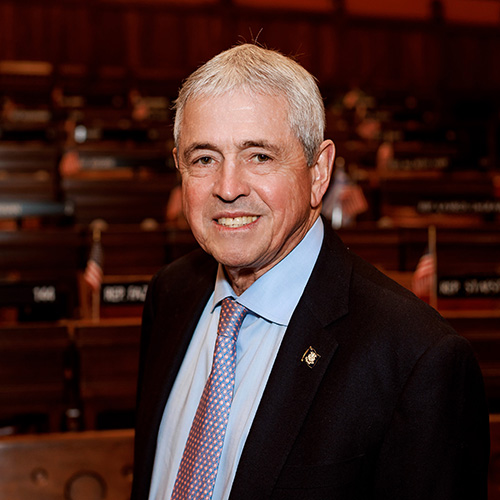
Rep. Hector Arzeno
Sponsored bills
Maddy summaryThis bill clarifies that local municipalities have the right to participate in decisions about authorized uses in areas managed by harbor commissions. It amends the Harbor Management Act to specifically state this participation right, ensuring municipalities can be involved in harbor-related planning and approvals. The change directly affects all cities and towns with harbor management commissions across the state. The bill does not create new policies but updates existing law to remove ambiguity about municipal involvement.
Maddy summaryHB 5852 amends Connecticut law to strengthen the local food for schools incentive program. It allows early childhood care programs to participate, provides administrative support including contracts for technical assistance and training, and allocates funds for two key initiatives: the CT Grown for CT Kids Grant Program (managed by the Department of Agriculture) and the program's administration (managed by the Department of Education). The bill specifically appropriates funds for fiscal year 2026 to support these efforts. This directly affects schools, early childhood programs, and Connecticut farmers participating in the state's farm-to-school initiatives.
Maddy summaryHB 5868 allows patriotic and civic organizations, such as Scouting America, to present to students, display materials, or distribute items in public schools. The bill directly affects public school students by expanding their exposure to these groups during school hours. Key provisions amend statutes to permit these organizations to engage with students without requiring prior administrative approval for each event. The bill focuses on providing structured opportunities for civic engagement, not altering school curricula or mandating participation.
Maddy summaryHB 5905 would make it illegal to buy, sell, or trade exotic animals and their body parts within the state. This law directly affects businesses and individuals currently involved in the commercial trade of exotic pets, wildlife products (like skins or bones), and related activities. The key provision is a new state statute that prohibits these transactions, replacing or adding to existing regulations. The bill’s stated purpose is to stop the trade of exotic animals and their parts, with no additional details provided on exceptions or enforcement mechanisms.
Maddy summaryHB 5052 increases the maximum assessed value of farm machinery that qualifies for property tax exemption under state law. This change directly affects farmers and agricultural businesses by expanding the range of machinery eligible for tax relief. The bill amends Section 12-91 of the general statutes to raise the current value threshold, allowing more equipment to be excluded from local property tax assessments. It does not alter other tax rules or create new administrative requirements.
Maddy summaryHB 5957 requires the Public Utilities Regulatory Authority to review the "Combined Public Benefits Charge" on electricity bills and assess whether a 96-hour standard for power restoration after outages imposes undue costs. It directly affects electricity ratepayers by creating a tax credit for those who paid the public benefits charge and prohibits municipal tax assessors from increasing property taxes on homes with solar panels. The bill promotes shared solar/battery projects, encourages smart meter adoption, and mandates more frequent reviews of storm damage costs for ratepayers. It also requires reinvestment of funds from nuclear power plant agreements into energy programs.
Maddy summarySB 886 prohibits the sale of lighter-than-air balloons (like helium balloons) unless they are biodegradable. The bill directly affects balloon sellers and manufacturers by requiring all such products sold to break down naturally in the environment. Key provisions ban non-biodegradable balloons and mandate that any sold must decompose without leaving persistent pollution. The stated purpose is to prevent environmental harm from balloons released into the air, which often become litter. This law changes the product standard for a common item to reduce ecological impact.
Maddy summaryHB 5845 appropriates state funds to reimburse school districts for the difference between federal reimbursement rates and the actual cost of providing reduced-price lunches and free breakfasts. It directly affects school districts participating in federal meal programs, covering costs for breakfasts served at no charge to all students and lunches at no charge to students eligible for reduced-price meals. The bill provides $____ from the General Fund for fiscal year 2026 to cover this cost gap, ensuring schools aren’t financially burdened by federal reimbursement shortfalls. This is a concrete policy change to maintain meal program access without altering eligibility rules.
Maddy summaryHB 5557 designates the fifteenth day of the Hindu lunar calendar's month of Kartik each year as "Diwali, the Festival of Lights" for official recognition. This procedural bill amends state statutes to formally acknowledge Diwali as an annual observance without creating new policies, funding, or obligations. It directly affects state records and official calendars by specifying the date for ceremonial recognition. The bill has no substantive impact on residents, businesses, or government operations beyond this symbolic designation.