

Maddy summaryHB 5028 removes the "Combined Public Benefits Charge" from electricity bills for residential and business customers of electric distribution companies. This bill directly affects all end-use electricity customers in the state by eliminating this specific fee from their monthly bills. The key mechanism shifts the funding source for these public benefits programs from customer bills to the state General Fund. The bill does not change existing public benefits programs but changes how their costs are paid. This is a direct billing change with no impact on program eligibility or service levels.
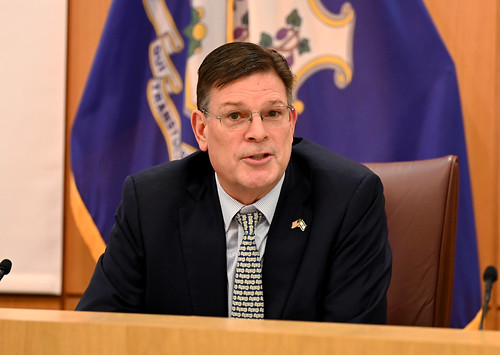
Rep. Tom O'Dea
Sponsored bills
Maddy summaryHB 5008 establishes a $2,080 tax credit per full-time equivalent employee for small businesses meeting the U.S. Small Business Administration's definition (typically businesses with fewer than 500 employees). This credit would directly reduce the state tax liability for qualifying small businesses, providing a concrete financial incentive tied to employee count. The bill amends state tax law to implement this credit, which applies to businesses that meet federal SBA criteria. This policy change specifically targets small business employment costs without altering broader tax structures.
Maddy summaryHB 5064 establishes a state grant program to fund agricultural preservation and improve farmland access. The program provides financial assistance to farmers and agricultural entities for projects that protect working farmland from development and help new or existing farmers access land. Key provisions include grant funding for conservation easements, farmland acquisition, and initiatives supporting beginning farmers. This law, now Public Act 25-141 after being signed by the governor on July 1, 2025, directly benefits agricultural landowners and operators seeking to preserve farmland or expand farming operations.
Maddy summaryHB 5015 authorizes employees of the Connecticut Agricultural Experiment Station to form spin-off companies based on their work. It directly affects researchers and staff at the station by allowing them to create new businesses using state-funded research or technology. The bill amends state law to permit this structure, enabling employees to commercialize innovations without requiring the station to sell or license the work directly. This law, now Public Act 25-10, took effect after the governor signed it on May 29, 2025.
Maddy summaryHB 5704 establishes a working group to study how to create a construction workforce pipeline program, focusing on training students and workers for skilled trades jobs. The group will examine expanding high school pre-apprenticeship programs, increasing career awareness, removing barriers to apprenticeships, and exploring financial incentives for employers. It will include representatives from trade associations, schools, business groups, and education officials, with the first report due by December 2025. The bill does not create the program itself but directs a study to inform future policy, with no fiscal impact on state or local budgets.
Maddy summaryHB 5574 requires state agencies to submit specific reports on progress toward implementing digitization recommendations from the 2021 CREATES project report, as well as on overtime usage and fingerprinting procedures. By February 1, 2026, the Office of Policy and Management must report on digitization efforts across seven state programs (including tax compliance, grants portals, and electronic health records), detailing staffing, funding, and savings. It also mandates annual reports on agency overtime practices and a one-time report from the Department of Emergency Services on fingerprinting for criminal checks, including processing times and reasons. The bill affects all state agencies by requiring them to document and share these operational details to the Government Oversight Committee. No new costs are expected, as agencies already have resources to fulfill these reporting requirements.
Maddy summaryHB 5544 imposes a registration fee on electric vehicles (EVs) and plug-in hybrid electric vehicles, and levies a per-kilowatt-hour tax on electricity sold at public EV charging stations. This bill directly affects EV owners through the new registration fee and charging station operators through the electricity tax. Revenue generated from both the fee and tax must be deposited into the Special Transportation Fund. The policy change shifts funding for transportation infrastructure to include EV-related fees, rather than relying solely on traditional fuel taxes.
Maddy summaryHB 5549 restores the tax credit rate against the affected business entity tax to 93.01 percent. This bill directly affects businesses that pay the affected business entity tax by increasing the credit they can claim. The key provision amends Chapter 228z of the general statutes to return the credit rate to its prior level. This is a procedural adjustment to correct a previous reduction, not a new policy change.
Maddy summaryHB 5546 exempts clothing for children ten years old and younger from the state's sales and use taxes. This policy change directly affects parents and caregivers who purchase clothing for young children, removing a tax burden on these essential items. The bill amends existing tax law (section 12-412 of the general statutes) to specifically exclude such clothing from taxable sales. The purpose, as stated in the bill, is to provide tax relief for families on necessary children's apparel.
Maddy summaryHB 5026 exempts the sale, storage, use, and consumption of aircraft weighing less than 6,000 pounds (maximum certificated takeoff weight) from state sales and use taxes. This change directly affects owners, buyers, and sellers of small aircraft, such as personal or small business planes. The bill amends existing tax law to create a uniform exemption for this category of aircraft, removing a tax burden previously applied to their purchase and use. It does not apply to larger aircraft or other taxable items.