

Maddy summaryThis bill requires state officials to conduct a study on whether to create official state-wide classifications for essential workers and first responders. The study will examine how such classifications would affect employee benefits and job requirements, develop clear definitions for these roles, and determine if specific groups like telecommunicators and public works employees should be included. The Department of Administrative Services will lead this research in consultation with emergency services and labor officials, with findings due by January 1, 2027. The bill does not change any current laws or create new benefits, but instead initiates a review process to inform potential future policy decisions.
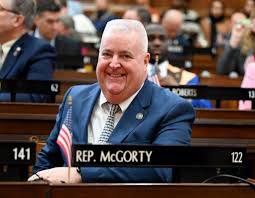
Rep. Ben McGorty
Sponsored bills
Maddy summaryThis bill allows Connecticut municipalities to waive or refund interest on delinquent property taxes owed by large common interest communities that are in court-ordered receivership. To qualify for this relief, a community must have more than 500 units and be under a Superior Court order placing it in receivership, with the decision to grant the waiver or refund made by a local legislative vote. The provision applies to both unpaid interest on overdue taxes and interest that has already been paid by the community. If enacted, municipalities would lose potential revenue or incur costs depending on whether they choose to abate future interest or refund past payments.
Maddy summarySB 373 would allow volunteer firefighters, volunteer fire police officers, and volunteer ambulance members in Connecticut to deduct stipends they receive for their service from their state personal income tax. The bill amends the state tax code to add these stipends as a deductible expense, effective January 1, 2027. This change directly affects individuals who serve on volunteer emergency response teams and receive monetary stipends for their work. The provision aligns with existing tax deductions for certain income types but specifically targets volunteer emergency service compensation. It does not change federal tax treatment of these stipends.
Maddy summaryHB 5399 redefines supervision requirements for dental assistants and establishes new standards for expanded function dental assistants in Connecticut. It requires expanded function dental assistants to pass national exams, complete accredited programs, maintain certification, display credentials, and carry $500,000 professional liability insurance. The bill allows dental assistants to take x-rays, impressions, and apply fluoride varnish under direct supervision, while expanded function assistants may place temporary restorations, apply sealants, and perform coronal polishing under direct or indirect supervision. These changes directly affect dental assistants, expanded function dental assistants, and dentists who supervise them, effective October 1, 2026.
Maddy summaryHB 5157 delays the requirement for retailers to join Connecticut's tire stewardship program until July 1, 2027. The bill amends Section 22a-905i of the general statutes to add a new subsection (s) that postpones the participation deadline. This directly affects tire retailers who would otherwise need to join the program sooner. The change provides a one-year extension from the original requirement date, giving retailers additional time to comply. The bill does not alter the program's structure or requirements, only the implementation timeline.
Maddy summaryThis bill creates a public reporting system for double utility poles, which are two poles located within six feet of each other due to incomplete replacement work. It requires the Commissioner of Energy and Environmental Protection to launch an online reporting platform by July 1, 2026, where any person can submit reports with location details and photographs. The commissioner will compile quarterly lists of these reports and share them with electric distribution companies, telephone companies, and municipal electric utilities starting October 31, 2027. The legislation defines specific utility pole types and establishes clear timelines for implementing the reporting infrastructure.
Maddy summarySB 371 requires children under 12 to wear a life jacket (defined per federal safety standards) while on any public dock, wharf, or pier in the state. The law takes effect October 1, 2026, and applies statewide, overriding local regulations. It directly affects parents or guardians of young children visiting public waterfront areas. The bill establishes a clear safety requirement without specifying enforcement details.
Maddy summaryHB 5046 modifies existing tuition waiver policies at Connecticut's community colleges and universities to specifically support public safety personnel. It waives tuition for current police officers (with 5+ years service) and firefighters (with 5+ years service), as well as for their dependents if the officer or firefighter was killed in the line of duty. The bill also expands waivers to include students enrolled in state fire school programs and police academy coordination courses. These changes apply to Connecticut State Community College and Connecticut State University System programs, effective July 1, 2026. The policy directly affects active and retired public safety workers and their families by reducing education costs.
Maddy summaryHB 5404 establishes a new job classification for part-time fire service instructors within the state's fire services department. The bill requires the Commissioner of Administrative Services, in consultation with the Commissioners of Emergency Services and the State Fire Administrator, to define this classification by October 1, 2026. This classification will set clear standards for the role, responsibilities, and compensation of part-time instructors who train firefighters. The change directly affects part-time fire service instructors and the state agencies that employ them.
Maddy summaryHB 5403 ensures health insurance coverage for survivors of certain public safety workers killed in the line of duty. It requires nonstate public employers to continue health coverage for survivors of unpaid volunteer firefighters, correction officers, or state marshals for one year (renewable annually up to five years) if coverage existed before death. If no coverage existed, employers must help survivors enroll in a partnership plan under the Comptroller’s program for up to five years. The bill specifically defines "unpaid volunteer firefighter" and expands eligibility under existing health insurance provisions for these workers’ survivors.