

Maddy summaryHB 5211 requires providers offering sales-based commercial financing (repayments tied to a business's sales/revenue) to disclose four specific details to recipients: the total financing amount, disbursement amount (excluding finance charges), finance charge, and an estimated annual percentage rate (APR) based on projected sales. This applies to financing under $250,000 not intended for personal use, directly affecting small businesses and the providers (like brokers or non-bank lenders) offering this financing. The APR must be calculated using either historical sales data or an opt-in method, with providers notifying the Banking Commissioner of their chosen method. Banks, credit unions, and certain large lenders are exempt from these requirements. The bill takes effect October 1, 2026.
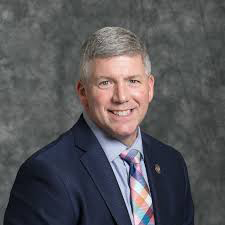
Rep. Pat Callahan
Sponsored bills
Maddy summaryHB 5045 streamlines approvals for new or expanded health care facilities by creating a new three-member panel within the Department of Public Health. This panel, chaired by the Public Health Commissioner, will make final decisions on all certificate of need applications starting January 1, 2027, replacing previous processes. The bill directly affects hospitals, outpatient surgical centers, mental health facilities, substance abuse treatment centers, and other entities requiring certificate of need reviews under state law. Key provisions include setting a fixed timeline for decisions (quarterly panel meetings) and defining "health care facility" to cover a broad range of services, effective October 1, 2026.
Maddy summaryThis bill strengthens Connecticut's Sewage Right-to-Know Act by requiring faster reporting and public notification of sewage spills and bypasses. It mandates that sewage treatment plant operators submit electronic reports to the Department of Energy and Environmental Protection within two hours of an incident, with details including location, volume, and public health concerns. The bill also requires operators to notify local officials and the public within two hours when a spill may impact people or waterways, and establishes a real-time alert system for residents to receive notifications via text or email. Additionally, the Department must publish annual summaries of sewage spills and enforcement actions on its website.
Maddy summarySB 146 allows livestock owners to seek state permits to take wildlife (like bears) that injure or kill their animals or damage crops, after proving they tried nonlethal protections first. The bill requires owners to document using methods like fencing or guard animals, and a state agency must verify the need before issuing permits. Permits specify how, when, and where wildlife can be taken, and only apply to property owners, their agents, or tenants with written permission. It explicitly excludes federally protected species and does not permit using deadly force against wildlife except in immediate danger to people or pets.
Maddy summaryHB 5131 would create a personal income tax deduction of up to $10,000 annually for taxpayers who pay principal and interest on postsecondary education loans. This deduction directly affects individuals with student loan debt who file state income taxes. The bill establishes this as a specific line-item deduction in the state tax code, reducing taxable income by the amount paid toward qualifying loans. It applies to both the principal and interest portions of the loan payments made during a taxable year. The policy change aims to provide tax relief for borrowers without specifying income thresholds or other eligibility conditions.
Maddy summaryHB 5916 requires solar developers to provide financial bonds for farmland restoration before projects are approved by the Siting Council. This applies to all solar projects on farmland, whether submitted as petitions or formal applications. The bonds ensure funds are available to restore the land to agricultural use after the solar project ends. The bill directly affects solar developers seeking approval for farmland-based projects in the state. It became law after the governor signed it on July 8, 2025.
Maddy summaryHB 5064 establishes a state grant program to fund agricultural preservation and improve farmland access. The program provides financial assistance to farmers and agricultural entities for projects that protect working farmland from development and help new or existing farmers access land. Key provisions include grant funding for conservation easements, farmland acquisition, and initiatives supporting beginning farmers. This law, now Public Act 25-141 after being signed by the governor on July 1, 2025, directly benefits agricultural landowners and operators seeking to preserve farmland or expand farming operations.
Maddy summaryHB 5019 requires battery manufacturers to fund and manage the recycling of consumer batteries after they are discarded, shifting responsibility from taxpayers and local governments. It directly affects battery producers and retailers selling consumer batteries within the state. Key provisions mandate producers to establish collection systems, cover recycling costs, and meet specific recycling rate targets. The bill became law (Public Act 25-34) after the governor signed it on June 10, 2025.
Maddy summaryHB 5822 appropriates $1.375 million from the General Fund to the Department of Education for fiscal year 2026, providing a grant-in-aid specifically for the Danbury Charter School's operating costs. The bill directly affects Danbury Charter School, which received state approval in October 2018, by funding its day-to-day operations. This funding aims to support the school's role in expanding educational options for families and students in Danbury, as stated in the bill's purpose. The provision is a direct financial allocation with no additional policy changes beyond the funding amount and recipient.
Maddy summaryThis bill authorizes law enforcement officers from Rhode Island, Massachusetts, and New York to arrest individuals for boating or fishing violations that occur on the waters bordering these states. It allows officers from any of the three states to make arrests in the bordering waters and transfer the arrested person to the state where the violation took place for prosecution. The law specifically applies to interior bodies of fresh water located between Rhode Island and its neighboring states.