

Maddy summaryThis bill, HB 5058, adopts the Nurse Licensure Compact into Connecticut law to allow nurses to hold a single license that permits them to practice in any other state that has also joined the agreement. Starting in October 2025, the state will issue multistate licenses to qualified nurses, eliminating the need to apply for separate permits in each neighboring jurisdiction. The agreement establishes a system where nurses must meet uniform standards and allows state boards to share information about disciplinary actions or investigations to protect public safety. While the bill simplifies the process for nurses to work across state lines, it also ensures that any violations of nursing laws in one participating state can be enforced by the boards in all other member states.
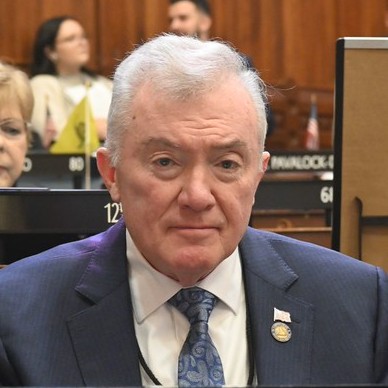
Rep. Marty Foncello
Sponsored bills
Maddy summaryThis bill makes minor updates to Connecticut's agriculture and animal control laws, primarily affecting pet owners, kennel operators, and animal pounds. It clarifies legal definitions for terms like "animal," "commercial kennel," and "pet shop" while removing references to exotic species such as monkeys and reptiles from the official list of regulated animals. The legislation also adjusts penalties for violating animal regulations and modifies requirements for equine health certificates and Coggins tests at public auctions. Additionally, it streamlines the process for animal pounds to sell unspayed or unneutered dogs and cats by requiring a $45 fee that funds sterilization vouchers for the adopters.
Maddy summaryThis bill updates Connecticut laws to regulate who can sell hypodermic needles and syringes and how pharmaceutical companies must register their sales representatives. It expands the list of individuals and organizations authorized to purchase needles to include additional medical professionals and specific institutions while maintaining restrictions on sales to the general public. The legislation also requires pharmaceutical marketing firms to annually register with the Department of Consumer Protection and submit updated lists of their employed representatives, with the department making these lists publicly available online. Additionally, the bill clarifies definitions for key terms such as pharmaceutical manufacturers and representatives to ensure consistent enforcement of these regulations.
Maddy summaryThis bill requires state agencies to create a streamlined process that helps children enrolled in the HUSKY A health program easily access other nutrition benefits like WIC and SNAP. Starting in January 2025, the Departments of Public Health, Social Services, and Agriculture must work together to simplify enrollment, provide clear fact sheets, and make application forms available online and by phone. The legislation also directs these departments to coordinate specifically for children over six who are transitioning from the WIC program to SNAP, while prohibiting the governor from reducing funding for these specific nutrition programs.
Maddy summaryThis bill updates regulations for beer manufacturers and package stores in Connecticut to expand how they can sell and serve alcohol. For beer makers, it allows them to sell bottled beer for off-premises consumption and permits the retail sale and self-delivery of kegs, provided specific rules about pricing and location are followed. It also clarifies what counts as a collaborative brew and enables beer producers to offer free tastings at nonprofit farmers' markets. Package stores gain the ability to host fee-based wine education classes and conduct limited spirit tastings for a small charge, while still being restricted from selling non-alcohol items like snacks or groceries. These changes take effect on July 1, 2024, and are designed to modernize the legal framework for these businesses without altering the core requirement that package stores focus primarily on selling alcohol.
Maddy summaryThis bill requires the Department of Children and Families to conduct in-person home visits when a safety plan identifies a parent or guardian with a substance use disorder. The law defines a safety plan as a document outlining specific actions to address unsafe conditions and assigns responsibility for those actions to particular individuals or providers. Effective July 1, 2024, this provision ensures that evaluations for homes with substance use issues are performed physically rather than remotely. The measure applies specifically to cases where the department has already established a plan to mitigate risks within the household.
Maddy summaryThis bill makes technical updates to Connecticut housing laws by clarifying the composition of the housing roundtable group, expanding the roles of legislative leaders and specific experts. It also directs the Department of Veterans Affairs to convert or renovate available properties to house veterans who are homeless or at risk of losing their housing. Additionally, the legislation strengthens privacy protections for eviction records by restricting their use for commercial screening purposes and ensuring they are removed from public websites after a set period. Finally, it adjusts the rules for when unpaid housing penalties automatically become a lien on a property owner's real estate.
Maddy summaryThis bill establishes a new program called CHESS to help people with complex health needs who are experiencing or at risk of homelessness. It requires state officials to create a strategic plan that simplifies how agencies work together to get benefits quickly and explores ways to secure additional funding for housing and health support. The legislation also mandates that a progress report be submitted to the state legislature by October 1, 2024, detailing how the program is improving health and housing stability for participants.
Maddy summaryThis bill expands eligibility for financial assistance from the Military Relief Fund to help service members and their immediate family members. It allows the Military Department to provide grants for essential personal or household goods and services when paying for them would cause a hardship due to military service, a serious injury or illness, or the death of the member or family member. The assistance is limited to a maximum of five thousand dollars or the total amount available in the fund, whichever is less. These changes are set to take effect on July 1, 2024.
Maddy summaryThis bill directs the Commissioner of Economic and Community Development to conduct a study on the state's "blue economy" and methods to boost economic activity along the coastline and waterways. The commissioner must complete this research and submit a report to the commerce committee no later than January 1, 2025. The legislation does not authorize funding or create new programs but instead mandates an analysis to inform future policy decisions.