Issue · Healthcare

Healthcare

Every healthcare bill, vote, and legislator stance in Connecticut, automatically classified by Maddy, our AI policy reader.

Total bills
161
2026 Regular Session
Top supporter
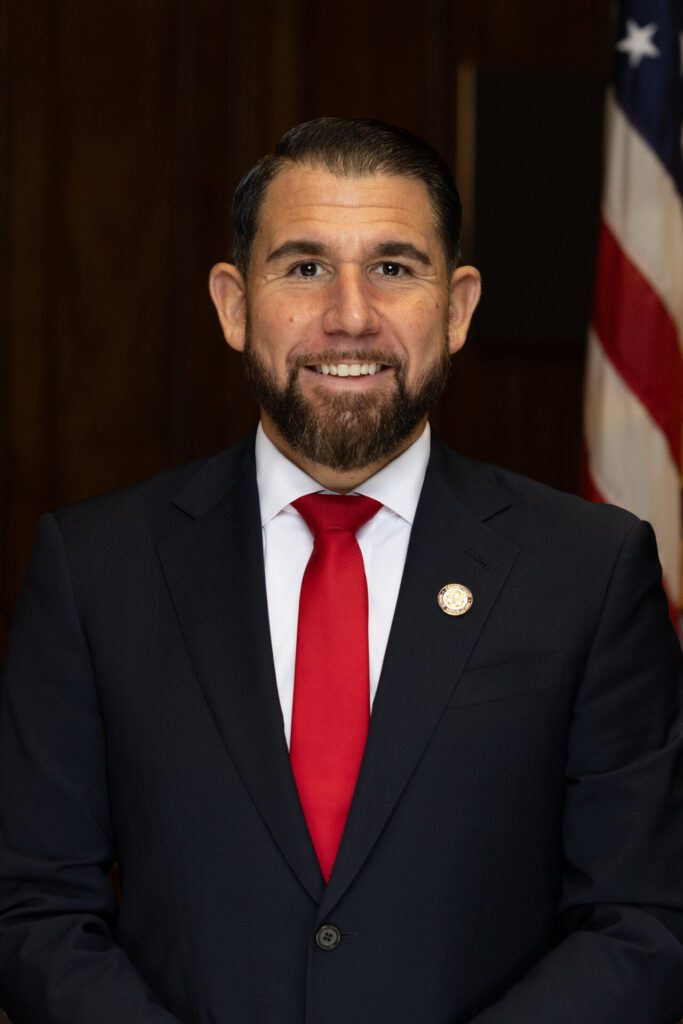
Jason Perillo
89% support rate
Top opponent
Donna Veach
14% support rate
Ranked legislators
10
5 support · 5 oppose
Key legislators

Who's moving healthcare in Connecticut

Legislators moving healthcare in Connecticut
Legislator Party Stance Support rate Votes
Jason Perillo
Jason Perillo Senate · District 21
R
Strong +
89% 48
Heather Somers
Heather Somers Senate · District 18
R
Strong +
84% 48
Jeff Gordon
Jeff Gordon Senate · District 35
R
Strong +
84% 47
Paul Cicarella
Paul Cicarella Senate · District 34
R
Strong +
84% 48
John Kissel
John Kissel Senate · District 7
R
Strong +
84% 47
Donna Veach
Donna Veach House · District 30
R
Strong −
14% 30
Karen Reddington-Hughes
Karen Reddington-Hughes House · District 66
R
Strong −
14% 30
John Fonfara
John Fonfara Senate · District 1
D
Strong −
17% 47
Matt Lesser
Matt Lesser Senate · District 9
D
Oppose
21% 48
Saud Anwar
Saud Anwar Senate · District 3
D
Oppose
21% 48
Showing 111–120 of 161 bills

All healthcare bills

in committee · Connecticut · Senate Feb 4, 2026

SB 37: AN ACT ELIMINATING THE APPLICATION FEE FOR HEALTH CARE PROFESSIONALS SEEKING LICENSURE BY THE DEPARTMENT OF PUBLIC HEALTH AND CAPPING THE LICENSURE FEE FOR SUCH PROFESSIONALS AT TWO HUNDRED DOLLARS.

SB 37 eliminates the application fee for health care professionals (such as doctors, nurses, and allied health workers) seeking licensure through the Department of Public Health and caps the total licensure fee at $200. This directly affects individuals applying for or renewing their state licenses to practice in health care roles. The bill removes the current application fee and ensures no professional pays more than $200 for the full licensure process. The change lowers upfront costs for health care professionals entering or maintaining their practice in the state.
Sub-Topics Medical Licensing Public Health Tags Licensing
in committee · Connecticut · Senate Apr 8, 2026

SB 193: AN ACT ESTABLISHING LICENSURE FOR LONG-TERM ACUTE CARE HOSPITALS.

SB 193 establishes a licensing requirement for long-term acute care hospitals in the state. This bill directly affects facilities that provide extended, intensive medical care for patients with complex, chronic conditions requiring hospital-level treatment beyond typical acute care stays. The legislation repeals an existing section of law and creates a new licensing framework, requiring these hospitals to obtain and maintain a state license to operate. The bill defines "long-term acute care hospital" as a specific type of facility within broader healthcare definitions but does not detail the specific licensing standards or requirements.
in committee · Connecticut · Senate Feb 20, 2026

SB 281: AN ACT ESTABLISHING A TASK FORCE TO STUDY MEANS OF ENCOURAGING MORE NURSING HOMES IN THE STATE TO CONTRACT WITH THE UNITED STATES DEPARTMENT OF VETERANS AFFAIRS.

SB 281 establishes a task force to study ways to encourage nursing homes in the state to contract with the U.S. Department of Veterans Affairs (VA) for veteran care. The task force, composed of legislative leaders and the Veterans Affairs Commissioner, will examine financial incentives like reimbursement supplements and tax credits to make VA contracting more attractive for nursing homes. Its goal is to increase access to VA-covered nursing home care for veterans who need it, focusing specifically on facilities meeting VA requirements. The task force must submit findings and recommendations to the legislature by January 1, 2027.
in committee · Connecticut · House Feb 27, 2026

HB 5345: AN ACT CONCERNING STATE CONTRACTING FOR STATE EMPLOYEE HEALTH INSURANCE COVERAGE AND OTHER RELATED SERVICES.

HB 5345 requires health insurance companies managing Connecticut's state employee health plans to provide advance written notices to the Comptroller, legislative leaders, and health cost oversight committee about potential termination of agreements with hospitals or healthcare providers. It mandates 90-, 60-, and 30-day written notices before provider agreement expirations and immediate notification of new or extended agreements. The bill also prohibits insurers that terminate provider agreements from bidding on future state health insurance contracts for up to five years, unless the parties agree to renew within 30 days. This directly affects third-party administrators (insurers/health carriers) and their network hospitals or healthcare providers. The law takes effect July 1, 2026, aiming to improve transparency and continuity in state employee health coverage.
Sub-Topics Insurance
in committee · Connecticut · Senate Mar 19, 2026

SB 287: AN ACT REQUIRING HOME HEALTH AIDE AGENCIES TO PROVIDE CERTAIN PERSONAL PROTECTIVE EQUIPMENT TO HOME HEALTH AIDES.

SB 287 requires home health aide agencies to provide free personal protective equipment (PPE) to their home health aide employees. The bill directly affects home health aide employees (both staff and contracted workers) who provide in-home care services. Agencies must supply necessary PPE like gloves, N95 masks, gowns, and hand sanitizers to ensure safe client interactions. The law takes effect on October 1, 2026, mandating this provision without additional costs to workers.
Sub-Topics Long-Term Care
in committee · Connecticut · Senate Apr 14, 2026

SB 238: AN ACT CONCERNING EMERGENCY MEDICAL SERVICES RESPONSE TIME TRANSPARENCY.

SB 238 requires Connecticut's Commissioner of Public Health to create a public online dashboard tracking emergency medical services (EMS) response times. The dashboard will display data broken down by location, call type (like heart attacks or injuries), and time of day, while protecting patient privacy. This data will be used to help direct federal grant funding toward communities needing the most improvement in EMS response times. The law affects EMS providers (who must report data), the public (who can access the transparency tool), and state agencies (which will use the data for grant applications). It takes effect on October 1, 2026.
Sub-Topics Mental Health Public Health Tags Public Safety
in committee · Connecticut · Senate Feb 17, 2026

SB 212: AN ACT ESTABLISHING A TAX CREDIT FOR PREMIUM PAYMENTS FOR CERTAIN LONG-TERM CARE INSURANCE POLICIES.

SB 212 creates a tax credit for individuals and groups purchasing long-term care insurance policies. It credits policyholders for any annual premium increase exceeding 2% of their total premium cost, allowing them to offset future tax liability with unused credits. This directly affects long-term care insurance buyers by reducing their out-of-pocket costs when premiums rise significantly. The credit is calculated annually and can be carried forward to offset taxes in subsequent years.
failed · Connecticut · House Apr 13, 2026

HB 5378: AN ACT CONCERNING SELF-FUNDED MULTIPLE EMPLOYER WELFARE ARRANGEMENTS AND REQUIRING A STUDY OF THE FEASIBILITY OF ESTABLISHING THE CONNECTICUT OPTION PROGRAM.

HB 5378 requires a study to determine if Connecticut can establish a state-run health insurance program (the "Connecticut Option Program") that would allow multiple employers to pool health coverage. The bill also updates definitions related to self-funded health plans shared by multiple employers (known as multiple employer welfare arrangements, or MEWAs) and other insurance terms. It does not create new programs but mandates a feasibility study by the state's insurance department. The study will examine whether such a program could provide affordable coverage options for employers and employees. This bill directly affects employers using self-funded health plans and future participants in the Connecticut Option Program, if established.
Sub-Topics Insurance
in committee · Connecticut · Senate Feb 17, 2026

SB 213: AN ACT CONCERNING FUNDING FOR THE 9-8-8 SUICIDE PREVENTION AND MENTAL HEALTH CRISIS LIFELINE AND THE 2-1-1 INFOLINE PROGRAM.

SB 213 would require a $0.25 monthly fee on residents' telecommunication and cellular service bills to fund two specific programs. The revenue would be split: 50% deposited into the 9-8-8 Suicide Prevention and Mental Health Crisis Lifeline Fund, and 50% used to administer Connecticut's 2-1-1 Infoline program operated by United Way. This creates a dedicated, ongoing funding source for these crisis support services instead of relying on annual state appropriations. The bill directly affects all Connecticut residents who pay for landline or mobile phone service.
Sub-Topics Mental Health
in committee · Connecticut · Senate Feb 10, 2026

SB 115: AN ACT EXEMPTING COVID-19 AT-HOME TEST KITS FROM THE SALES AND USE TAXES.

This bill exempts the purchase of COVID-19 at-home test kits from state sales and use taxes. It directly affects consumers who buy these kits for personal use, removing the tax burden on these specific products. The key provision amends tax law to exclude these kits from taxable sales, meaning buyers pay no state tax when purchasing them. The exemption applies to both the sale and any subsequent use or consumption of the kits within the state.
Showing 111 to 120 of 161 bills
Previous 1 11 12 13 17 Next