Issue · Budget & Taxes

Budget & Taxes (Sales Tax)

Every budget & taxes bill, vote, and legislator stance in Connecticut, automatically classified by Maddy, our AI policy reader.

Total bills
66
2026 Regular Session
Top supporter
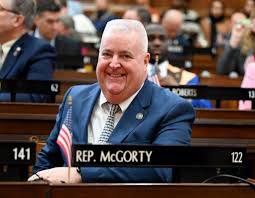
Ben McGorty
100% support rate
Top opponent
Aimee Berger-Girvalo
33% support rate
Ranked legislators
10
5 support · 5 oppose
Key legislators

Who's moving sales tax in Connecticut

Legislators moving sales tax in Connecticut
Legislator Party Stance Support rate Votes
Ben McGorty
Ben McGorty House · District 122
R
Strong +
100% 3
Bill Pizzuto
Bill Pizzuto House · District 71
R
Strong +
100% 3
Billy Buckbee
Billy Buckbee House · District 67
R
Strong +
100% 3
Brian Lanoue
Brian Lanoue House · District 45
R
Strong +
100% 3
Carol Hall
Carol Hall House · District 59
R
Strong +
100% 3
Aimee Berger-Girvalo
Aimee Berger-Girvalo House · District 111
D
Oppose
33% 3
Al Paolillo
Al Paolillo House · District 97
D
Oppose
33% 3
Amy Morrin Bello
Amy Morrin Bello House · District 28
D
Oppose
33% 3
Andre Baker
Andre Baker House · District 124
D
Oppose
33% 3
Anne Hughes
Anne Hughes House · District 135
D
Oppose
33% 3
Showing 51–60 of 66 bills

All budget & taxes bills

in committee · Connecticut · Senate Feb 17, 2026

SB 205: AN ACT DEDICATING A PORTION OF THE REVENUE GENERATED FROM SALES AND USE TAXES IMPOSED ON MEALS SOLD BY AN EATING ESTABLISHMENT, CATERER OR GROCERY STORE TO THE TOURISM FUND.

SB 205 requires that a portion of revenue from an additional 1% sales tax on meals sold by restaurants, caterers, and grocery stores be deposited into the state's Tourism Fund. This fund, established under existing law, will finance tourism promotion, hospitality services, arts, cultural programs, and related marketing initiatives. The bill does not alter the tax rate but redirects specific tax revenue streams toward tourism development. It directly affects how the state allocates revenue collected from the food service industry.
Sub-Topics Revenue Sales Tax
in committee · Connecticut · House Apr 20, 2026

HB 5109: AN ACT REPLACING THE CANNABIS TOTAL THC TAX WITH AN EXCISE TAX.

HB 5109 replaces Connecticut's existing cannabis tax (based on milligrams of THC per product) with a 10.75% tax on the gross sales revenue of all cannabis products. This affects cannabis retailers, hybrid retailers, and micro-cultivators, who must collect the tax from consumers at point of sale. Excluded from the tax are sales for palliative use, business-to-business transfers, and delivery services. The new tax takes effect October 1, 2026, and replaces the previous THC-milligram-based rates for plant material, edibles, and other cannabis products.
Sub-Topics Sales Tax
in committee · Connecticut · Senate Feb 4, 2026

SB 55: AN ACT DEDICATING THE ADDITIONAL SALES TAX ON MEALS TO CERTAIN PURPOSES.

SB 55 dedicates revenue from an additional 1% sales tax on meals to three specific purposes: 50% to the Tourism Fund, 25% to the municipalities where meals were purchased, and 25% to fund free school lunches. The bill directly affects local governments (through municipal payments), tourism agencies (via the Tourism Fund), and public schools (through school lunch funding). It creates a new, mandatory allocation of this tax revenue stream without changing the tax rate or creating new taxes. The bill focuses on directing existing revenue from a current tax to defined public services.
in committee · Connecticut · House Feb 9, 2026

HB 5089: AN ACT EXEMPTING OVERTIME WAGES, TIPS OR GRATUITIES AND SOCIAL SECURITY BENEFITS FROM THE PERSONAL INCOME TAX.

HB 5089 would exempt overtime wages, tips or gratuities, and Social Security benefits from the state's personal income tax. This directly affects workers who earn overtime pay, receive tips (like in restaurants), or rely on Social Security benefits as part of their income. The bill's key mechanism is amending tax law to remove these specific income sources from taxable personal income. It does not change tax rates for other income types, focusing solely on these exemptions.
in committee · Connecticut · Senate Feb 6, 2026

SB 96: AN ACT ESTABLISHING TAX CREDITS FOR GROCERY STORES BUILT IN LOW-INCOME AREAS.

This bill establishes tax credits for developers building new grocery stores in designated low-income areas with limited grocery access. It directly affects grocery store developers planning to construct in these underserved neighborhoods. The key provision offers financial incentives through tax credits to encourage new store development. The policy aims to improve grocery access in communities currently lacking sufficient retail food options.
Sub-Topics Sales Tax Tax Credits Tax Incentives Tags Economic Development
in committee · Connecticut · Senate Feb 20, 2026

SB 102: AN ACT CONCERNING THE DISTRIBUTION OF THE SALES AND USE TAXES IMPOSED ON MEALS SOLD BY AN EATING ESTABLISHMENT, CATERER OR GROCERY STORE.

SB 102 redirects an additional 1% sales tax on meals sold by restaurants, caterers, and grocery stores to the specific municipalities where the sales occur. The bill requires that this tax revenue, collected from food purchases at these businesses, be distributed directly to the local governments (cities or towns) where the transactions happened. This changes how the tax revenue is allocated, shifting it from a state-level pool to the communities generating the income. The policy directly affects eateries, caterers, grocery stores, and the municipalities receiving the redistributed funds.
Sub-Topics Revenue Sales Tax
in committee · Connecticut · Senate Feb 4, 2026

SB 39: AN ACT REQUIRING THE INDEXING OF INCOME THRESHOLDS FOR THE PERSONAL INCOME TAX.

SB 39 requires that the income thresholds for the state's personal income tax be automatically adjusted each year based on changes in the consumer price index (CPI). This means tax brackets will rise with inflation, preventing taxpayers from moving into higher tax brackets simply because their income hasn't kept pace with rising costs. The bill directly affects all individuals and households subject to the state's personal income tax by ensuring their tax liability doesn't increase due to inflation alone. The key mechanism is linking threshold adjustments directly to the CPI, creating a permanent, automatic update process without requiring new legislation each year.
in committee · Connecticut · House Feb 10, 2026

HB 5138: AN ACT CONCERNING THE SALES AND USE TAXES IMPOSED ON MEALS SOLD BY AN EATING ESTABLISHMENT, CATERER OR GROCERY STORE LOCATED IN CERTAIN MUNICIPALITIES.

HB 5138 would remove an additional 1% sales tax on meals sold by restaurants, caterers, and grocery stores located in municipalities with populations exceeding 100,000 residents. This change directly affects businesses operating in large cities, such as Hartford, Bridgeport, or New Haven. The bill modifies existing tax law to eliminate this specific tax increment for eligible establishments, simplifying their tax obligations in those areas. The policy change applies only to meals sold at these locations within qualifying municipalities.
Sub-Topics Sales Tax
in committee · Connecticut · House Feb 10, 2026

HB 5106: AN ACT EXEMPTING HOSPITAL BEDS FOR HOME HEALTH CARE USE FROM THE SALES AND USE TAXES.

HB 5106 exempts hospital beds used for home health care from the state's sales and use taxes. This directly affects home health care providers and suppliers who purchase these beds for patient use in private residences. The bill amends tax law to remove the tax burden on the sale, storage, use, or consumption of such beds within the state. It does not change existing tax rules for hospital beds used in medical facilities. The policy change is limited to tax treatment, with no additional funding or service requirements.
Sub-Topics Sales Tax Hospitals
in committee · Connecticut · Senate Feb 11, 2026

SB 186: AN ACT ESTABLISHING A REFUNDABLE CREDIT AGAINST THE PERSONAL INCOME TAX FOR VOLUNTEER FIRST RESPONDERS.

SB 186 establishes a $2,000 refundable credit against personal income tax for volunteer firefighters, emergency medical technicians (EMTs), paramedics, and civil preparedness staff. This credit directly benefits these unpaid volunteers by reducing their tax liability, and if the credit exceeds their tax owed, they receive the difference as a cash refund. The bill amends the state tax code to create this refundable credit, providing financial recognition for their service without requiring them to pay additional taxes. It does not alter existing tax rates or apply to paid first responders.
Sub-Topics Income Tax Sales Tax Tax Credits Tags Public Safety
Showing 51 to 60 of 66 bills
Previous 1 5 6 7 Next