

Issue · Budget & Taxes
Budget & Taxes
Every budget & taxes bill, vote, and legislator stance in Connecticut, automatically classified by Maddy, our AI policy reader.
Total bills
366
2026 Regular Session
Top supporter
Eilish Collins Main
80% support rate
Top opponent
Cara Pavalock-D'Amato
30% support rate
Ranked legislators
10
5 support · 5 oppose
Key legislators
Who's moving budget & taxes in Connecticut
| Legislator | Party | Stance | Support rate | Votes |
|---|---|---|---|---|

Eilish Collins Main
House · District 146
|
D |
Strong +
|
80% | 21 |

Jonathan Steinberg
House · District 136
|
D |
Strong +
|
80% | 25 |

Maryam Khan
House · District 5
|
D |
Support
|
75% | 27 |

Fred Gee
House · District 126
|
D |
Support
|
73% | 26 |

Raghib Allie-Brennan
House · District 2
|
D |
Support
|
73% | 26 |

Cara Pavalock-D'Amato
House · District 77
|
R |
Oppose
|
30% | 25 |

Anne Dauphinais
House · District 44
|
R |
Oppose
|
31% | 28 |

Donna Veach
House · District 30
|
R |
Oppose
|
31% | 28 |
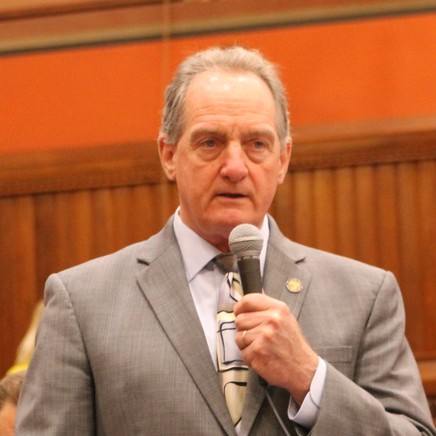
John Piscopo
House · District 76
|
R |
Oppose
|
31% | 28 |

Mark DeCaprio
House · District 48
|
R |
Oppose
|
31% | 28 |
Showing 221–230 of 366
bills
All budget & taxes bills
HB 5129: AN ACT ESTABLISHING A SURCHARGE ON HIGH-VALUE RECREATIONAL VESSELS AND CONCERNING THE USE OF THE REVENUE GENERATED.
SB 3: AN ACT CONCERNING HEALTH CARE AFFORDABILITY.
Topics
✓ Budget & TaxesSupports Budget & TaxesMandates state appropriation from General Fund to cover health care premiums, increasing public spending on essential services for moderate-income residents.
✓ HealthcareSupports HealthcareFunds premium coverage for moderate-income Access Health CT enrollees, preventing out-of-pocket cost increases and protecting access to health insurance.
SB 40: AN ACT ESTABLISHING A TAX CREDIT FOR EDUCATIONAL ACCESS AND OPPORTUNITY SCHOLARSHIPS.
Topics
✓ Budget & TaxesSupports Budget & TaxesCreates tax credit providing tax relief to donors, incentivizing private funding for education scholarships, directly addressing tax policy and fiscal management.
✓ EducationSupports EducationBill creates tax incentives for donations to scholarship programs, directly expanding educational access and opportunity through private funding mechanisms.
SB 114: AN ACT ELIMINATING THE QUALIFYING INCOME THRESHOLDS FOR THE PERSONAL INCOME TAX DEDUCTIONS FOR SOCIAL SECURITY BENEFITS.
Topics
✓ Budget & TaxesSupports Budget & TaxesEliminates income limits for Social Security tax deduction, providing tax relief to more recipients by expanding eligibility.
✓ VeteransSupports VeteransRemoves income limits on Social Security tax deductions, directly benefiting veterans who receive Social Security benefits as a primary income source.
Sub-Topics
Income Tax
SB 211: AN ACT APPROPRIATING FUNDS TO INVESTIGATE AND ENFORCE CONDUCT RELATING TO HEALTH INSURANCE PRACTICES.
Topics
✓ Budget & TaxesSupports Budget & TaxesAppropriates $5M from General Fund to enforce health insurance regulations, increasing state budget allocation for consumer protection and healthcare access oversight.
✓ HealthcareSupports HealthcareFunds $5M to investigate health insurers impacting access/costs, advancing consumer protections and enforcement against harmful practices.
HB 5103: AN ACT INCREASING THE AMOUNT OF THE PERSONAL INCOME TAX DEDUCTION FOR CONTRIBUTIONS TO 529 QUALIFIED STATE TUITION PROGRAMS.
Topics
✓ Budget & TaxesSupports Budget & TaxesIncreases tax deduction for 529 contributions, providing direct tax relief to individual taxpayers saving for education.
✓ EducationSupports EducationIncreases tax deduction for 529 college savings, enhancing higher education access and affordability through direct financial incentive to families.
HB 5298: AN ACT ESTABLISHING A GRANT PROGRAM FOR CAPITAL EXPENDITURE PROJECTS TO PLACE OR MAINTAIN WAR OR VETERANS' MEMORIALS OR MONUMENTS.
Topics
✓ Budget & TaxesSupports Budget & TaxesBill allocates state bond funds for veterans' capital projects, increasing government spending on public services (veterans' programs). Directly supports budget & taxes through new appropriations.
✓ VeteransSupports VeteransEstablishes grant program funding home repairs for vulnerable veterans and memorial maintenance, directly advancing veterans' services through state-funded capital projects.
SB 62: AN ACT AUTHORIZING BONDS OF THE STATE FOR THE ENHANCEMENT AND EXTENSION OF HIGH-SPEED BROADBAND INTERNET ACCESS IN RURAL COMMUNITIES.
Topics
✓ Budget & TaxesSupports Budget & TaxesAuthorizes state bond issuance to fund rural broadband infrastructure, constituting government spending for public service expansion under budget appropriations.
✓ TechnologySupports TechnologyAuthorizes state bonds to fund rural broadband expansion, directly advancing internet access in underserved areas per bill summary.