

Maddy summaryThis bill extends the expiration date for cybersecurity information sharing authorities under the 2015 law from September 30, 2025, to September 30, 2035. It directly affects organizations and government entities that share cybersecurity threat information under the existing framework. The key provision amends Section 111(a) of the Cybersecurity Information Sharing Act of 2015 to update the deadline, with retroactive effect starting October 1, 2025. The bill also updates the law's title to "Protecting America from Cyber Threats Act" for consistency.
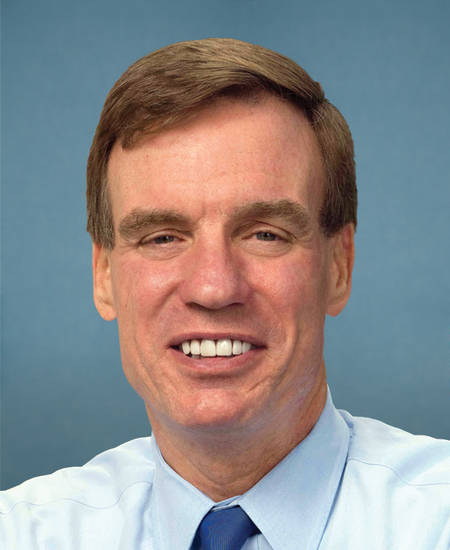
Sen. Mark R. Warner
Sponsored bills
Maddy summaryThis bill provides temporary relief to federal workers during government shutdowns by pausing specific civil obligations. It directly affects federal employees (including contractor employees) who are furloughed or working without pay, suspending actions like evictions, mortgage foreclosures, student loan collections, tax payments, and insurance lapses during the shutdown and for 30 days afterward. Key mechanisms include court-ordered stays for rent, mortgages, and loans; automatic student loan deferment; tax payment deferrals; and protection against insurance policy termination due to unpaid premiums. The relief applies only to civil matters (not criminal cases or child support) and requires court involvement for certain actions.
Maddy summaryS 2977, the FAST Justice Act, creates a 120-day timeline for the Merit Systems Protection Board (MSPB) to act on federal employee appeals. If the MSPB fails to take action within 120 days (excluding certain cases), affected federal employees or job applicants can file a civil lawsuit in federal court. The bill specifies where these lawsuits may be filed - based on where the personnel action occurred, where the employee would have worked, or the agency's main office - and ensures courts use the standard review applicable to MSPB decisions. This procedural change directly affects federal workers whose appeals are stalled at the MSPB, aiming to expedite resolution of personnel disputes.
Maddy summaryThis bill allows federal contractors, their employees, and certain federal grant recipients or District of Columbia government workers affected by government shutdowns to withdraw up to $30,000 (adjusted for inflation) from retirement plans without the usual 10% early withdrawal penalty. Withdrawals must be repaid within three years to avoid tax consequences, and the withdrawn amount is spread over three years for tax purposes. It specifically applies during periods of federal appropriations lapses (at least two weeks) when workers face unpaid leave or reduced pay. The bill modifies tax rules to treat these distributions as eligible for penalty-free access under defined circumstances.
Maddy summaryThis bill requires federal agencies to adjust contract prices for contractors affected by government funding lapses (like shutdowns), ensuring contractors can cover costs for employees who were furloughed, laid off, or had reduced hours. It mandates that contractors receive reimbursement for paying employees at their standard rate during the lapse or restoring paid leave used instead of work. The reimbursement is capped at $1,442 per week (pro-rated for part-time workers), and contractors must provide proof of costs to the agency. Agencies must report to Congress within a year on how many contractor employees were impacted and how compensation was handled.
Maddy summaryThis bill provides emergency financial relief for federal employees affected by government shutdowns. It allows workers on furlough or working without pay during a shutdown lasting at least two weeks to withdraw up to $30,000 (adjusted annually for inflation) from their Thrift Savings Plan (TSP) retirement accounts without the usual 10% tax penalty. The bill also prevents missed TSP loan payments during shutdowns from being treated as taxable distributions, protecting employees from unexpected tax bills. These provisions apply to withdrawals and loan payments made after September 30, 2025, directly supporting federal workers facing income disruption during funding lapses.
Maddy summarySRES 428 is a Senate resolution recognizing Hispanic Heritage Month from September 15 to October 15, 2025. It formally acknowledges the cultural heritage, historical contributions, and economic impact of Latino communities across the United States. The resolution urges all Americans to observe the month through programs and activities celebrating Latino achievements. It does not create new laws, funding, or obligations but serves as a symbolic recognition of Latino contributions to U.S. society.
Maddy summarySRES 423 is a Senate resolution recognizing October 2025 as Filipino American History Month. It celebrates the history, culture, and contributions of Filipino Americans to the United States, building on prior congressional recognition that began in 2009. The resolution encourages public observance through educational programs and activities, highlighting Filipino Americans' roles in U.S. history, military service, and fields like healthcare and the arts. It does not create new laws or policies but serves as a symbolic acknowledgment of their enduring impact.
Maddy summaryThis bill requires states to allow federal employees who must work during government shutdowns (called "excepted employees") to receive unemployment benefits for those weeks in 2026-2027. If an employee later receives pay from the government for the same period, they must repay the state unemployment fund. The federal government will reimburse states 100% of the unemployment benefits paid to these employees plus related administrative costs. The bill directly affects federal workers required to work during shutdowns and state unemployment systems managing these claims. It creates a clear process for benefits and repayment during shutdowns in 2026-2027.
Maddy summaryThis resolution (SRES 418) expresses the U.S. Senate's support for designating September 20-27, 2025, as "National Estuaries Week." It does not create new laws or funding but aims to raise public awareness about the ecological and economic importance of estuaries. The resolution highlights estuaries' role in supporting jobs, economic output, and coastal protection, while acknowledging ongoing threats like pollution and habitat loss. It is a symbolic gesture directed at the public, government officials, and organizations working to protect estuaries.