

Maddy summaryHR 3644, the ACT for Veterans Act, extends the time veterans have to submit documentation for emergency care received outside VA facilities. It allows veterans (or their representatives) to get coverage for emergency treatment at non-VA medical providers without immediate paperwork, as long as notification is submitted within 96 hours after treatment. This change applies specifically to veterans needing emergency care in non-VA settings and modifies Section 1703 of Title 38, U.S. Code. The bill takes effect one year after enactment.
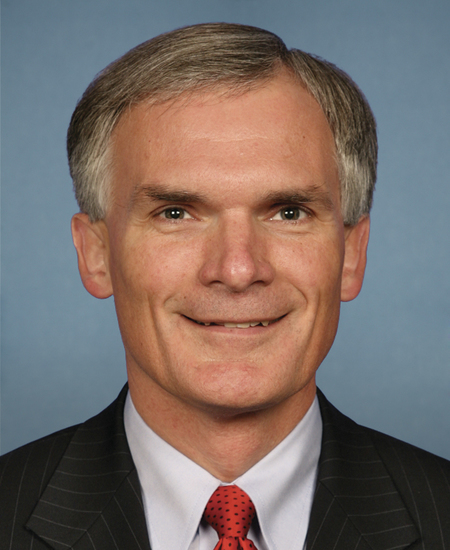
Rep. Robert E. Latta
Sponsored bills
Maddy summaryHRES 1148 is a resolution passed by the U.S. House of Representatives that condemns the Iranian government for supporting terrorism, regional proxy conflicts, and internal suppression of dissent - including its crackdown on protests following Mahsa Amini's death in 2022. It specifically calls for maintaining sanctions against Iran, supporting the Iranian Resistance's Ten-Point Plan (which advocates for a democratic, secular, nonnuclear Iran), and protecting Iranian political refugees in Albania. The resolution also affirms the Iranian people's right to self-determination under international law and urges the U.S. to recognize their struggle for freedom. As a non-binding resolution, it does not create new laws but formally expresses congressional stance.
Maddy summaryHJRES 123 is a resolution seeking congressional disapproval of an Environmental Protection Agency (EPA) rule published on March 11, 2024, which would have required chemical facilities to implement new safety measures under the Clean Air Act to prevent accidental releases. The rule, titled "Accidental Release Prevention Requirements: Risk Management Programs Under the Clean Air Act; Safer Communities by Chemical Accident Prevention," aimed to strengthen existing risk management programs at chemical plants. If passed, this resolution would block the rule from taking effect by invoking a federal process for disapproving agency regulations. It directly affects the EPA's regulatory authority and the chemical industry's compliance obligations under the Clean Air Act.
Maddy summaryThis bill freezes new energy efficiency standards for distribution transformers. It prohibits the Energy Secretary from proposing or implementing any rules different from the 2013 standards (published April 18, 2013) for five years after the bill's enactment. The law directly affects the Department of Energy and transformer manufacturers by maintaining existing efficiency requirements. It ensures no changes to the 2013 rule during this five-year period.
Maddy summaryThis bill designates the U.S. Postal Service facility at 265 Main Street in Philo, Ohio, as the "Samuel J. Mitchell Jr. Post Office." It requires all federal documents, maps, and references to this specific location to use the new name going forward. The change applies only to the physical post office building and its official documentation, with no other policy or funding changes. This is a purely administrative naming resolution with no direct impact on residents or services beyond the facility's official designation.
Maddy summaryThis bill amends the Clean Air Act to change how national air quality standards are implemented and reviewed. It extends the timeline for reviewing air quality standards from 5 to 10 years, requires consideration of economic impacts and feasibility when setting standards, and mandates that the EPA issue implementing regulations and guidance at the same time as new standards. It also gives states more time (up to 3 years) to correct deficiencies before federal plans are imposed, and adds wildfire mitigation measures as factors that can be considered in air quality designations. The bill directly affects states, local governments, and businesses that must comply with air quality regulations, particularly those in ozone and particulate matter nonattainment areas. These changes aim to create a more balanced implementation process that considers both environmental protection and practical economic considerations.
Maddy summaryThis bill prohibits U.S. app stores, hosting services, and distributors from enabling foreign adversary-controlled applications (like TikTok, owned by ByteDance) to operate within U.S. borders. It requires companies to provide users with their data in a machine-readable format before a ban takes effect, and imposes civil penalties of up to $5,000 per affected user for violations. The law directly affects major app platforms, app stores, and internet hosting services, targeting applications owned by entities controlled by designated "foreign adversary" countries (e.g., China). It includes exemptions for companies that divest U.S. operations to non-adversary entities before the ban date.
Maddy summaryThis bill requires the General Services Administration to review and improve the federal subaward reporting system within 180 days, focusing on accuracy, consistency, and public access. It mandates a standardized reporting plan within one year to reduce administrative burden on recipients while expanding data collection to include second-tier subawards (beyond the first tier currently reported). Federal agencies must implement these changes by year two, with annual progress reports to Congress. The law directly affects federal agencies managing grants and their recipients, aiming to make subaward data more complete, transparent, and easier to access for the public.
Maddy summaryHR 3277, the Energy Emergency Leadership Act, reassigns specific energy emergency and security responsibilities to an Assistant Secretary within the Department of Energy. It adds new duties for the Assistant Secretary to handle infrastructure protection, cybersecurity, supply chain issues, and emergency response planning. The bill also authorizes the Department to provide technical assistance to states, local governments, or energy companies upon request when facing energy security threats. This is a procedural bill clarifying existing agency roles, not creating new programs or funding.
Maddy summaryThis bill repeals a law (18 U.S.C. § 1715) that previously prohibited mailing firearms without a license. It directly affects the U.S. Postal Service, firearm sellers, and individuals mailing firearms by preventing the Postal Service from creating rules that would block firearm mailings or require disclosure of sensitive records like sales receipts or firearm serial numbers. Key provisions include removing the existing ban on mailing firearms and prohibiting the Postal Service from imposing new restrictions on firearm mailings or demanding customer transaction data. The bill ensures that firearm mailings can proceed without these specific federal restrictions, while applying to ongoing legal cases under the repealed law.