

Joint Budget Committee. The bill addresses numerous reforms to the funding structure for the state's child welfare services. Section 1 of the bill clarifies the types of child welfare services that must be available and provided, as necessary and appropriate, by county departments of human or social services (county departments). Sections 2 and 7 of the bill eliminate the option for county departments to maintain unspent general fund money from the child welfare services block allocation if they participate in the collaborative management program or the integrated care management program. Section 3 of the bill adds a statutory definition of and citation to the federal 'Family First Prevention Services Act of 2018'. Section 4 of the bill creates a program in the child welfare system for residential out-of-home placements for children and youth with intellectual and developmental disabilities. Section 5 of the bill: Changes the number of and process for appointments to the child welfare allocations committee; and Requires the development of a child welfare system funding model. Section 6 of the bill: Increases the percentage that counties are reimbursed by the state for adoption and relative guardianship subsidies from 80% to 90%; Formalizes the input process of the child welfare allocations committee; Allows the department of human services (state department) to submit supplemental budget requests for increases in out-of-home placement provider rates and adoption and relative guardianship expenditures; Modifies language concerning negotiations between county departments and providers for out-of-home placement rates; Requires capacity evaluations in counties or regions; Requires the state department to perform an analysis and cost projections to determine the fiscal impact on the state for changes in federal reimbursement rates for child welfare expenditures that result from the federal 'Family First Prevention Services Act of 2018'; Modifies the close-out process for child welfare expenditures; and Creates a child welfare prevention and intervention services cash fund into which unspent general fund money allocated to county departments through block allocations are transferred for sustainability of state-approved prevention and intervention programs and services. Section 8 of the bill creates the delivery of child welfare services task force.(Note: This summary applies to the reengrossed version of this bill as introduced in the second house.) , Read More
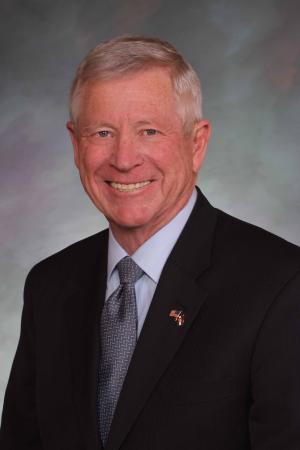
Sponsored bills
The bill authorizes the commissioner of insurance to apply to the secretary of the United States department of health and human services for a state innovation waiver, for federal funding, or both to allow the state to implement and operate a reinsurance program to assist health insurers in paying high-cost insurance claims. The state cannot implement the program absent waiver or funding approval from the secretary. The program is established as an enterprise for purposes of section 20 of article X of the state constitution. The division of insurance is to include an update regarding the program in its annual SMART Act report, and the program is subject to sunset review and repeal in 5 years. (Note: This summary applies to the reengrossed version of this bill as introduced in the second house.) , Read More
Joint Budget Committee. The bill authorizes the department of human services to retain money for its indirect costs, based on a federally approved cost allocation plan, from the older Coloradans cash fund and the nurse home visitor program fund.(Note: This summary applies to the reengrossed version of this bill as introduced in the second house.) , Read More
Joint Budget Committee. Under current law, money is transferred from the severance tax operational fund (operational fund) to certain cash funds to benefit programs that are commonly referred to as the tier 2 programs. On June 30, 2018, the bill requires the state treasurer to transfer money to the operational fund from the following cash funds to recoup money that was previously transferred in this fiscal year for tier 2 programs: $727,888 from the species conservation trust fund ( section 8 of the bill); $18,488 from the special account in the general fund used by the mined land reclamation board for reclaiming certain lands ( section 10 ); $80,068 from the water efficiency grant program cash fund ( section 11 ); $108,465 from the interbasin compact committee operation fund ( section 12 ); and $1,455,776 from the water supply reserve fund ( section 14 ). Section 9 transfers to the general fund $393,272 from the division of parks and outdoor recreation aquatic nuisance species fund and $189,912 from the division of wildlife aquatic nuisance species fund. To replace funding from the operational fund, the bill requires the state treasurer to transfer the following amounts on July 1, 2018, from the general fund to pay for tier 2 programs for the next fiscal year: $954,545 to the forest restoration and wildfire risk mitigation grant program cash fund ( section 1 ); $1,186,363 to the healthy forests and vibrant communities fund ( section 2 ); $3,000,000 to the species conservation trust fund ( section 3 ); $45,455 to the wildland-urban interface training fund ( section 4 ); $86,364 to the wildfire preparedness fund ( section 5 ); $127,000 to the special account in the general fund established by the mined land reclamation board ( section 6 ); $450,000 to the conservation district grant fund ( section 7 ); $2,452,193 to the division of parks and outdoor recreation aquatic nuisance species fund (section 9); and $1,184,171 to the division of wildlife aquatic nuisance species fund (section 9). Section 16 further appropriates the $3 million transferred to the species conservation trust fund for programs submitted by the executive director of the department of natural resources that are designed to conserve native species that state or federal law list as threatened or endangered or that are candidate species or are likely to become candidate species as determined by the United States fish and wildlife service. If, prior to July 1, 2018, there is insufficient money in the severance tax reserve, which is used to make severance tax refunds, then under current law, money would be recouped from the various severance tax cash funds in order to make the refunds. Section 13 requires income tax revenue that would otherwise be deposited in the general fund to be deposited in the reserve to make the refund instead of recouping money from the operational fund. Section 15 requires the state treasurer to make 3 transfers from the general fund to the operational fund: $17,030,925 on July 1, 2018, which amount will fund the programs commonly known as the tier 1 programs; $3,000,000 on January 1, 2019; and On July 1, 2019, an amount equal to the operational fund reserve required for the fiscal year commencing on July 1, 2019, or $14,214,854, whichever is less. The transfers made in 2019 will be used to fund the tier 1 operational fund reserve. To offset the general fund transfers, section 14 requires revenue, up to a maximum of $40,942,016, that was or otherwise would be deposited in the operational fund from February 1, 2018, through June 30, 2019, to instead be transferred or deposited in the general fund. It also requires the department of revenue to submit an annual report to each member of the general assembly about revenues, property tax credits, stripper well exemptions, and deductions for the oil and gas severance tax. Section 15 also prohibits the state treasurer from making any transfers from the operational fund to benefit the tier 2 programs for the next fiscal year, unless severance tax receipts are deposited in the operational fund during the fiscal year and there is sufficient money in the operational fund reserve so that no transfer will be made to the fund from the general fund on July 1, 2019. (Note: This summary applies to the reengrossed version of this bill as introduced in the second house.) , Read More
Joint Budget Committee. The bill authorizes a supplemental payment of state-only money to qualified providers of durable medical equipment who experienced a decrease in reimbursement in the 2017-18 state fiscal year as a result of the implementation of the federal '21st Century Cures Act'. The bill directs the department of health care policy and financing (department) to distribute a supplemental payment to qualified providers, as defined in the bill, and includes provisions for determining the amount of each qualified provider's supplemental payment. The bill authorizes the medical services board to adopt rules as necessary. The bill appropriates general fund money to the department for the supplemental payment to qualified providers. (Note: This summary applies to the reengrossed version of this bill as introduced in the second house.) , Read More
If property taxes are levied erroneously or illegally on oil and gas leaseholds and lands and a taxpayer has not protested the valuation within the time permitted by law, then the taxpayer has 2 years from the start of the property tax year to file a petition for an abatement or refund. The board of county commissioners is required to abate the taxes, and the taxpayer is entitled to a refund for the incorrect amount and refund interest equal to 1% per month from the date a complete abatement petition is filed. The bill eliminates the refund interest related to a property tax abatement if the property tax was erroneously levied and collected as a result of an error made in an oil and gas owner or operator statement and if the taxpayer receives the abatement or refund on or before the date six months after the date that the complete abatement petition is filed. (Note: This summary applies to the reengrossed version of this bill as introduced in the second house.) , Read More
The bill authorizes the creation of early childhood development service districts (districts) to provide services for children from birth through 8 years of age. Early childhood development services are defined to include early care and educational, health, mental health, and developmental services, including prevention and intervention. Districts are authorized to seek voter approval to levy property taxes and sales taxes in the district to generate revenues to provide early childhood development services. The district must be organized pursuant to the 'Special District Act' as modified by the bill. Under the bill, all eligible electors in the proposed district, rather than only property owners, are able to vote on the organization of the district and related ballot issues. The service plan for a proposed district is not required to be submitted to the planning commission for each county in which the special district is proposed to be located, and instead is submitted directly to the board of county commissioners (board) for such counties. In addition, the bill directs that the board shall not accept or act upon the request of a person owning property in the proposed service area to have his or her property excluded from the special district. The court conducting a hearing for the petition is also directed to not accept or act upon such a petition to exclude property from the district. The districts are governed by the 'Special District Act'; except that they are not subject to provisions concerning the inclusion or exclusion of property, procedures for the levy and collection of taxes, the certification and notice of special district taxes for general obligation indebtedness, property tax reduction agreements, and public improvement contracts. A district is authorized to contract with or work with another district or other provider of early childhood development services to provide services throughout the district. (Note: This summary applies to the reengrossed version of this bill as introduced in the second house.) , Read More
Joint Budget Committee. The bill creates in the department of higher education (department) the collaborative educator preparation grant program (grant program) to support joint initiatives among educator preparation programs, alternative teacher programs, school districts, boards of cooperative services, and public schools for preparing and placing educators. The department, working with the rural education coordinator, is directed to convene meetings of educator preparation programs, alternative teacher programs, school districts, boards of cooperative services, and public schools to assist them in jointly preparing grant initiatives. The department must review the grant initiatives that are submitted and, taking into account specified criteria, select initiatives to receive one-time grants. Each grant recipient must report specified information to the department concerning the use of the grant money. The department must submit a report to the joint budget committee and the education committees of the general assembly concerning implementation of the grant program and whether it was successful in addressing the teacher shortage in the state. The grant program repeals July 1, 2021.(Note: This summary applies to the reengrossed version of this bill as introduced in the second house.) , Read More
Joint Budget Committee. The statewide digital trunked radio system (DTRS) provides interoperable radio communications that allow personnel from multiple agencies in different levels of government to rapidly share information and coordinate efforts in emergency situations. While DTRS is considered one of the nation's most successful statewide public safety communications voice networks, there are areas of the state that do not have adequate coverage on the DTRS network. This means public safety officials are unable to communicate with others when working in geographies with little to no coverage. The general assembly established the public safety communications trust fund (trust fund) for the acquisition and maintenance of public safety communications systems, including the DTRS. Currently, through the 2024-25 fiscal year, the general assembly appropriates $7.2 million each fiscal year from the general fund and other funds to the trust fund for purposes of the DTRS. The governor's office of information technology (office) is required to use the money for the replacement of legacy radio equipment and hardware at radio tower sites and for software upgrade assurance. Due to a one-time savings achieved through negotiations between the office and its DTRS software vendor, approximately $3 million of the money appropriated to the trust fund to date is unexpended. The bill authorizes the office to use any unencumbered and unexpended money appropriated for purposes of the DTRS on DTRS site supporting infrastructure and DTRS supporting software and hardware. In addition, in both the 2018-19 and 2019-20 fiscal years, the bill requires the general assembly to appropriate an additional $2 million from the general fund to the trust fund. The bill requires the office to use the money to work in partnership with local and regional government entities to add additional radio tower sites in areas of the state that are experiencing critical coverage gaps for public safety radio communications. The office is required to submit a report to the joint budget committee detailing the use of the additional $2 million. (Note: This summary applies to the reengrossed version of this bill as introduced in the second house.) , Read More
The bill requires the department of health care policy and financing (department), in consultation with the Colorado healthcare affordability and sustainability enterprise board, to develop and prepare an annual report detailing uncompensated hospital costs and the different categories of expenditures made by general hospitals in the state (hospital expenditure report). In compiling the hospital expenditure report, the department shall use publicly available data sources whenever possible. Each general hospital in the state is required to make available to the department certain information, including: Hospital cost reports submitted to the federal centers for medicare and medicaid services; Annual audited financial statements; except that, if a hospital is part of a consolidated or combined group, the hospital may submit a consolidated or combined financial statement if the group's statement separately identifies the information for each of the group's licensed hospitals; Utilization and staffing information and standard units of measure; and Information accessed through a secure, online data collection and reporting system that provides a central location for the collection and analysis of hospital utilization and financial data. The hospital expenditure report must include, but not be limited to: A description of the methods of analysis and definitions of report components by payer group; Uncompensated care costs by payer group; and The percentage that different categories of expenses contribute to overall expenses of hospitals. The department is required to submit the hospital expenditure report to the governor, specified committees of the general assembly, and the medical services board in the department. The department is also directed to post the hospital expenditure report on the department's website. (Note: This summary applies to the reengrossed version of this bill as introduced in the second house.) , Read More