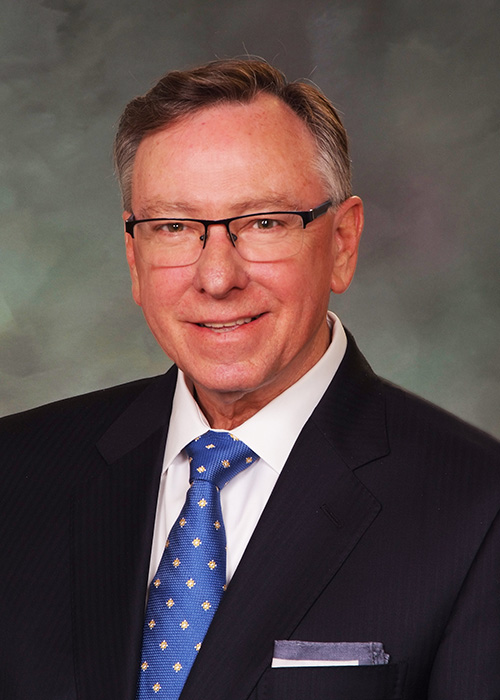
Maddy summaryHJR 1014 is a symbolic resolution commemorating Colorado veterans who served in post-9/11 military operations (2001-2021). It honors all service members who deployed to Iraq and Afghanistan, specifically acknowledging Colorado's 107 fallen soldiers and expressing gratitude to veterans and their families. The resolution formally reaffirms Colorado's commitment to supporting veterans' care but does not create new programs or change existing policies. It directs copies to state officials, veterans' organizations, and museums as a gesture of recognition. This is a non-binding commemorative measure with no direct policy impact on veterans' benefits or services.
Sponsored bills
Maddy summaryHJR 1009 is a symbolic resolution (not a law) recognizing Colorado's veterans and their mental health challenges. It cites Colorado's high veteran suicide rate (178 in 2022) and highlights successful existing programs like Next Chapter and Mt. Carmel Veterans Service Center, which enrolled over 1,200 veterans with no suicides among participants. The resolution commits the state to continuing support for veterans' mental health, breaking down stigmas, and expanding community services to ease their transition to civilian life. It does not create new programs or allocate funds but expresses legislative support and directs copies to the governor, U.S. Department of Veterans Affairs, and the mentioned organizations.
Maddy summaryHJR 1004 is a symbolic resolution recognizing Colorado's military community, veterans, Gold Star Families, and POW/MIA service members. It expresses legislative gratitude for active-duty personnel, veterans (over 340,000 in Colorado), military installations (like Fort Carson), and Gold Star Families who have lost loved ones. The resolution encourages Coloradans to honor these groups and directs copies to military leaders, veterans' organizations, and Colorado's congressional delegation. As a non-binding gesture, it does not create new policies or benefits.
Maddy summaryHJR 1016 is a symbolic Colorado state resolution honoring the 10th Mountain Division's historical service. It commemorates the unit's WWII training at Camp Hale in Eagle County and its combat role in the Italian Alps, while recognizing President Biden's 2022 designation of Camp Hale as a National Monument. The resolution expresses the state's appreciation for the division's legacy and sends copies to relevant organizations like the 10th Mountain Division Hut Association and local government bodies. It does not create new laws, funding, or policy changes - only formal recognition of historical significance.
Maddy summaryHJR 1015 is a Colorado legislative resolution commemorating the 58th anniversary of the 1968 North Korean capture of the U.S.S. Pueblo, a Navy ship named after Pueblo, Colorado. It designates January 23 as "U.S.S. Pueblo Day" to honor the crew (including one fatality and 82 captives) and calls on North Korea to return the ship, which remains in Pyongyang's possession and is displayed in a museum there. The resolution has no legal effect but serves as a symbolic statement of remembrance and a continued request for the ship's return.
Maddy summaryHJR 1008 is a Colorado legislative resolution honoring women veterans and active-duty service members in the U.S. Armed Forces. It expresses the Colorado General Assembly's gratitude for their historical and ongoing contributions, including service in all military branches since the Revolutionary War, and reaffirms commitment to supporting them. The resolution has no binding effect - it is purely symbolic, recognizing service through formal acknowledgment rather than policy changes. It passed both chambers of the Colorado legislature in early 2026.
Maddy summaryBased on the provided context, HJR 1012 is a joint resolution honoring Korean War veterans. The bill text is not included in the available information, so specific provisions or policy changes cannot be described. The resolution has completed its legislative process (introduced in both chambers, passed third reading without amendments, and signed by the Speaker). As a joint resolution with no bill text provided, it likely serves a ceremonial or commemorative purpose rather than creating new policy. Without the actual text, a detailed summary of its mechanisms or direct effects cannot be generated.
Maddy summaryHJR 1007 is a symbolic resolution honoring Native American veterans' historical and ongoing military service. It recognizes their disproportionate contributions - such as over 12,000 serving in WWI (despite limited citizenship), 70% per capita service in WWII, and Code Talkers in the Pacific Theater - and current service (31,000 active-duty Native Americans today). The resolution specifically acknowledges Colorado's Indigenous lands, highlights Colorado's appointment of its first Native veteran to the state Board of Veterans Affairs, and commemorates veterans' sacrifices across conflicts from the Revolutionary War to modern times. As a non-binding resolution, it expresses legislative recognition but does not create new policy or funding.
In accordance with the "Keep Colorado Wild Pass Act", a person registering their motor vehicle in Colorado may, at the time of registration, elect to purchase a keep Colorado wild pass as an annual state parks and public lands pass for their motor vehicle. The keep Colorado wild pass provides the person access by car, bike, or foot to any Colorado state park or other participating public land for the duration of the vehicle's registration period. The option to purchase a keep Colorado wild pass is offered at the time of registration of any passenger motor vehicle, light-weight truck, motorcycle, or recreational vehicle. Currently, the cost for a keep Colorado wild pass is $29.All money collected from the purchase and sale of the keep Colorado wild pass is remitted to the department of revenue, which in turn transmits the money, minus administrative costs, to the state treasurer.By statute, the first $36 million collected from the keep Colorado wild pass is allocated to the following 3 funds:$32.5 million to the parks and outdoor recreation cash fund for state parks maintenance, staffing, and resources;$2.5 million to the backcountry search and rescue fund, in furtherance of the goal of supporting Colorado's search and rescue volunteers who respond to backcountry emergencies and who develop educational programs and campaigns to promote backcountry safety; and$1 million to the Colorado avalanche information center fund, in furtherance of the goal of protecting winter recreationists by supporting backcountry avalanche safety and awareness.The amounts allocated to these 3 funds are adjusted annually based on changes to the United States department of labor's bureau of labor statistics consumer price index for Denver-Aurora-Lakewood for all items and all urban consumers.After allocating the first $36 million to the 3 funds, as specified above, statute currently directs the state treasurer to credit any remaining money collected from the purchase and sale of the keep Colorado wild pass as follows:One-half of any remaining money is credited to the wildlife cash fund; andOne-half of any remaining money is credited to the parks and outdoor recreation cash fund, in furtherance of the goals of:Building and maintaining new state parks on a regular basis in partnership with local governments, conservationists, recreationists, and other land management agencies; andFunding Colorado regional outdoor partnerships to support community-driven conservation and recreation planning and projects.The bill modifies how, after the allocation of the first $36 million, any remaining money collected from the purchase and sale of the keep Colorado wild pass is allocated. The bill creates the state park and state wildlife area access cash fund (fund) for the purpose of supporting local governments in efforts to improve roads and other infrastructure that provide local access to state parks and state wildlife areas accessed from within a local government's boundary (local access). The bill directs the entirety of any remaining money to the fund, instead of dividing and allocating the remaining money between the wildlife cash fund and the parks and outdoor recreation cash fund.The bill also creates the state park and state wildlife area access grant program (grant program). The bill requires the division of local government (division) in the department of local affairs to administer the grant program and to award grants to local governments that apply for a grant to improve local access. Money in the fund is used to pay the grant awards.The bill preserves the current allocation of the first $36 million, adjusted annually, to the parks and outdoor recreation cash fund, the backcountry search and rescue fund, and the Colorado avalanche information center fund. The bill also specifies that, if no applications for local access grants are received by the division by December 31, 2029, and by December 31 for each year thereafter, half of the remaining money collected from the purchase and sale of the keep Colorado wild pass is transferred to the wildlife cash fund and half is transferred to the parks and outdoor recreation cash fund in furtherance of specific goals.(Note: This summary applies to this bill as introduced.)

Maddy summaryThis Senate Joint Resolution (SJR 7) is a ceremonial resolution recognizing February 2026 as Black History Month. It does not create new laws or affect any individuals or policies - it solely commemorates the annual observance of Black History Month through historical context and Colorado-specific examples. The resolution cites Dr. Carter G. Woodson’s founding of Negro History Week in 1926, its evolution into Black History Month during the Civil Rights Movement, and highlights Colorado’s Black historical figures like Barney Ford, Clara Brown, and early state representatives. It serves as a symbolic acknowledgment of contributions to American history, not a policy change.