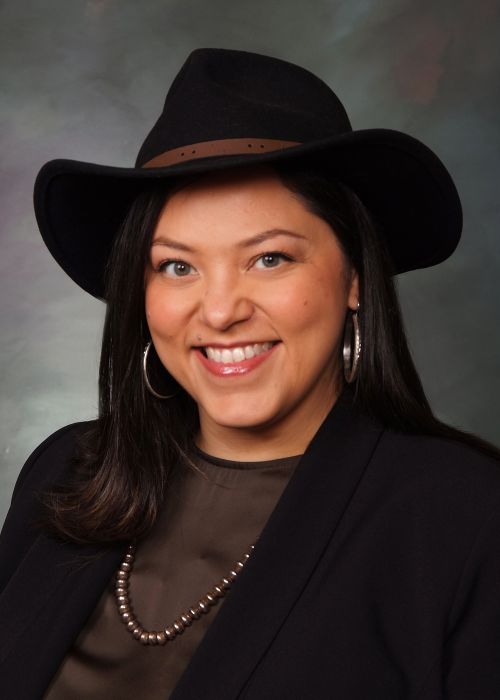
Photo of Julie Gonzales
D Colorado Senate · District 34

Sen. Julie Gonzales

Compare
Total votes
6,713
all sessions
Attendance
98%
136 missed
Lower than 92% of chamber peers
With party
98%
of cast votes
Higher than 77% of chamber peers
Bipartisan score
1%
crosses aisle rarely
Lower than 81% of chamber peers
Sponsored
710
bills & resolutions
Higher than 75% of chamber peers
Committees
3
assignments
710 bills and resolutions

Sponsored bills

Total
710
Primary
297
Co-sponsor
413
This page
710
matching current filters
Primary HB 22-1322
Signed into law · Colorado House · Lead sponsor
Water Quality Regulation

The act: Requires the water quality control commission (commission) to conduct outreach and gather input from disproportionately impacted communities regarding the commission's rule-making proceedings, licensing proceedings, and adjudicatory hearings (section 1 of the act); Requires the commission to utilize the criteria promulgated by rule by the commission in designating waters as use-protected (section 2); and Creates a 5-year statute of limitations for bringing actions alleging violations of the "Colorado Water Quality Control Act" (water quality control act) or any rules or orders under the water quality control act (section 3).(Note: This summary applies to this bill as enacted.)

Signed into law Jun 8, 2022 0 co-sponsors
Primary HB 22-1272
Signed into law · Colorado House · Lead sponsor
Repeal Of Attorney Fees On Motions To Dismiss

Under current law, a defendant may be awarded reasonable attorney fees in tort actions if a case is dismissed on a motion of the defendant prior to trial. The act states that a defendant may not be awarded reasonable attorney fees in cases dismissed prior to trial in which the plaintiff brought non-frivolous claims in order to challenge precedent or for a similar reason. (Note: This summary applies to this bill as enacted.)

Signed into law Jun 8, 2022 0 co-sponsors
Primary SB 22-204
Signed into law · Colorado Senate · Lead sponsor
Repeal Federal Government Confirm Status For Identification Documents

Under existing law, the department of revenue (department) is required to issue a driver's license, instruction permit, or identification card (identification documents) to a person who is lawfully present in the United States if: The individual qualifies for the identification document; The individual produces documents that satisfy the department that the individual is lawfully present; and The federal government confirms the individual's status, including electronically through the federal systematic alien verification for entitlements (SAVE) system. The bill repeals the requirement that the federal government confirm the individual's status. The bill appropriates $19,397 to the department of revenue to implement the bill, and $2,575 to the office of the governor for use by the office of information technology to provide information technology services for the department of revenue. (Note: Italicized words indicate new material added to the original summary; dashes through words indicate deletions from the original summary.) (Note: This summary applies to the reengrossed version of this bill as introduced in the second house.)

Signed into law Jun 7, 2022 0 co-sponsors
Primary HB 22-1373
Signed into law · Colorado House · Lead sponsor
Court-ordered Restitution Paid By Juveniles

The act prohibits a court from ordering a juvenile to pay restitution to insurance companies. A court may still order restitution for a victim's pecuniary loss for which the victim cannot be compensated under a policy of insurance, self-insurance, an indemnity agreement, or a risk management fund. (Note: This summary applies to this bill as enacted.)

Signed into law Jun 7, 2022 0 co-sponsors
Primary HB 22-1131
Signed into law · Colorado House · Lead sponsor
Reduce Justice-involvement For Young Children

Under current law, juveniles who are 10 years of age and older can be prosecuted in juvenile court. The act requires the state department of human services to establish a pre-adolescent services task force to examine gaps in services for juveniles who are 10 years of age or older but under 13 years of age, if any, that would be created if the minimum age of prosecution of juveniles is increased from 10 years of age to 13 years of age, and to make recommendations for addressing any gaps in services identified. The task force shall create a report containing its recommendations made by December 30, 2022, and provide that report to the judiciary committees of the house of representatives and the senate, and to the public and behavioral health and human services committee of the house of representatives and the health and human services committee of the senate, or any successor committees. For the 2022-23 fiscal year, the act appropriates $105,000 from the general fund to the state department of human services for use by the division of child welfare. For the 2022-23 fiscal year, the act appropriates $9,433 from the general fund to the legislative department for use by the general assembly for per diem and travel expenses. (Note: This summary applies to this bill as enacted.)

Signed into law Jun 7, 2022 0 co-sponsors
Primary HB 22-1319
Signed into law · Colorado House · Lead sponsor
Dependency Proceedings Unaccompanied Child

The act provides juvenile court jurisdiction over an unaccompanied child in the custody of the federal office of refugee resettlement who is housed in a facility in Colorado and who has been subjected to parental abuse or neglect. A child may file a petition asking the court to determine that the child is dependent on the court. The petition must: Set forth the facts that bring the child under the court's jurisdiction; State the child's name, age, and country of birth; and Identify the facility where the child is housed in Colorado in the custody of the federal office of refugee resettlement. The petition must not name the child's parent as a respondent. The petition must state clearly that parental rights may not be terminated through the proceedings. The act requires the court to schedule a hearing after the petition is filed. If the court finds at the hearing that the statements in the petition are supported by a preponderance of the evidence, the court shall declare the child dependent on the court. A child declared dependent is eligible for oversight and services by the office of the child protection ombudsman. Upon request, the court may also issue an order establishing the child's eligibility for classification as a special immigrant juvenile under federal law. (Note: This summary applies to this bill as enacted.)

Signed into law Jun 7, 2022 0 co-sponsors
Primary HB 22-1314
Signed into law · Colorado House · Lead sponsor
Towing Carrier Nonconsensual Tows

Colorado law requires a towing carrier (carrier) to notify law enforcement, within 30 minutes after towing an abandoned vehicle, of the carrier's name and the storage location and description of the vehicle. The act clarifies that the carrier is deemed to have complied if: The carrier gave the location of the storage facility to law enforcement when obtaining authorization for the tow; or The carrier made 2 or more attempts within the 30 minutes after the tow to notify a law enforcement agency but was unsuccessful for reasons beyond the control of the carrier. When a carrier tows a vehicle without the owner's or lienholder's consent, current law requires the carrier to notify the department of revenue (department), the owner, and the lienholder of the tow between 2 and 10 days after the tow, thus imposing a 2-day waiting period before notification. The act repeals this waiting period and instead requires notice within 10 days after the tow and caps at $75 the amount the carrier may charge for sending this notice; however, the act encourages carriers to wait 24 hours after a tow to notify the owner and lienholder of the tow. Except for the first 24 hours, daily storage fees are forbidden until the carrier has sent the required notice to the owner and lienholder. A carrier's mechanic's lien does not attach to a vehicle for 30 days after notice was sent to the owner or lienholder of the vehicle if the carrier tows a vehicle from private property without the owner's, operator's, or lienholder's consent. If the owner or lienholder fails to retrieve the towed vehicle for 30 days, Colorado law authorizes the carrier to sell the vehicle to recover the carrier's fees. The act requires the carrier to set the sale price at the time of sale, list the fair market price at the time of sale, and report the sale price to the department within 5 business days after the sale. The law also requires the vehicle to be appraised by an independent third-party. Before the act, the balance of the money from the vehicle sale, after the carrier and law enforcement were reimbursed, was sent to the department to pay any taxes or fees. The act repeals this requirement and replaces it with a requirement that the carrier give the money to the lienholder or owner, depending on any lien. If the money is never claimed, it is sent to the unclaimed property program. The amount of the fee that a carrier must pay to have a carrier's permit is changed from $150 to being set by the public utilities commission (PUC), and approved by the executive director of the department of regulatory agencies, to cover the cost of regulating carriers. The PUC is authorized to deny an application for a carrier permit or to refuse to renew a carrier permit when a carrier has been convicted of a towing-related offense. The PUC may deny an application or refuse to renew a permit of a towing carrier based on a determination that there is good cause to believe the issuance of or renewal of the permit is not in the public interest. The act requires that carriers that are towing a vehicle from private property without the owner's, operator's, or lienholder's consent must: Display at their place of business and on any website the current maximum rates permitted by rule of the PUC for each tow service provided by the towing carrier, and the sign must include information about how to make a complaint to the PUC; Accept cash and major credit cards, as defined by rule of the PUC, and, upon request, disclose the accepted forms of payment; Not charge storage fees for a day on which the carrier did not store the vehicle; Before connecting to a vehicle, photographically document the vehicle's condition and the reason for the tow. Failure to produce documentation of the vehicle's condition or the reason for the tow creates a rebuttable presumption that any damages to the vehicle were caused by the carrier or that the tow was not authorized. Maintain an area at each storage facility with lighting adequate to inspect a vehicle for damage; Upon demand of the owner within 30 days after providing the owner notice that the vehicle has been towed, retrieve the contents of the towed vehicle or allow the owner to retrieve the vehicle or the contents; Upon the owner paying 15 percent of the fees or $60, whichever is less, and signing a form acknowledging the remainder of the debt, retrieve the towed vehicle or the contents of the towed vehicle or allow the owner to retrieve the vehicle or the contents; Obtain authorization from the property owner, leaseholder, or common interest community within 24 hours before towing a vehicle from private property; With certain exceptions, give 24 hours' written notice before removing a vehicle from a parking spot or the common areas of a condominium, cooperative, apartment, or mobile home park; Post adequate signs that a vehicle may be towed if parked inappropriately; Upon request, provide evidence of the carrier's insurance coverages; Have a sign at storage facilities that states the name, telephone number, and hours of operation of the carrier's business; Upon request, provide an itemized bill showing each charge and the rate for each fee that the person has incurred; Give written notice of the ability to make a complaint to the PUC; For a carrier to perform a nonconsensual tow, other than for an abandoned motor vehicle, from private property normally used for parking, the property owner or carrier must have provided adequate signs communicating the parking regulations that subject a vehicle to being towed; and Unless ordered by a peace officer, not tow a vehicle from private property because the rear license plate shows the vehicle registration is expired. If a carrier fails to comply with the provisions of the act, the carrier may not charge or retain any fees or charges for the services performed with respect to the vehicle and must return any fees it collected with respect to the vehicle. It is an affirmative defense in any action to collect towing fees that the carrier failed to comply with these provisions. If a carrier damages a vehicle or violates these provisions in a manner that causes damages and refuses to reimburse the owner, operator, or lienholder, the owner or lienholder may recover attorney fees. Carriers are required to record certain information about each nonconsensual tow, retain the information in their records for 3 years, and produce the records within 48 hours upon request. A carrier is prohibited from paying money or other valuable consideration to a landowner or business for the privilege of nonconsensually towing vehicles. It is a deceptive trade practice to violate the provisions of the act, and the attorney general is responsible for enforcement. Upon making a finding that a towing practice harms the public interest, the PUC may promulgate rules to stop or change the practice. The act appropriates $109,475 to the department of regulatory agencies for use by the PUC for implementation of this act and reappropriates $5,733 of the money to the department of personnel for vehicle replacement lease and purchase services. (Note: This summary applies to this bill as enacted.)


Signed into law Jun 7, 2022 0 co-sponsors
Primary HB 22-1356
Signed into law · Colorado House · Lead sponsor
Small Community-based Nonprofit Grant Program

The small community-based nonprofit infrastructure grant program (grant program) is created in the division of local government in the department of local affairs (division) to provide grants to small community-based nonprofit organizations that have been impacted or disproportionately impacted by the COVID-19 public health emergency for infrastructure and capacity building. The division is required to administer the grant program and to contract with no more than 10 nonprofit organizations with specified qualifications (regional access partners) to award and monitor the grants. To be eligible to receive a grant through the grant program, an organization must be one of the following: A small community-based nonprofit organization that operates under section 501 (c)(3) of the federal internal revenue code; A small community-based nonprofit organization that does not operate under section 501 (c)(3) of the federal internal revenue code and that works with a fiscal agent; or A collaboration of multiple small community-based groups that are not nonprofit organizations and that work with a fiscal sponsor. Each small community-based nonprofit organization or each of the small community-based groups that apply for a grant collaboratively is required to satisfy specified criteria to be considered an eligible recipient for a grant through the grant program. Grant recipients may use grant program money for infrastructure and capacity building purposes, including data technology needs, professional development for staff and board members, strategic planning and organizational development for capacity building and fundraising, communications, and existing program expansion, development, or evaluation. Grant recipients may not use grant money for capital improvements, real estate or land acquisition, payment of debt, advocacy or lobbying, organizing, endowments, or reserves. To receive a grant, an applicant must submit an application to a regional access partner in accordance with policies and procedures developed by the division. The regional access partner is required to award grants and ensure that: The maximum grant award does not exceed $100,000; and A grant award does not exceed 30% of the recipient's annual operating budget. The act appropriates $35 million from the economic recovery and relief cash fund to the division for the purposes of the grant program. The regional access partners are required to award the grants for the purposes of the grant program on or before December 30, 2024, and recipients of the grants are required to expend all grant money by December 30, 2026. The division and any person that receives money from the division, including a regional access partner, is required to comply with the compliance, reporting, record-keeping, and program evaluation requirements established by the office of state planning and budgeting and the state controller. (Note: This summary applies to this bill as enacted.)
Signed into law Jun 3, 2022 0 co-sponsors
Primary HB 22-1232
Signed into law · Colorado House · Lead sponsor
Sunset Continue Regulation Of Asbestos

The act implements the recommendations of the department of regulatory agencies, as contained in the department's sunset review of the regulation of persons in connection with the control of asbestos, as follows: Continues the regulation for 5 years, until September 1, 2027; Removes limits on the ability of the air quality control commission to promulgate rules more stringent than the standards set forth in the federal "Occupational Safety and Health Act" (OSHA) and federal regulations promulgated pursuant to OSHA; and Requires a local government to add language regarding asbestos inspections on each application to renovate or demolish property. The act also: Expands the definition of "area of public access" to include any building, facility, or property that a member of the general public can enter or be exposed to asbestos; Amends the definition of "asbestos abatement" to include conducting a major spill response to prevent the escape of asbestos fibers into the atmosphere; Adds a definition of "facility"; and Expands the types of facilities for which a person must be certified before conducting asbestos inspections or asbestos abatement actions from schools or public or commercial buildings to any building, facility, or property.(Note: This summary applies to this bill as enacted.)

Signed into law Jun 3, 2022 0 co-sponsors
Showing 561 to 570 of 710 bills
Previous 1 … 56 57 58 … 71 Next