

The office of e-health innovation in the governor's office is required to convene a working group to determine the feasibility of creating a centralized digital consent repository that allows patients to provide, extend, deny, and revoke consent for sharing their medical data and information between physical and behavioral health-care providers, family members, community organizations, payers, and state agencies at any time. By January 1, 2026, the working group is required to submit a report including recommendations regarding the feasibility of creating the centralized digital consent repository to specified committees of the general assembly. On or before July 1, 2025, the behavioral health administration in the department of human services (department) is required to create a friends and family input form to allow an individual to provide a treating professional or a licensed or designated facility or organization with information related to a patient receiving mental health or substance use services. For the 2024-25 state fiscal year, $50,604 is appropriated to the department to implement the act. APPROVED by Governor May 28, 2024 EFFECTIVE May 28, 2024(Note: This summary applies to this bill as enacted.)
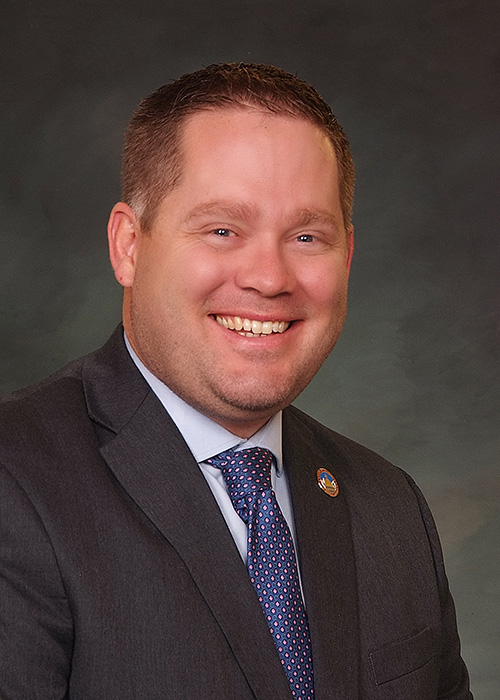
Sen. Kyle Mullica
Sponsored bills
The act adds established payments to personal services corporations as a qualified local expenditure (expenditure) for the purpose of qualifying for the film incentive income tax credit (credit), removes a condition that the credit is available only in years that the amount of state revenues are in excess of the limitation of state fiscal year spending by at least $50 million, and extends the deadline from February 4, 2025, to July 1, 2028, for a tax credit effectiveness study to be submitted to the finance committees of the house of representatives and the senate. The act requires a production company to make at least $100,000 in expenditures for the production company to be eligible for the credit. The credit must not exceed 22% of the expenditures of the production company, and $5 million is the maximum aggregate amount of all credits that may be issued in one calendar year. The act establishes a reservation system for a production company to apply for the credit before commencing production activities (activities). If the office of film, television, and media (office) determines that a production company is entitled to a tax credit reservation, the office shall notify the company in writing of the reservation and the amount. Once a production company has completed its activities in the state, the company may be issued a tax credit certificate if the office determines that the production company complied with all the requirements for the issuance of the credit. Activities must be completed on or before December 31, 2031. The office must provide the department of revenue with an electronic report of each production company to which the office issued a tax credit certificate for the preceding income tax year that includes the name of the production company, the amount of the credit awarded, and the production company's social security number or the production company's Colorado account number and federal employer identification number. The act repeals the credit on January 1, 2032. The act appropriates $29,120 from the general fund to the office of the governor for state fiscal year 2024-25. The act also appropriates $400,000 to the office of the governor for state fiscal year 2024-25 from the Colorado office of film, television, and media operational account cash fund. The appropriations may be used by the office to implement the act. APPROVED by Governor May 28, 2024 EFFECTIVE August 7, 2024(Note: This summary applies to this bill as enacted.)
If the state exceeds its constitutional fiscal year spending limit, it is required by the Taxpayer's Bill of Rights (TABOR) to refund the excess state revenues (TABOR refunds). The act concerns the 4 TABOR refund mechanisms: a reimbursement to counties for lost property tax revenue, an income tax rate reduction, a sales and use tax rate reduction, and a sales tax refund. The first mechanism through which excess state revenues are refunded is a reimbursement paid to counties for allocation to local governments to offset the reduction in property taxes resulting from property tax exemptions for qualifying seniors, veterans with disabilities, and spouses of veterans who died in the line of duty or as a result of a service-related injury or disease (homestead exemptions). Additionally, for property tax years commencing on or after January 1, 2024, the reimbursement to local governments to offset the reduction in property taxes resulting from the newly reduced valuation for assessment of qualified-senior primary residences created in Senate Bill 24-111, concerning a reduction in the valuation for assessment of qualified-senior primary residence real property, joins the homestead exemptions reimbursement as the first TABOR refund mechanism. The temporary income tax rate reduction is active for income tax years 2024 through 2034. To refund excess state revenues from fiscal year 2023-24, the income tax rate for income tax year 2024 is temporarily reduced from 4.40% to 4.25%. After that year, if the amount of excess state revenues exceeds the projected total amount of TABOR refunds issued as reimbursement to counties for the homestead exemptions and the qualified-senior primary residence valuation reductions, then the state individual income tax rate is temporarily reduced by the following percentages according to the total amount of excess state revenues remaining after the homestead exemptions reimbursement and the qualified-senior primary residence reimbursement are paid (remaining excess state revenues): If the remaining excess state revenues are above $300 million but less than or equal to $500 million, the income tax rate is temporarily reduced by 0.04%; If the remaining excess state revenues are above $500 million but less than or equal to $600 million, the income tax rate is temporarily reduced by 0.07%; If the remaining excess state revenues are above $600 million but less than or equal to $700 million, the income tax rate is temporarily reduced by 0.09%; If the remaining excess state revenues are above $700 million but less than or equal to $800 million, the income tax rate is temporarily reduced by 0.11%; If the remaining excess state revenues are above $800 million but less than or equal to $1 billion, the income tax rate is temporarily reduced by 0.12%; If the remaining excess state revenues are above $1 billion but less than or equal to $1.5 billion, the income tax rate is temporarily reduced by 0.13%; and If the remaining excess state revenues are above $1.5 billion, the income tax rate is temporarily reduced by 0.15%. The sales and use tax rate reduction refund mechanism is active for fiscal years 2024-25 to 2033-34. Under this mechanism, if the amount of remaining excess state revenues is greater than $1.5 billion, as annually adjusted by a percentage equal to the percentage of allowable increase in state fiscal year spending, and exceeds the projected total amount of TABOR refunds issued as reimbursement to counties for the homestead exemptions and the qualified-senior primary residence valuation reductions, plus refunds issued through the temporary income tax rate reduction, then the state sales and use tax rates are temporarily reduced by 0.13%. Under the sales tax refund mechanism, all qualified individuals receive an identical refund amount unless the amount of excess state revenues to be refunded would make that identical refund exceed a certain threshold, in which case the excess state revenues are instead refunded through a 6-tier refund mechanism based on the qualified individual's adjusted gross income. The identical refund amount above which the 6-tier mechanism is triggered is tied to annual federal internal revenue service calculations of sales tax paid in the state by family size and income level; except that, if, by September 1 of any year, the executive director of the department of revenue has not received advice from the internal revenue service that such an identical refund is regarded as a refund of sales tax and not as an accession to wealth, the identical refund threshold remains the existing rate of $15. An individual may claim the sales tax refund by filing an income tax return or a specified assistance grant application by October 15 of the calendar year following the taxable year for which the refund is being claimed. Whether the TABOR refund mechanisms are triggered and, if so, how many of the mechanisms are triggered depends on the amount of excess state revenues remaining after reimbursement to counties for the homestead exemptions and the qualified-senior primary residence valuation reductions as follows: If remaining excess state revenues are less than or equal to $300 million, TABOR refunds are distributed only through the tiered or flat sales tax refund mechanism; If remaining excess state revenues are greater than $300 million but less than or equal to $1.5 billion, TABOR refunds are distributed first through the income tax rate reduction and then through the tiered or flat sales tax refund mechanism; and If remaining excess state revenues are greater than $1.5 billion, TABOR refunds are distributed first through the income tax rate reduction, next through the sales and use tax rate reduction, and finally through the tiered or flat sales tax refund mechanism. If there are not sufficient excess state revenues to pay the full amount of an income tax rate reduction refund mechanism or the sales and use tax rate reduction refund mechanism, then the affected refund mechanism is not triggered. The act also repeals statutory sections related to TABOR refund mechanisms that are no longer applicable, including the 4-tier sales tax refund mechanism to refund excess revenues from fiscal year 1997-98. For the 2024-25 state fiscal year, $59,443 is appropriated from the general fund to the department of revenue for personal services and tax administration IT system support. APPROVED by Governor May 14, 2024 PORTIONS EFFECTIVE May 14, 2024 PORTIONS EFFECTIVE August 7, 2024(Note: This summary applies to this bill as enacted.)
For income tax years commencing on or after January 1, 2024, but before January 1, 2026, the bill allows a refundable state income tax credit, which is intended to offset the various expenses that licensed teachers often incur throughout an academic year for classroom supplies, professional development costs, supplemental educational materials, field trips, and other items that improve the quality of the educational services that they provide, to a licensed teacher who is employed as a teacher in a public school on a full-time basis for at least one-half of an academic year (eligible teacher) during the income tax year for which the credit is claimed. The amount of the credit is $1,000 for an eligible teacher who is employed for the equivalent of an entire academic year and $500 for a teacher who is employed for one-half of an academic year. Two eligible teachers who file a joint income tax return may each claim the credit.(Note: This summary applies to this bill as introduced.)
Section 1 of the act creates a series of requirements related to accessory dwelling units. Section 1 establishes unique requirements for subject jurisdictions and for qualifying as an accessory dwelling unit supportive jurisdiction (supportive jurisdiction). As established in section 1, a subject jurisdiction is either: A municipality that has a population of 1,000 or more and that is within the area of a metropolitan planning organization; or The portion of a county that is both within a census designated place with a population of forty thousand or more, as reported in the most recent decennial census, and within the area of a metropolitan planning organization. Section 1 requires a subject jurisdiction, on or after June 30, 2025, to allow, subject to an administrative approval process, one accessory dwelling unit as an accessory use to a single-unit detached dwelling in any part of the subject jurisdiction where the subject jurisdiction allows single-unit detached dwellings. Section 1 also prohibits, on or after June 30, 2025, subject jurisdictions from enacting or enforcing certain local laws or otherwise acting in certain ways that would restrict the construction or conversion of an accessory dwelling unit. In order to qualify as a supportive jurisdiction, a local government must submit a report on or before June 30, 2025, to the department of local affairs (department) demonstrating that the local government: Has complied with the accessory dwelling unit requirements section 1 imposes on subject jurisdictions as a subject jurisdiction or, if the local government is not a subject jurisdiction, as if the local government were a subject jurisdiction; and Has implemented one or more specified strategies to encourage and facilitate the construction or conversion of accessory dwelling units. Section 1 also creates the accessory dwelling unit fee reduction and encouragement grant program within the department. The purpose of this grant program is for the department to provide grants to supportive jurisdictions for offsetting costs incurred in connection with developing pre-approved accessory dwelling unit plans, providing technical assistance to persons converting or constructing accessory dwelling units, or waiving, reducing, or providing financial assistance for accessory dwelling unit associated fees and other required costs. In addition to providing grants, the department is required to develop a toolkit to support local governments in encouraging accessory dwelling unit construction. Section 1 requires the state treasurer to transfer $5 million to the accessory dwelling unit fee reduction and encouragement grant program fund created for purposes of implementing the grant program. Section 2 requires the department to create, and for local governments to consider and adopt, model public safety code requirements related to geographic or climatic conditions for factory-built structures, including those structures that would be considered accessory dwelling units. Section 3 grants the Colorado economic development commission the power to expend $8 million to contract with the Colorado housing and finance authority to operate and establish the following programs to benefit low- to moderate-income residents of supportive jurisdictions: An accessory dwelling unit credit enhancement program that supports lenders offering affordable loans to eligible low- and moderate-income borrowers for the construction or conversion of accessory dwelling units; A program that allows for the buying down of interest rates on loans made to eligible low- and moderate-income borrowers in connection with the construction or conversion of accessory dwelling units; A program that offers down payment assistance in connection with accessory dwelling units, principal reduction on loans to eligible low- and moderate-income borrowers made in connection with accessory dwelling units, or both; and A program through which the Colorado housing and finance authority offers loans, revolving lines of credit, or grants to eligible non-profits, public housing authorities, and community development financial institutions to make direct loans or grants to support the construction or conversion of accessory dwelling units for low- and moderate-income borrowers or tenants. Section 4 directs the state treasurer to transfer $8 million from the general fund to the Colorado economic development fund for the purpose of the contracting described in section 3. Section 5 prohibits a subject jurisdiction's planned unit development resolution or ordinance for a planned unit development from restricting the permitting of an accessory dwelling unit more than the local law that applies to accessory dwelling units outside of the planned unit development. Section 6 states, subject to a reasonable restriction exception, that any prohibition on accessory dwelling units or the implementation of restrictive design or dimension standards by a unit owners' association in a supportive jurisdiction is void as a matter of public policy. Section 7 makes appropriations to the department, the division of local government within the department, and the office of the governor for use by the office of information technology for the purpose of implementing the act. APPROVED by Governor May 13, 2024 EFFECTIVE May 13, 2024(Note: This summary applies to this bill as enacted.)
Existing law limits the amount recoverable for noneconomic damages in medical malpractice actions to $300,000. Beginning January 1, 2025, the bill incrementally increases the noneconomic damages limitation to $500,000 over the course of 5 years. (Note: This summary applies to this bill as introduced.)
Current law allows an entity that wants to access public rights-of-way (rights-of-way) for the deployment of broadband to enter into a public-private initiative agreement with the department of transportation (department) for the entity's access to the rights-of-way. The bill creates an alternative method for entities that want to access rights-of-way for the deployment of broadband, whereby the department may issue a permit and impose a permit fee for access to rights-of-way for the deployment of broadband. The bill specifies that an entity that wants to access rights-of-way for the deployment of broadband may pursue either the permit application and fee process created in the bill or the existing public-private initiative agreement process. In issuing permits that grant access to rights-of-way, the bill: Requires the department to allow competitively neutral and nondiscriminatory access to broadband providers seeking to use rights-of-way for the deployment of broadband; Requires the department to determine the form and manner of the permit application process and to approve or deny a permit application within 30 days; Specifies that the term of any permit issued pursuant to the bill is 30 years and that the department cannot assert ownership of broadband infrastructure except for when a permit recipient abandons the broadband infrastructure; Prohibits the department from requiring the permit recipient to lay additional fiber for use by the department or any third party; Prohibits the department from requiring the permit recipient to provide any in-kind goods or services as a condition of granting access to rights-of way; and Requires the department to produce an anticipated annual budget for the costs associated with the permit application process and an anticipated annual forecast of the revenue that the department will generate from the permit fees. The department may impose a one-time permit processing fee in connection with an application to gain access to rights-of-way for the deployment of broadband (permit processing fee) so long as the fee does not exceed the department's actual costs in connection with granting or administering the permits. The department is prohibited from imposing any other fee or charge for access to rights-of-way for the deployment of broadband. The department is also prohibited from including any charge in the permit processing fee to receive compensation for the fair market value of rights-of-way or access to rights-of-way; except that if the attorney general certifies in writing to the transportation commission that excluding fair market value in the permit processing fee violates federal law and that the violation will result in the loss of federal money apportioned to the state, the department is required to include fair market value in the permit processing fee. In such case, the department is required to set the rate of fair market value at a level that does not exceed the lowest rate of fair market value established by any other state for access to that state's rights-of-way for the deployment of broadband. (Note: This summary applies to this bill as introduced.)
The act authorizes the state historical society, also known as history Colorado, to sell the real property that is referred to as its north storage property. History Colorado is required to credit the proceeds of the sale to the state museum cash fund to be used for moving, retrofitting, lease-related, and acquisition costs for a new storage facility that history Colorado will lease in the future or for controlled maintenance. APPROVED by Governor May 1, 2024 EFFECTIVE August 7, 2024(Note: This summary applies to this bill as enacted.)
The act requires the state treasurer, on behalf of the state, to execute, no later than December 31, 2024, financed purchase of an asset or certificate of participation agreements (financing agreements) to finance capital costs related to the construction of facilities for 4 state institutions of higher education. The financing agreements are to be issued in an aggregate principal amount of up to $246,936,092 plus reasonable and necessary administrative, monitoring, and closing costs and interest, including capitalized interest. The anticipated annual state-funded payments for the principal and interest components due under the financing agreements must not exceed $17,500,000 with principal amortization not occurring before July 1, 2027. The proceeds from the financing agreements will be used for the following 4 capital projects: Construction of facilities for the university of northern Colorado's college of osteopathic medicine; Construction of a health institute tower for metropolitan state university of Denver; Construction of a veterinary health education complex for Colorado state university; and Renovation of Trinidad state college's valley campus main building to move nursing and allied health programs into the building, address deferred maintenance issues, and create an assembly space that will serve both the college and the community and a one-stop student services center to support career and technical education and allied health students. The act also requires a general fund transfer of $41,250,000 to the university of northern Colorado for deposit into an escrow account to be held in escrow in accordance with the requirements of the accrediting body of the college of osteopathic medicine. If the money in escrow, including interest, is released to the university of northern Colorado upon graduation of the first cohort from the college of osteopathic medicine, then the university shall provide notice of the release of escrow to the joint budget committee of the general assembly, to the state treasurer, and to the office of state planning and budgeting. Additionally, for the state fiscal year in which the escrow money is released, the amount that is to be paid to the university pursuant to its fee-for-service contract for that state fiscal year is reduced by the lesser of an amount equal to the amount of the escrow money or an amount equal to the amount of a portion of the escrow money that reduces the amount to be paid pursuant to the fee-for-service contract to zero. If the amount of the escrow money exceeds the amount due under such fee-for-service contract, then the amount the university of northern Colorado would otherwise receive from the college opportunity fund is reduced by an amount equal to the excess. If, after both reductions, there remains excess escrow money, then in the next state fiscal year the amount that is to be paid to the university of northern Colorado pursuant to its fee-for-service contract for that state fiscal year is reduced by an amount equal to the amount of the remaining escrow money. The university of northern Colorado must use the escrow money, or a portion of it, as applicable, for each applicable reduction as an offset for the reduction. If the escrow money is released for failure of the college of osteopathic medicine to complete accreditation, then the university of northern Colorado shall provide a report of this to the joint budget committee of the general assembly, to the state treasurer, and to the office of state planning and budgeting. For the period that the escrow money is held in escrow, the amount of unrestricted general fund year-end balances that must be retained as a reserve is reduced by $41,250,000. The appropriation to implement the act anticipates that the department of higher education will receive $246,936,092 in cash funds from the proceeds of the financing agreements and is anticipated to use the amount as follows: $127,542,028 for construction of the college of osteopathic medicine at the university of northern Colorado; $50,000,000 for construction of the health institute tower at metropolitan state university of Denver; $50,000,000 for construction of the veterinary health education complex at Colorado state university; and $19,394,064 for renovation of the valley campus main building at Trinidad state college. APPROVED by Governor May 1, 2024 EFFECTIVE May 1, 2024(Note: This summary applies to this bill as enacted.)
The act allows a health-care provider, a health-facility, and a hospital pharmacy to provide a patient with certain facility-provided medications if the medication is required for continued treatment, the medication does not contain a controlled substance, and the medication was administered to the patient during the patient's visit to the health-care provider or health facility. The health-care provider, health facility, or pharmacy that provided the medication to the patient is required to label the medication and to counsel the patient regarding the proper use of the medication. APPROVED by Governor April 22, 2024 EFFECTIVE April 22, 2024(Note: This summary applies to this bill as enacted.)