

The act adjusts several tax expenditures and adds purpose statements to other tax expenditures as follows: Section 1 of the act disallows the income tax credit for unsalable alcohol after December 31, 2025, and repeals the credit on December 31, 2030; Section 2 extends the 10% of purchase price income tax credit for income tax years commencing before January 1, 2025, for a purchaser who installs an energy storage system in a residential dwelling to include subsequent income tax years commencing before January 1, 2027, and extends the repeal of the credit from January 1, 2028, to January 1, 2030. By amending a definition of "agricultural compounds" that is incorporated into the definition of "wholesale sale" used for purposes of the sales and use tax statutes, section 3 exempts from sales and use tax soil conditioners, plant amendments, plant growth regulators, mulches, compost, soil used for aboveground production of agricultural commodities, manure, fish for non-stocking purposes, fish embryos, and fish eggs beginning January 1, 2026; Section 4 states that the purpose of the insolvency assessments paid insurance premium tax credit is to offset the cost for an insurer paying required assessments into the life and health insurance protection association and that the credit's effectiveness is measured by how many eligible insurers claim the credit and the amount claimed relative to payments into the life and health insurance protection association; Sections 5 and 6 state that the purpose of the state refund income tax subtraction is to avoid re-taxing a taxpayer's state income tax refund when a state refund is required to be included as income on the taxpayer's federal return pursuant to the internal revenue code and that the effectiveness of the deduction is measured by the number of taxpayers claiming the deduction and the total amount of state refunds claimed as subtractions from Colorado taxable income; Section 7 states that the purpose of the dyed special fuels and off-road fuel tax excise tax exemption is to entirely exclude dyed diesel or kerosene from the special fuels excise tax where the dyed fuel is used for specified off-road purposes or by governmental entities and that the effectiveness of the exemption is measured by the number of taxpayers claiming the exemption and the amount of tax that would have been paid without the exemption; Section 8 states that the purpose of the off-road fuel use refund is to compensate taxpayers who buy and pay the tax on otherwise taxable fuels for the purpose of using the fuels for specified non-taxable purposes under federal law and that the effectiveness of the refund is measured by the number of taxpayers claiming a refund and the amount of tax that was already collected and is refunded; Section 9 states that the purpose of the wholesale sale exemption from sales tax is to ensure that sales tax is levied and collected only on a final end sale to a retail consumer and not on wholesale sales and that the effectiveness of the wholesale exemption from sales tax is measured by the number of taxpayers claiming the wholesale exemption from tax and the amount of tax liability not paid; Section 10 extends the availability of the biotechnology sales and use tax refund by 1 year to include calendar years beginning before January 1, 2027; and Section 11 clarifies that the temporary property tax valuation for assessment reduction for qualified-senior primary residence real property is available whether or not the state has sufficient excess revenues to pay for it. For the 2025-26 state fiscal year, $13,137 is appropriated from the general fund to the department of revenue for implementation of the act. (Note: This summary applies to this bill as enacted.)
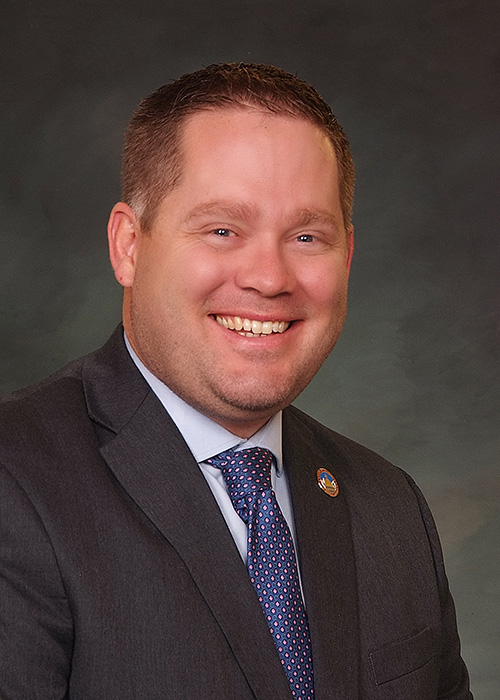
Sen. Kyle Mullica
Sponsored bills
The act creates the Colorado sexual assault forensic medical evidence review board (board), consisting of the attorney general, or their designee, as board chair; the executive director of the Colorado district attorneys' council, or their designee; and various members appointed by the attorney general or the governor. The board's duties include reviewing and monitoring processes related to sexual assault response, making recommendations to improve sexual assault response, and submitting an annual report concerning its duties. The act creates a notification requirement under the "Victim Rights Act" that requires a law enforcement agency to notify a victim every 90 days when the law enforcement agency has not received the results of the forensic medical evidence DNA analysis from an accredited crime laboratory. The act requires an accredited crime laboratory to endeavor to analyze forensic medical evidence within 60 days after its receipt. The act expands public reporting requirements concerning forensic medical evidence and DNA evidence backlogs. For the 2025-26 state fiscal year, the act appropriates $112,365 from the general fund to the department of law for use by the administration division to implement the act. (Note: This summary applies to this bill as enacted.)
The act makes it a deceptive trade practice under the "Colorado Consumer Protection Act" for a person who consults with, advises, or assists a veteran in connection with a claim for veterans' benefits (veterans' benefits matter) to: Receive compensation in excess of the lesser of $9,200 or 25% of the amount of any past-due benefits the veteran actually receives after the person procures an increase in the veteran's monthly benefits; Receive compensation in connection with a claim filed prior to a veteran's release from active duty or within the one-year period following a veteran's release from active duty; Guarantee a successful outcome in a veterans' benefits matter; Fail to memorialize the payment terms and certain disclosures in a written, signed contract; Omit certain disclosures from advertising or make false representations about accreditation; Fail to take various security measures related to veterans' personal information; or Provide services in connection with an appeal or review of the veterans administration's initial decision in a veterans' benefits matter, unless the service provider is accredited by the veterans administration. The act requires the attorney general or district attorney to transmit any civil penalty collected for a violation of the veterans' benefits matter provisions to the state treasurer for deposit in the Colorado state veterans trust fund. (Note: This summary applies to this bill as enacted.)
If a service member's driver's license expires while they are serving on active duty outside of Colorado, the driver's license expiration date is extended for 3 years or until 90 days after the service member returns to the state. The act designates the service member's dependents as also subject to the extension of their driver's license expiration date. (Note: This summary applies to this bill as enacted.)
The act requires the state board of education (state board) to adopt standards related to Black historical and cultural studies (standards). Local education providers shall incorporate the standards into courses for public elementary and secondary school students in the state no later than 2 years after the state board adopts the standards. The act aligns the timeline for the development, adoption, and integration of the standards with the 6-year cycle that the state board of education currently uses for revising the state academic standards. The act creates the Black historical and cultural studies advisory committee (committee) in the department of education (department) to recommend standards and related materials and to provide technical assistance at the request of local education providers implementing the standards. The committee's recommendations must include updates to the state's history and civics standards and must advance developmentally appropriate but comprehensive instruction that features factual accounts of the struggles and contributions of Black Americans in all fields of endeavor. Using the committee's recommendations, the department will create and maintain a resource bank of research-based, scholarly articles and promising program materials and curricula pertaining to Black historical and cultural studies. For the 2025-26 state fiscal year, the act appropriates $19,225 from the general fund to the department for costs related to content specialists. (Note: This summary applies to this bill as enacted.)
Beginning January 1, 2027, the act requires large group health benefit plans to provide coverage for the treatment of the chronic disease of obesity and the treatment of pre-diabetes, including coverage for a comparable program to the national diabetes prevention program, medical nutrition therapy, intensive behavioral or lifestyle therapy, and metabolic and bariatric surgery. For a large group health benefit plan offered in the state, the act requires carriers to offer the policyholder the option to purchase coverage for FDA-approved anti-obesity medications, including at least one FDA-approved GLP-1 medication. The commissioner of insurance may adopt rules for the implementation of the act. (Note: This summary applies to this bill as enacted.)
The healthy school meals for all program (program) reimburses participating school food authorities for meals that those authorities provide to students without charge. Section 2 of the act allows the amount of these reimbursements to be modified in 2 different scenarios. First, if a referred measure that would, in combination with the income tax deduction modification that was approved by the voters in connection with the program, result in the collection of at least $150 million for the income tax year commencing on January 1, 2026, is not approved by the voters voting on the referred measure at the 2025 statewide election, the department of education (department) is required to only provide reimbursements to participating school food authorities for meals served at eligible sites. Eligible sites are those that either: Qualify for the community eligibility provision program, as that program exists on November 15, 2025; or Are identified as eligible sites by the department based on the amount that the general assembly appropriates for the purpose of providing reimbursements to a participating school food authority for offering eligible meals without charge and the percentage of a site's student enrollment who are certified as eligible for free meals based on documentation of benefit receipt or categorical eligibility as described in federal rule, or any successor regulations. Second, if the department, in consultation with the office of state planning and budgeting, determines that the amount that the general assembly appropriated for the purpose of providing reimbursements to a participating school food authority is less than the costs of the department providing those reimbursements, the department may determine a prorated reimbursement amount for the reimbursements that the department provides through the program to each participating school food authority for the remainder of that budget year. Sections 4 and 6 limit the existing authority of the department, if the department determines that there is an insufficient amount of money in the healthy school meals for all program cash fund (fund) for the department to provide reimbursements to a participating school food authority for offering eligible meals without charge, to make an expenditure from the general fund to provide those reimbursements to state fiscal years commencing on or before July 1, 2024. Section 3 allows the general assembly to appropriate money from the state education fund to cover program costs for which there is not sufficient money in the fund, as it was required to do for state fiscal years 2024-25, for state fiscal year 2025-26. Section 4 requires the department, on January 15, 2027, in consultation with the office of state planning and budgeting, to report to the joint budget committee on whether there is a sufficient balance in the fund for: The state treasurer to transfer an amount from the fund to the state education fund equal to the total amount of expenditures from the state education fund for the program for state fiscal years 2022-23, 2023-24, 2024-25, and 2025-26 minus the amount of additional tax revenue deposited in the state education fund as a result of the increase in state income tax generated in connection with voter approval of the program for those same fiscal years; and The department to provide reimbursements to a participating school food authority for offering eligible meals without charge. Section 8 extends the local school food purchasing program indefinitely, so that the program extends beyond the 2024-25 school year. Section 9 similarly extends the required reporting on the local school food purchasing program. Section 11 decreases the appropriation for school meal reimbursements provided through the program from the general fund by $42,240,242 and increases the appropriation from the state education fund by $8,119,271 for the same purpose. (Note: This summary applies to this bill as enacted.)
The act requires the office of just transition (office) in the department of labor and employment to prioritize awarding funding to support tier one and tier 2 coal transition communities experiencing socioeconomic impacts of coal closures and for opportunities for economic diversification, local community input, feasibility studies of specific proposed projects, and needs assessments. The office is required to use money appropriated to the just transition cash fund after July 1, 2025, to support programs that support targeted investment in coal transition communities by collaborating with coal transition communities and eligible entities, state and regionally recognized governmental and economic development entities, employee organizations that represent coal transition workers, and workers who are not affiliated with employee organizations to implement the most effective projects and programs for those communities. The act requires the office to annually report to the joint budget committee and at the annual "State Measurement for Accountable, Responsive, and Transparent (SMART) Government Act" hearings of the senate local government and housing committee and the house transportation, housing, and local government committee about the grants awarded by the office during the preceding state fiscal year, their recipients, and the purpose for which they were awarded. A public entity may invest public funds only as allowed by law. The act specifies that the investment of a payment or settlement to offset the socioeconomic impacts to a community or government from the closure of a coal mine or coal power generating station is not subject to these investment limitations. The act allows the executive director of the department of local affairs to establish a policy preference for awarding up to 70% of the money credited to the local government severance tax fund to just transition communities for a 3-year period beginning January 1, 2026. The act extends the deadline for the submittal by the director of the Colorado energy office of the findings and conclusions of assessments of advanced energy solutions in the northwestern and west end of Montrose county and in southeastern Colorado from July 1, 2025 to December 19, 2025, and makes the requirement that the findings and conclusion be submitted contingent on the director having sufficient federal money to support the submittal. (Note: This summary applies to this bill as enacted.)
In 2019, the division of insurance within the department of regulatory agencies (department) established the primary care payment reform collaborative (collaborative) to, among other things, advise in the development of affordability standards and targets for insurance carrier investments in primary care, identify barriers to the adoption of alternative payment models by health-care providers and insurers, and develop recommendations to address barriers. The act implements the recommendations of the department's sunset review and report by: Continuing the collaborative for 7 years, until September 1, 2032; and Scheduling the next sunset review of the collaborative to be conducted pursuant to the sunset review structure for advisory committees. In addition, the act clarifies that the collaborative is required to ensure the development and consideration of alternative payment models that are responsive to the needs of primary care delivery in pediatrics and that the commissioner of insurance is required to invite pediatric primary care providers to participate in the collaborative. (Note: This summary applies to this bill as enacted.)
The act refers 2 ballot issues to the voters at the November 2025 statewide election concerning funding for the healthy school meals for all program. Section 2 refers a ballot issue to the voters at the November 2025 statewide election to allow the state to retain and spend state revenue that would otherwise need to be refunded for exceeding the estimate in the ballot information booklet analysis for Proposition FF and to allow the state to maintain the increases in state taxable income established in Proposition FF that would otherwise need to be decreased. If voters reject the ballot issue, the state will both: Refund $12,430,388 to individuals who have a federal taxable income of $300,000 or more and claimed itemized or standard state income tax deductions greater than $12,000 for single tax return filers and $16,000 for joint tax return filers; and Adjust the limit on itemized deductions established in Proposition FF to a level that would have reduced the amount of income tax revenue attributable to these itemized deductions by $12,430,388. If voters approve the ballot measure: The state will not refund $12,430,388 to individuals who have a federal taxable income of $300,000 or more and claimed itemized or standard state income tax deductions greater than $12,000 for single tax return filers and $16,000 for joint tax return filers; and The increases in federal taxable income as a result of Proposition FF will stay at the levels established by Proposition FF. Section 3 refers a ballot issue to the voters at the November 2025 statewide election to allow the state to increase taxes by $95 million annually by increasing state taxable income to support the healthy school meals for all program. If voters approve the ballot issue: Income tax deductions for individuals who have a federal taxable income of $300,000 or more will be reduced from current levels to $1,000 for single filers and $2,000 for joint filers; and The state will allocate the additional revenue generated by the reduction in income tax deductions to the healthy school meals for all program. If voters reject the ballot issue, income tax deductions will not be reduced, and there will not be any additional revenue to be allocated to the healthy school meals for all program. In addition to the income tax changes and potential refunds that may result from voters approving or rejecting the ballot issues described in sections 2 and 3, the act also changes the healthy school meals for all program cash fund (fund) and healthy school meals for all programs. If voters approve the ballot issue submitted pursuant to section 2 and reject the ballot issue submitted pursuant to section 3, $1 million is transferred annually from the fund to local school food purchasing programs. If voters approve the ballot issue submitted pursuant to section 3, regardless of whether the voters approve the ballot issue submitted pursuant to section 2: The permissible distribution of local food purchasing grants is modified; Certain school food authorities are allowed to collaborate to implement advisory committees; The duties of an advisory committee are clarified; and The distribution of funds from the fund is changed so that the amounts distributed through local food purchasing grants for increasing wages or providing stipends for individuals whom the participating school food authority employs to directly prepare and serve food for school meals and through the local school food purchasing technical assistance and education grant program are modified based on the amount of money in the fund. NOTE: Certain provisions of the act are contingent on the results a measure concerning Proposition FF refunds or Proposition FF revenue increases being either approved or not approved by a majority of voters at the November 2025 statewide election.(Note: This summary applies to this bill as enacted.)