Maddy summarySJR 25-024 is a procedural resolution that establishes the final adjournment date for the First Regular Session of the Seventy-fifth General Assembly. It declares that when the session concludes on May 7, 2025, it will stand adjourned "sine die," meaning it will be the final adjournment without a set date to reconvene. This directly affects the members of the General Assembly by formalizing the end of their legislative session.
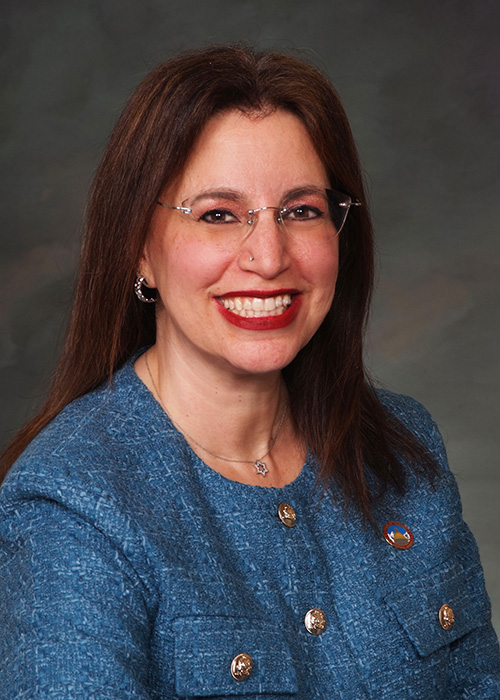
Sen. Dafna Michaelson Jenet
Sponsored bills
Maddy summarySJR 25-020 is a commemorative resolution that recognizes Colorado Mesa University's 100-year anniversary. The bill celebrates the university's history, achievements, and impact on students and the western Colorado community. It directs that copies of the resolution be sent to the university's Board of Trustees and Century Project Steering Committee.
Maddy summarySJR 25-019 is a joint resolution that recognizes April 10, 2025, as "Home Education Day" in Colorado. It aims to honor, thank, and celebrate home educators and their home-educated children in the state.
The act allows a currently licensed Colorado teacher seeking to add an early childhood education endorsement, early childhood special education endorsement, elementary education endorsement, or special education generalist endorsement to demonstrate professional competencies by submitting evidence of achieving sufficiently high education coursework grades on coursework aligned with relevant standards as approved by the department of education. If the applicant spots for the multiple measures pathway are not filled, the act allows currently licensed Colorado teachers who are seeking additional licensure endorsements to demonstrate professional competencies using the multiple measures pathway. The act clarifies that 4-year institutions of higher education that offer programs of off-campus instruction and that have courses included in the guaranteed transfer pathway matrix or that are part of a statewide degree transfer agreement may participate in the teacher recruitment education and preparation program. (Note: This summary applies to this bill as enacted.)
Under current law, a person engages in an unfair and unconscionable act or practice in violation of consumer protection laws if the person engages in price gouging during a declared disaster emergency. The act provides that a person engages in price gouging in the sale or offer for sale of certain goods or services if, after the governor declares a disaster emergency, which declaration may be based on a market disruption, the price of the good or service is increased by 10% or more above the price at which a similar good or service was sold or offered for sale before the disaster began. The act also establishes that seasonal pricing is not considered unreasonably excessive pricing and therefore is not price gouging. (Note: This summary applies to this bill as enacted.)
Legislative Oversight Committee Concerning the Treatment of Persons with Behavioral Health Disorders in the Criminal and Juvenile Justice Systems. Current law establishes the youthful offender system in the department of corrections as a sentencing option that provides a continuum of services. Section 1 of the bill: Revises certain legislative declaration provisions to emphasize lasting behavioral changes in preparation for reentry, accountability, healthy relationship building, and offender and staff safety; Adds language related to housing arrangements and equitable treatment for youthful offenders, including youthful offenders with disabilities; Adds a requirement for rehabilitative treatment and life skills programming and, in certain cases, for individual and family therapy and substance use disorder treatment; Elaborates on clinician evaluations, tailored treatment plans, and client manager requirements for youthful offenders; and Imposes an annual reporting requirement beginning in January 2026. Section 2 of the bill applies the standards for determining competency in juvenile delinquency cases to juveniles who have charges directly filed against them in adult court, juveniles whose cases are transferred to adult court, or juveniles subject to concurrent court jurisdiction. Section 3 of the bill permits bridges court liaisons to access juvenile competency evaluations and related information. Current law sets forth procedures for court determinations of a juvenile's competency in juvenile justice proceedings. Section 4 of the bill requires a court to dismiss the case against a juvenile if the court makes a final determination that the juvenile is incompetent to proceed and the juvenile's highest charged act is a class 2 misdemeanor, a petty offense, a drug misdemeanor, or a traffic offense. Under current law, one year after a court finds a juvenile charged with a level 4 drug felony is incompetent to proceed the court shall enter a finding the juvenile is unrestorable to competency and shall determine whether a management plan is necessary for the juvenile. The bill reduces the time from one year to 6 months. The bill imposes certain limitations on a case management plan's contents in cases that involve sexual conduct and addresses court responses when a juvenile or a juvenile's parent or guardian fails to engage with a management plan's ordered services. Section 5 of the bill requires that a person sentenced for a delinquent act committed as a juvenile receive credit for any period of confinement prior to sentencing. Section 6 of the bill creates the deflection and community investment grant program (grant program) in the office of adult and juvenile justice assistance in the division of criminal justice to provide grants to eligible nonprofit and tribal applicants to implement a mixed-delivery system of trauma-informed health and development deflection programs for youth, including Native American youth.(Note: This summary applies to this bill as introduced.)
The bill creates the fostering success pilot program (pilot program) in the department of human services (department). The pilot program is a 2-part program, which includes: The supplemental support for foster students program (supplemental support program), which awards $2,000 scholarships annually to a foster care provider, kinship foster care provider, or a non-certified kinship care provider (provider) who cares for a youth in the legal custody of a county department of human or social services until the youth graduates from high school; and The milestone incentives program (milestone program), which awards $1,000 to a youth for successfully graduating from high school. On or before September 30, 2025, subject to available appropriations, the department shall contract with a third-party administrator (administrator) to develop, implement, and administer the pilot program. The department shall contract with an administrator that is: A nonprofit organization; Experienced working with students and families; and Experienced administering student scholarship and grant programs. On or before December 31, 2025, subject to available appropriations, the department shall establish a timeline for: Announcing the pilot program; Accepting applications from youth and their providers; and Selecting youth and their providers to participate in the pilot program. The department shall select youth and provider participants in the order of applications received. A youth and their provider selected to participate in the pilot program must participate in the supplemental support program and the milestone program. The administrator may contract with one or more private entities to develop and implement a system to establish scholarship accounts that allows payment to qualifying vendors by electronic means from an online portal. The administrator shall: Ensure that the scholarship account is accessible through an online portal for the provider to facilitate payments to a qualifying vendor for the supplemental support program; Ensure the transfer of scholarship funds from the online portal directly to a qualifying vendor without direct access to scholarship funds by a provider; and Distribute money to each scholarship account. The administrator shall ensure that a youth has sole access to the milestone program award funds. There are no restrictions on how the youth may use the milestone program award funds. On or before July 1, 2028, the administrator shall administer a survey to youth and their providers to receive feedback on the pilot program. On or before October 31, 2028, the administrator shall report to the department the following information: The number of participants selected for the pilot program; The amount of money awarded through the pilot program; The survey results from youth and their providers; and How the pilot program affected the youth's performance in school. On or before December 31, 2028, the department shall submit a report summarizing the information collected from the survey to the education committees of the house of representatives and senate, the health and human services committees of the house of representatives and senate, or their successor committees. (Note: This summary applies to this bill as introduced.)
The act provides that, after the state housing board (board) adopts rules about any activity required to undertake or complete the construction or installation of a factory-built nonresidential structure, a factory-built residential structure, or a factory-built tiny home (factory-built structure), the state plumbing board, the state electrical board, and the state fire suppression administrator do not have jurisdiction over and their rules do not apply to a factory-built structure. The advisory committee on factory-built structures and tiny homes (advisory committee) is required to develop regional building codes standards accounting for local climatic and geographic conditions and fire suppression activities to ensure safety, to apply the most stringent of these requirements for the construction and installation of factory-built structures, and to develop implementation requirements. The advisory committee must submit the recommended codes and implementation requirements to the board. Any future statewide adopted codes contemplated in statute must be vetted through the advisory committee for consideration for adoption by the board. The act requires that plumbing or electrical installations that connect factory-built structures to external utility sources and that are not considered actions to complete the installation of a factory- built structure as required by a registered installer must be completed by a licenced plumber or electrician under a registered plumbing or electrical contractor. The inspection and inspectors of these installations, other than those authorized to be performed by a registered installer, must be performed by licensed plumbing or electrical inspectors. During the 2026 legislative session, the department of local affairs (department) shall present the recommendations of the advisory committee related to the development of regional building codes accounting for local climatic and geographic conditions and fire suppression activities, and improved coordination between the state and local permitting process onsite for the construction and installation of factory-built structures, to the senate local government and housing committee and the house transportation, housing, and local government committee prior to consideration and adoption by the board. The department shall report on the outcomes as part of its 2031 "SMART Act" hearing. On or before July 1, 2026, the board must adopt rules: Establishing regional building code standards from the advisory committee that account for local climatic and geographic conditions, and fire protection and suppression activities for the construction and installation of factory-built structures developed by the advisory committee, which supersede any conflicting ordinance, code, regulation, or other law of a local government unless the local government adopts the rules of the board; Establishing requirements based on the recommendations developed by the advisory committee, including the continued authorization of a local government certified by the division of housing (division) to perform inspections of factory-built structures on behalf of the division and registration, responsibility, and accountability requirements for a manufacturer, installer, seller, or general contractor who develops the installation site or completes the construction of a factory-built structure at the installation site; Covering electrical or plumbing codes required to undertake or complete the construction or installation of a factory-built structure; Allowing the division to contract for third-party review and approval of a final design and construction plan for a factory-built structure on behalf of the division; Allowing the division to create a process for vetting and approving the ability of a third party to review and approve a final design and construction plan for a factory-built structure on behalf of the division; and Requiring the division to cause an audit to be performed on a third party that reviews and approves design and construction plans, on a third party that conducts inspections on its behalf, of contracts of sellers to verify compliance, and to ensure protection of down payments made by purchasers that are retained by the seller of manufacturer. A county or municipality may not: Enact a regulation that excludes factory-built structures from the county or municipality; Impose more restrictive standards on factory-built structures than those that the county or municipality applies to site-built homes in the same residential zones in the county or municipality; or Enact or enforce a regulation, law, or ordinance affecting the installation or construction of a factory-built structure that is more stringent than a regulation, ordinance, or law that applies to other types of construction. A county or municipality may enact: Land use regulations to the extent that the regulations are applicable to existing similar housing or structures or new site-built housing in the county or municipality; A building code provision for unique public safety requirements unless the provision applies to a factory-built structure; and Rules regulating above-grade site-built components of a factory-built structure. Factory-built homes certified by the division prior to the effective date of the regional building code standards adopted by the board are subject to state or local rules concerning unique public safety requirements related to geographic conditions or wildfire risk relating to the construction and installation of the structures existing before the effective date of the regional building code standards. A county or municipality must comply with the requirements established by the division for factory-built structures and by the United States department of housing and urban development for manufactured homes. The act repeals the ability of local governments to adopt different standards for factory-built housing than those adopted by the division only if: The board adopts rules establishing requirements for factory-built housing based on the recommendations of the advisory committee; and The board notifies the revisor of statutes in writing via email of the adoption of the rules. The act changes the composition of the advisory committee from 15 to 19 members. The membership changes include the: Addition of four members from building code enforcement, each representing a local building department from climate zones 4, 5, 6, and 7, instead of 3 members from building code enforcement; Removal of a member with experience in mechanical engineering or contracting; Substitution of a member who is a licensed electrician who may be employed by the department of regulatory agencies for a member from electrical engineering or contracting; Substitution of a member who is a licensed plumber who may be employed by the department of regulatory agencies for a member from the plumbing industry; Removal of a member from the construction design or producer industry; Substitution of 3 members from factory-built structure construction for 2 members from manufactured housing; Subtraction of one of the 2 current members from the tiny home industry; Addition of one member who is a developer specializing in the use of factory-built structures in projects; Addition of one member from climate resiliency; Addition of one member who is a registered installer; Addition of one member who is a registered seller; and Addition of one member who is an individual representing emergency services or management. The state treasurer shall transfer $600,000 on July 1, 2025, from the innovative housing incentive program fund to the building regulation fund. The act excludes the building regulation fund from the limitations on cash fund reserves. For the 2025-26 state fiscal year, the act appropriates $182,264 from the building regulation fund to the department for use by the division to implement the act. (Note: This summary applies to this bill as enacted.)

Maddy summaryHJR 25-1028 designates Friday, April 25, 2025, as "Sportsmen's Day" in Colorado. This resolution aims to recognize the contributions of Colorado's sportsmen and women to conservation efforts and the state's economy. It also encourages members of the General Assembly to join the Colorado Legislative Sportsmen's Caucus and urges public and private institutions to work with the caucus.
Maddy summaryHouse Joint Resolution 25-1027 designates a specific portion of Colorado State Highway 1 in Larimer County, from East County Road 60 to Interstate 25, as the "Commissioner Lew Gaiter III Memorial Highway." It authorizes the Colorado Department of Transportation (CDOT) to accept donations for the initial placement of signs and to explore a cooperative agreement with Larimer County for sign maintenance.