

The bill states that the general assembly intends that the department of corrections (department) shall close excess facilities, as prioritized by a 2013 prison utilization study, when prison population projections indicate excess capacity within correctional facilities. The bill states that on or before June 30, 2019, and thereafter, the department shall operate the Centennial south campus of the Centennial correctional facility to: Administer a diagnostic program; Administer a reentry program; Provide support and other services to the department; and Use the remaining capacity of the campus to house inmates, as appropriate. Current law prohibits the department from operating the Centennial south campus for the purpose of housing inmates in housing units. The bill removes this prohibition and appropriates money to make physical modifications at the Centennial south campus to comply with legal requirements for housing inmates. The bill renames the facility formerly referred to as the 'Denver reception and diagnostic center' as the 'Denver correctional facility' and requires the Denver correctional facility to administer a residential treatment program that provides mental health treatment services to inmates. The department shall also utilize the Denver correctional facility to house inmates with physical, cognitive, and medical conditions that require long-term treatment. The bill states that on and after July 1, 2019, subject to available appropriations, the Centennial north campus shall serve as a transportation unit for the department and as a support facility for the Centennial correctional facility. The bill requires the department to include certain information in its annual 'State Measurement for Accountable, Responsive, and Transparent (SMART) Government Act' report to the committees of reference through 2023. (Note: This summary applies to the reengrossed version of this bill as introduced in the second house.) Read More
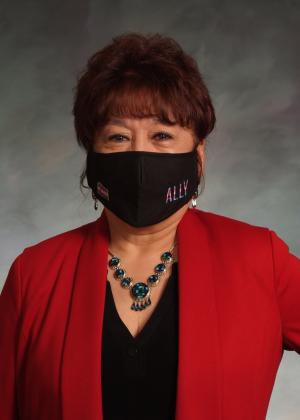
Sponsored bills
Current law specifies that any individual who claims the basic standard deduction on their federal income tax return, and is therefore unable to claim a federal itemized deduction for charitable contributions, may take a deduction on their Colorado income tax return for the portion of the charitable contributions that exceed $500 that the individual makes during the tax year. The bill specifies, by removing the $500 calculation threshold, that for income tax years commencing on or after January 1, 2019, an individual who claims the basic standard deduction on their federal income tax return may take a deduction on their Colorado income tax return for all of the charitable contributions that they make during the tax year.(Note: This summary applies to this bill as introduced.) , Read More
The bill requires the state court administrator to administer a court reminder program to remind criminal defendants to appear at their scheduled hearings in the county courts and district courts of the state, except for the Denver county court. The objective of the program is to significantly reduce the number of defendants who are committed to the custody of a county jail solely as a result of their failure to appear in court. The bill makes an appropriation. (Note: This summary applies to the reengrossed version of this bill as introduced in the second house.) , Read More
Legislative Oversight Committee Concerning the Treatment of Persons with Mental Health Disorders in the Criminal and Juvenile Justice Systems. The bill requires the department of corrections to: Monitor the number of inmates who need sex offender treatment or services and the number who are not receiving such treatment or services; Develop an incentive plan to contract for more mental health professionals to provide sex offender treatment or services in difficult-to-serve geographic areas; and Report to the joint budget committee the number of inmates needing treatment or services, the number not receiving the treatment or services, and the impact of the incentive plan.(Note: This summary applies to the reengrossed version of this bill as introduced in the second house.) Read More
At the sentencing hearing for a defendant convicted of a crime in which an element of the crime is an act of sexual intrusion or sexual penetration, the court shall make specific findings of fact regarding the act. If the court finds that an act of sexual intrusion or sexual penetration occurred, the court shall enter a finding of rape and shall state the finding on the record.(Note: This summary applies to this bill as introduced.) , Read More
Currently, Columbus day is one of 10 legal holidays in Colorado. Section 2 of the bill repeals Columbus day as a state legal holiday and replaces it with election day. 'Election day' is defined to fall on the day of a general election in even-numbered years and the day on which ballot issues must be decided under the state constitution in odd-numbered years. Section 1 contains a nonstatutory legislative declaration and sections 4 and 5 make conforming amendments.(Note: This summary applies to this bill as introduced.) , Read More
The bill specifies that the period of time wherein a tax must be assessed is extended in the case of a taxpayer whose assets are in the control or custody of a court or in the case of a taxpayer who has filed bankruptcy proceedings. The bill also provides clarifications regarding: The department of revenue's authorization to sell a delinquent taxpayer's motor vehicle; Other remedies that a district court has available in the case of a delinquent taxpayer; and When property or rights to property must be surrendered to the executive director of the department of revenue and what the penalties are for failing to surrender such property.(Note: This summary applies to the reengrossed version of this bill as introduced in the second house.) , Read More
The bill requires the contractor for any public project that does not receive any federal money to use apprentices registered with an apprenticeship program for at least 25% of the workforce in an apprenticeable occupation that is hired to work on the public project (apprenticeship requirements). The apprenticeship program must be registered with the United States department of labor, office of apprenticeship. For purposes of the bill, a public project is a project under the supervision of any state agency, including the department of transportation, that is likely to cost $500,000 or more in any fiscal year. A government agency may consider a bid or proposal for a public project that does not receive any federal money only if the bid or proposal indicates that at least 25% of the project workforce that is in an apprenticeable occupation and that is hired by the contractor to work on the public project will be apprentices registered with an apprenticeship program. Upon completion of a public project, the contractor is required to submit an affidavit to the government agency stating that the contractor has either complied with the apprenticeship requirements or has made a good faith effort to comply. If the contractor complied with the apprenticeship requirements, the affidavit must include the names of the registered apprentices, identify the specific apprenticeship programs with which the apprentices are registered, and specify the total number of people in the workforce for the public project who are in apprenticeable occupations. If the contractor did not comply with the apprenticeship requirements, the affidavit must include documentation of the contractor's good faith effort to comply. If the contractor fails to submit the affidavit or if the state agency finds that the affidavit does not reflect the contractor's compliance or good faith effort to comply with the apprenticeship requirements, the agency may retain any unallocated portion of the amount of the contract price that the agency is authorized to withhold until the contract is completed as liquidated damages. The bill specifies that the apprenticeship requirements do not supersede existing statutory requirements for licensed apprenticeable occupations. (Note: This summary applies to the reengrossed version of this bill as introduced in the second house.) , Read More
The bill states that, except in certain cases, a court shall not require a defendant arrested and charged for any misdemeanor, petty offense, or municipal code violation to post monetary bail as a condition of being discharged from custody. A defendant who is charged with an offense other than a felony may not be released from custody under his or her own recognizance until he or she signs and files with the clerk of the court or other designated person a written release agreement that includes certain promises. Current law requires any pretrial services program to be established pursuant to a plan formulated by a community advisory board created for such purpose and appointed by the chief judge of the judicial district. The bill makes this requirement merely permissible. The bill states that if a person is in custody and the court imposed a monetary condition of bond for release, and the person, after 5 days from the setting of the monetary condition of bond, remains in custody because he or she is unable to meet the monetary obligations of the bond, upon motion of the person, the court shall forthwith conduct a hearing to reconsider the monetary condition of the bond. (Note: This summary applies to the reengrossed version of this bill as introduced in the second house.) , Read More