

The act creates the circular economy development center (center) in the department of public health and environment (department). The purpose of the center is to grow existing markets; create new markets; and provide necessary infrastructure, systems, logistics, and marketing to create a sustainable circular economy for recycled commodities and compost in Colorado. On or before July 1, 2023, subject to available appropriations, the department must contract with a third-party administrator to operate the center. The center must conduct a statewide, end-market gap analysis and opportunity assessment and submit a final report of the analysis and assessment to the department by August 1, 2024. Beginning September 1, 2023, and on or before each September 1 thereafter, the center must also submit a report to the department describing the progress of the center. The department must include the report in its annual presentation to the general assembly pursuant to the "State Measurement for Accountable, Responsive, and Transparent (SMART) Government Act". The center is repealed, effective September 1, 2030. Before the repeal, the activities of the center are scheduled for a sunset review by the department of regulatory agencies. The act requires the front range waste diversion enterprise (enterprise), in coordination with the department, to pay for direct and indirect costs associated with the operation of the center through the front range waste diversion cash fund (fund). The act also makes changes to the front range waste diversion enterprise grant program as follows: Current law imposes limitations for grant applications that are received from a waste hauler or a landfill owner or operator. Specifically, as to the portions of such an application that relate to infrastructure or equipment, only 50% of infrastructure or equipment can be funded through the grant program and, if the board of directors of the enterprise (board) awards a grant to a waste hauler or landfill owner or operator for infrastructure or equipment, the grantee is ineligible to receive a grant for the following 5 years. The act removes these limitations. Current law prohibits the board from allocating more than 20% of the annual fund revenue in any single grant award. The act raises this maximum to 50%. The act also requires the department to use money appropriated from the recycling resources economic opportunity fund to pay for up to 40% of the direct and indirect costs associated with the operation of the center. Under current law, the solid waste user fee is repealed, effective July 1, 2026. The act eliminates this repeal date and extends, from September 1, 2029, to September 1, 2030, the repeal date of a specific user fee that is associated with the solid waste user fee. (Note: This summary applies to this bill as enacted.)
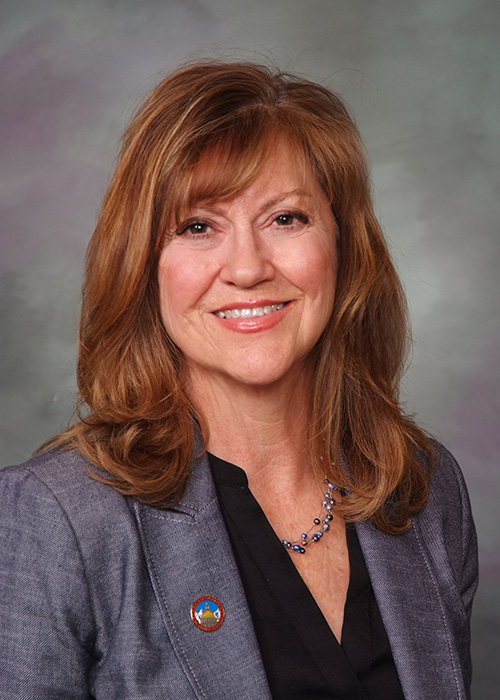
Sponsored bills
The act establishes the wildfire mitigation incentives for local government grant program (grant program) in the Colorado state forest service (forest service). The grant program is established to provide state funding assistance in the form of grant awards to local governments to either match revenue raised by such governments from a dedicated revenue source or to expand existing programs administered by the local government on a long-term basis, which efforts are intended to be used for forest management or wildfire mitigation efforts at the local level. Such wildfire mitigation efforts include, without limitation, projects that promote fuel breaks, forest thinning, a reduction in the amount or extent of fuels contributing to wildfires, outreach and education efforts directed at property owners and other members of the public, and any other means of forest management or wildfire mitigation as determined appropriate for funding by the forest service. On or before March 1, 2023, the forest service is required to adopt polices, procedures, and guidelines for the grant program that include, without limitation: Procedures and timelines by which an eligible recipient may apply for a grant; Criteria for determining grant eligibility and grant amounts; and Reporting requirements for grant recipients. Any funding awarded under the grant program must match either revenues raised by the local government from a dedicated revenue source or supplement existing programs administered by the local government on a long-term basis, which efforts are intended to be used for forest management or wildfire mitigation efforts at the local level in accordance with policies, procedures, and guidelines developed by the forest service. A local government is eligible for funding under the grant program even in the absence of a dedicated revenue source if the local government has created and administers an existing program, project, or funding mechanism that creates long-term funding at the local level for wildfire mitigation or forest health or has created and administers other creative and innovative approaches for promoting wildfire mitigation and forest health. In allocating funding under the grant program, preference must be given to certain eligible recipients based on prioritization factors enumerated in the act. Eligible recipients may apply for funding from the grant program, and the recipient's application for funding may be approved by the forest service before the local government has created a dedicated revenue source that forms the basis for the match if the electors of the local government approve a ballot issue creating the revenue source at an election that takes place in the same calendar year in which the funding is awarded. The act creates the wildfire mitigation incentives local government grant program fund (fund) in the state treasury. On July 1, 2022, the state treasurer is required to transfer $10 million from the general fund to the fund. The forest service is to use the money transferred to fund awards under the grant program and pay the administrative costs of the forest service in administering the grant program. On or before November 1, 2024, and on or before November 1 of each year thereafter, the forest service is required to publish a report summarizing the use of all of the money that was awarded under the grant program in the preceding fiscal year. The act specifies additional required components of the report. The report must be posted on the website of the forest service. The act requires the Colorado department of higher education to summarize the information contained in the report in its "State Measurement for Accountable, Responsive, and Transparent (SMART) Government Act" hearings. The act requires the forest service to prepare educational materials concerning the grant program and to display such materials on its official website. The forest service is also required to undertake outreach activities to inform local governments located in priority areas for wildfire mitigation of the grant program. The grant program is repealed, effective September 1, 2027. Before its repeal, the department of regulatory agencies is required to review the grant program as part of the general assembly's review of regulatory agencies and functions for repeal, continuation, or reestablishment. (Note: This summary applies to this bill as enacted.)
The act enacts the "Perfluoroalkyl and Polyfluoroalkyl Chemicals Consumer Protection Act" to establish a regulatory scheme that prohibits the sale or distribution of certain products that contain intentionally added perfluoroalkyl and polyfluoroalkyl chemicals (PFAS chemicals). On and after January 1, 2024, a person shall not sell or distribute in the state any products in the following product categories if the products contain intentionally added PFAS chemicals: Carpets or rugs; Fabric treatments; Food packaging; Juvenile products; and Oil and gas products. On and after January 1, 2024, a manufacturer of cookware sold in the state that contains intentionally added PFAS chemicals in the handle of the product or in any product surface that comes into contact with food, foodstuffs, or beverages is required to: List the presence of PFAS chemicals on the product label of the cookware; and Include a statement on the product label of the cookware that directs the consumer to a website with information about why PFAS chemicals were intentionally added to the product. On and after January 1, 2024, a manufacturer of cookware is prohibited from making a statement that the cookware is free of PFAS chemicals unless no individual PFAS chemical is intentionally added to the cookware. On and after January 1, 2025, a person shall not sell or distribute in the state any products in the following product categories if the products contain intentionally added PFAS chemicals: Cosmetics; Indoor textile furnishings; and Indoor upholstered furniture. On and after January 1, 2027, a person shall not sell or distribute in the state any products in the following product categories if the products contain intentionally added PFAS chemicals: Outdoor textile furnishings; and Outdoor upholstered furniture. The act includes products that do not contain intentionally added PFAS chemicals in the definition of "environmentally preferable products" for the purposes of state agency procurement. The act also: Requires a person that uses class B firefighting foam that contains intentionally added PFAS chemicals (firefighting foam) to prohibit a release of the firefighting foam into the environment, fully contain the firefighting foam during its use, safely store the firefighting foam, and report certain information to the water quality spills hotline within 24 hours if there is a release of the firefighting foam into the environment; Requires a person that uses firefighting foam to report its use to the water quality spills hotline within 24 hours after the use; Authorizes the attorney general to enforce laws regulating firefighting foams that contain PFAS chemicals; and Extends to January 1, 2024, the effective date of an existing restriction on the use of firefighting foam that contains intentionally added PFAS chemicals at certain airports.(Note: This summary applies to this bill as enacted.)
On or before June 1, 2023, the executive director (executive director) of the Colorado department of public health and environment (department) must designate a nonprofit organization (organization) to implement and manage a statewide program (program) that provides recycling services to covered entities in the state, which are defined as residences, public places, small businesses, schools, hospitality locations, and state and local government buildings. The program is funded by annual dues (producer responsibility dues) paid by producers of products that use covered materials (producers). Covered materials are defined as packaging materials and paper products. The act creates the producer responsibility program for statewide recycling advisory board (advisory board), which consists of members who have expertise in recycling programs and are knowledgeable about recycling services in the different geographic regions of the state. Prior to the implementation of the program, the organization must: On or before September 1, 2023, hire an independent third party to conduct an assessment of the recycling services currently provided in the state and the recycling needs in the state that are not being met (needs assessment); On or before January 30, 2024, report the results of the needs assessment to the advisory board and the executive director; On or before March 15, 2024, submit and present the needs assessment to the joint budget committee; and On or before February 1, 2025, after soliciting input from the advisory board and other key stakeholders, submit a plan proposal for the program (plan proposal) to the advisory board and executive director. The plan proposal will initially cover recycling services only for residential covered entities. The plan proposal must: Describe how the organization will meet certain convenience standards and statewide recycling, collection, and postconsumer-recycled-content rates (rates); Establish a funding mechanism through the collection of producer responsibility dues that covers the organization's costs in implementing the program and the costs of the department in overseeing the program; Establish an objective formula to reimburse 100% of the net recycling services costs of public and private recycling service providers (providers) performing services under the program; Provide a list of covered materials (minimum recyclable list) that providers performing services under the program must collect to be eligible for reimbursement under the program; Set minimum rate targets that the state will strive to meet by January 1, 2030, and January 1, 2035, and describe how the state can meet increased rates after 2035; and Describe a process and timeline, beginning no later than 2028, to expand recycling services to applicable nonresidential covered entities. As part of the program, the organization must: Utilize and expand on providers' existing recycling services to provide statewide recycling services at no charge to covered entities for all covered materials on the minimum recyclable list; Develop and implement a statewide education and outreach program on the recycling and reuse of covered materials; Contract with an independent third party to conduct an annual audit of the program; and Submit an annual report to the advisory board describing the progress of the program (annual report). On January 1, 2025, and each January 1 thereafter, as an alternative to participating in the program, a producer may submit an individual plan proposal to the advisory board. The advisory board will review and make recommendations on, and the executive director shall approve or reject, the individual plan proposal. The act establishes the producer responsibility program for statewide recycling administration fund (fund). On or before June 30, 2026, and on each June 30 thereafter, the department will notify the organization of its costs in overseeing and enforcing the program, and the organization will transmit a portion of the producer responsibility dues to the fund for the purposes of reimbursing the department for its costs. Effective July 1, 2025, a producer may not sell or distribute any products that use covered materials in the state unless the producer is participating in the program or, after January 1, 2029, as set forth in the final plan or another plan approved by the executive director. The advisory board has the following duties: Advise the organization on the needs assessment; Review the needs assessment; Review the plan proposal and make recommendations to the executive director regarding its approval or rejection; Consult with the organization on any amendments to the plan proposal and then make recommendations to the executive director regarding approval or rejection of the amendments; Review the annual report submitted by the organization; and Consult with the organization on the development and updating of the minimum recyclable list. The act establishes an administrative penalty for the organization's or a producer's violation of the relevant statutes and rules. The collected penalties are deposited into the recycling resources economic opportunity fund. For the 2022-23 fiscal year, $119,130 is appropriated from the general fund to the department to implement the act, of which $20,503 is reappropriated to the department of law to provide legal services for the department. (Note: This summary applies to this bill as enacted.)
The act requires the Colorado state forest service (forest service) to convene a working group (working group) that includes the division of fire prevention and control in the department of public safety (DFPC) and the United States forest service (USFS), and that may include other local, state, or federal partners and entities engaged in wildfire risk mitigation in the wildland-urban interface (WUI). The working group shall consider how best to conduct enhanced outreach campaigns during wildfire awareness month in 2023 and 2024, as well as other outreach efforts that inform and motivate residents in the WUI to engage in more wildfire risk mitigation. After considering feedback from the working group, the forest service shall implement an enhanced wildfire awareness month outreach campaign in conjunction with the DFPC and the USFS in 2023 and 2024, as well as other outreach efforts in the 2022-23 and 2023-24 state fiscal years. In implementing an enhanced wildfire awareness month outreach campaign and other outreach efforts, the forest service may, subject to available appropriations: Develop or contract for the development or placement of marketing and educational materials, including videos, direct mail, social media, print media, television and radio spots, and billboards; Conduct or contract for educational events targeted to residents in the WUI; Retain consultants, as necessary, to implement all or part of an outreach campaign, as well as other outreach efforts; Make enhancements to the forest service's web-based clearinghouse for technical assistance and funding resources and coordinate with working group partners and other entities to provide links to web-based educational resources and information; and Secure necessary staff to implement the outreach efforts. The act requires the state forester to report to the wildfire matters review committee during the 2023 and 2024 legislative interims concerning the outreach efforts implemented pursuant to the act, including the amount and use of money appropriated for outreach efforts and the impact of those efforts in increasing awareness of wildfire risk mitigation in the WUI. For the 2022-23 state fiscal year, the act appropriates $800,000 from the general fund to the healthy forest and vibrant communities fund for use by the Colorado state forest service in implementing the act. The act also authorizes the appropriation of money to the DFPC as necessary to implement the outreach plan. (Note: This summary applies to this bill as enacted.)
The food pantry assistance grant program is set to repeal on June 30, 2023. The act extends the food pantry assistance grant program through July 1, 2024. For the 2022-23 state fiscal year, the act appropriates $3 million from the general fund to be used for the purchase of Colorado agricultural products and agricultural products that hold cultural significance for indigenous first nations people, or for other cultures or subcultural groups, including the ways in which those agricultural products are produced. The act allows up to $100,000 annually of the appropriation to be used to hire a nonprofit entity to provide technical assistance to a grant recipient to train food pantries and assist in the location and purchase of Colorado agricultural products. (Note: This summary applies to this bill as enacted.)
The act allows fire departments, including fire protection districts and volunteer fire departments, to be compensated from certain state funding sources for wildland fire suppression activities conducted in the fire department's jurisdiction if the fire department relies primarily or solely on volunteer firefighters, the fire exceeds the department's capacity to extinguish or control, and the period of mutual aid has ended. The fire department must use money received to compensate volunteer firefighters in accordance with guidelines adopted by the division of fire prevention and control (division) in the annual wildfire preparedness plan. Boards of county commissioners are authorized to reimburse fire departments from county funds for wildland fire suppression activities conducted within the fire department's jurisdiction in the same circumstances. The act amends the existing local firefighter safety and disease prevention fund (fund) to require the division to give priority in awarding grants to governing bodies and volunteer fire departments that: Have lost tax revenues as a result of decreased assessment values due to a wildland fire within their jurisdiction in the previous 5 years; Rely solely or primarily on volunteer firefighters and serve communities affected by wildland fires; or Demonstrate the greatest need for additional funding to ensure the safety of volunteer and seasonal firefighters. In addition, money in the fund may be used to reimburse a multiple employer behavioral health trust (trust) for the direct costs of providing a behavioral health care to firefighters. In fiscal year 2022-23, the reimbursement to a trust is limited to $1 million. In subsequent years, the fire service training, certification, and firefighter safety advisory board makes recommendations on the amount that should be used for this purpose. The division is also authorized to directly purchase and distribute equipment and pay for training for governing bodies and volunteer fire departments without requiring a grant application. The general assembly is required to appropriate $1 million to the fund for fiscal year 2022-23, and to appropriate $5 million to the fund in each of fiscal years 2023-24 and 2024-25. On or before September 1, 2025, the staff of the joint budget committee is required to report on whether the amount of the annual appropriation should be adjusted based on current needs. The division is required to submit an annual report on expenditures from the fund to the wildfire matters review committee or a successor committee. An entity that employs firefighters, including volunteer firefighters, is required to participate in a trust to provide behavioral health-care services to its firefighters. The division is required to reimburse the trust for its direct costs, and if the available funding is insufficient, the requirement for employers to participate becomes optional. The trust is required to provide a program of basic services to firefighters for the prevention, diagnosis, and initial treatment of emotional, behavioral, or mental health disorders. The services are provided primarily on an outpatient basis, including telephonically or remotely. The trust is authorized to further define the services and benefits available and to adopt policies and procedures for the administration of the trust. The trust is required to report, together with the division, to the wildfire matters review committee on the extent to which the program is meeting the behavioral health-care needs of firefighters, the ongoing funding needs of the trust, and any other changes that are necessary to more effectively meet the behavioral health-care needs of firefighters. $1 million is appropriated from the general fund to the fund for use by the department. (Note: This summary applies to this bill as enacted.)
The act expands the grant program administered by the Colorado bureau of investigation (CBI) that assists counties in implementing recovery programs for persons who wander (grant program). A recovery program for persons who wander (recovery program), currently known as a lifesaver program, is a program under which a participant has a device that may be used to assist in attempting to electronically locate the participant. The act expands the grant program to apply to recovery programs established or maintained by counties and municipalities (local governments) or local government designees. The act also removes a limit on the amount of any single grant and a nonbinding intent statement regarding the maximum amount of money that the general assembly should spend on the grant program. Further, the act allows the executive director of the department of public safety to award grants to assist in maintaining and implementing recovery programs. The act also requires the CBI to establish a website that lists those local governments and local government designees that have a recovery program, describes how to contact those local governments and local government designees, lists resources for caretakers of persons with medical conditions that cause wandering, provides procedures to follow when a participant of a recovery program is determined to be missing, describes how the technology used by the various local governments and local government designees for recovery programs works, and provides any other information the CBI may conclude is necessary to better explain and publicize recovery programs. $100,000 is appropriated from the general fund to the recovery program for persons who wander cash fund for use by the CBI for operating expenses related to the Colorado crime information center and related personal services. (Note: This summary applies to this bill as enacted.)
The act requires the state treasurer to transfer $8,435,000 from the general fund to the department of state cash fund on July 1, 2022, for use by the department of state to offset the costs of reducing certain of the secretary of state's business-related fees during state fiscal year 2022-23. (Note: This summary applies to this bill as enacted.)
The bill requires all state departments to spend at least 50% of the money they spend on advertising to Colorado residents in a fiscal year on advertising through local newspapers. The bill further requires all departments to report on their advertising spending during their annual "State Measurement for Accountable, Responsive, and Transparent (SMART) Government Act" presentations. The bill also creates an income tax credit for supporting local newspapers. For income tax years beginning on or after January 1, 2023, but before January 1, 2033: A taxpayer is allowed a credit against their income taxes in an amount equal to 50%, not to exceed $250, of the total amount paid by the taxpayer for local newspaper subscriptions or memberships for the personal use of the taxpayer and of the contributions made by the taxpayer to nonprofit local newspapers; and A small business is allowed a credit against their income taxes, not to exceed $2,500, in an amount equal to the amount paid by the eligible small business for local newspaper advertising. If the amount of the credit allowed exceeds the amount of income taxes otherwise due in the income tax year for which the credit is being claimed, the bill permits the amount of the credit not used in the income tax year to be carried forward as a credit against subsequent years' income tax liability for a period not to exceed 10 years. Any amount of the credit that is not used after such period is not refunded to the taxpayer. (Note: This summary applies to this bill as introduced.)