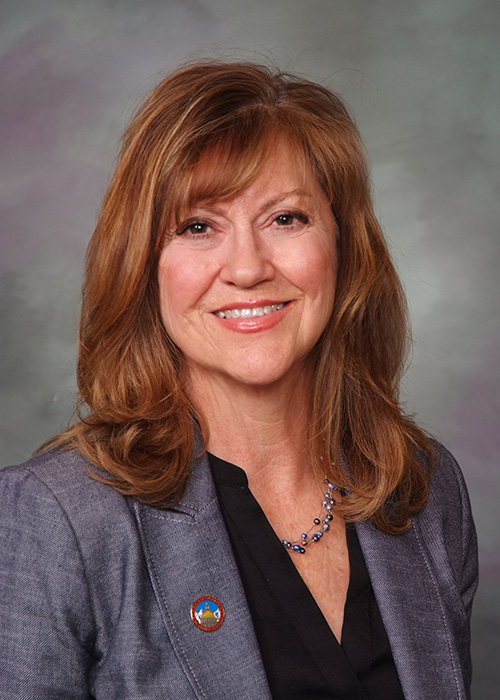
Photo of Lisa Cutter
D Colorado Senate · District 20

Sen. Lisa Cutter

Compare
Total votes
7,018
all sessions
Attendance
98%
114 missed
Near the chamber average
With party
98%
of cast votes
Higher than 83% of chamber peers
Bipartisan score
1%
crosses aisle rarely
Near the chamber average
Sponsored
771
bills & resolutions
Higher than 88% of chamber peers
Committees
4
assignments
771 bills and resolutions

Sponsored bills

Total
771
Primary
245
Co-sponsor
526
This page
771
matching current filters
Co-sponsor HJR 25-1030
Passed · Colorado House · Co-sponsor
Products with Forced Labor Components

Maddy summaryHouse Joint Resolution 25-1030 expresses the State of Colorado's strong opposition to the use of forced labor in the production of goods. The resolution states that Colorado will use its purchasing power to support businesses that ethically source or manufacture products without forced labor. It also encourages state and local economic development offices to attract businesses that avoid these labor practices. This joint resolution aims to influence state and local government purchasing decisions and promote ethical business standards.

Passed May 6, 2025 1 co-sponsor
Co-sponsor HJR 25-1026
Passed · Colorado House · Co-sponsor
Designate Representative Hugh McKean Memorial Highway

Maddy summaryHJR 25-1026 designates Colorado State Highway 402, from United States Highway 287 to Interstate 25, as the "Rep. Hugh McKean Memorial Highway." It also authorizes the Colorado Department of Transportation (CDOT) to accept donations for the initial placement of signs and to explore agreements with Larimer County for sign maintenance.

Passed May 6, 2025 1 co-sponsor
Primary HB 25-1078
Passed · Colorado House · Lead sponsor
Forestry & Firefighter Workforce & Education

Wildfire Matters Review Committee. Section 1 of the bill authorizes the Colorado cooperative extension service (extension) to expand and implement outreach programs and initiatives recommended by the Colorado forest health council for the purpose of increasing awareness of and interest in areas of forestry, wildland fire, and natural resources (forest health) in youth and young adults. The outreach programs and initiatives may be implemented for the 2025-26 state fiscal year through the 2027-28 state fiscal year and may include, in part: The expansion of 4-H programs and curricula in forest health; Partnerships with the forest health industry, local school districts, higher education institutions, conservation districts, the Colorado state forest service, the division of fire prevention and control in the department of public safety (division), and others to facilitate career and workforce readiness and entry into forest health careers; Outreach and support to youth and young adults relating to 2- and 4-year programs and certificates in forest health; Industry partnerships and scholarships for forest health certifications, such as wildland fire or chain saw certifications; Paid natural resources summer internships focused on forestry for high school students, including the potential to earn high school credit for completing the internship; and Paid internships in forest health careers offered by the extension, with mentoring of young adults by the extension, Colorado state university, the Colorado state forest service, and the division. The bill requires the extension to report annually to the department of natural resources and the house of representatives agriculture, water, and natural resources committee and the senate agriculture and natural resources committee on the implementation and outcomes of the outreach programs and initiatives. Section 2 authorizes the division to use money in the local firefighter safety and disease prevention fund to: Provide need-based grants to fire service governing bodies and volunteer fire departments for the cost of certain firefighter certification courses, course materials, textbooks, instructors, and written testing and to provide fire instructor I or equivalent certification for instructors who want to participate in a train-the-trainer program created by the division; Subject to appropriations by the general assembly, create a train-the-trainer program to ensure that all instructors providing grant-funded certification classes described in the bill teach a consistent curriculum; and Subject to appropriations by the general assembly, create a statewide outreach program to promote fire service careers, including marketing materials targeted to youth, an online portal to access career pathways and resources, and marketing materials that include social media. The bill requires the state treasurer to make an interest-free loan of $50 million from the unclaimed property trust fund (UPTF loan) to the department of local affairs (department). The department shall use the UPTF loan to create a zero-interest revolving loan program (loan program) to benefit fire departments. Eligible fire departments include town, city, county, and city and county fire protection organizations, fire protection districts, or other districts that provide fire protection, as well as volunteer fire departments. Eligible uses of loans made to fire departments under the loan program may include: The purchase of rolling stock, such as fire trucks, brush trucks, and fast attack vehicles, and associated apparatus; Capital improvements for existing or new facilities; The purchase of other facilities, infrastructure, or equipment for the state's firefighter workforce to respond to emergencies and ensure public safety; and Temporary bridge loans to cover unusual costs in response to emergencies. Prior to making loans to fire departments, the department shall consult with statewide associations representing fire chiefs and firefighters and the division of fire prevention and control in the department of public safety. The department may charge an administrative fee of up to one-half of one percent on the principal amount of the loans made to fire departments and may use earnings from the investment of the UPTF loan to administer the loan program. The bill creates a fund in the state treasury for use by the department for the UPTF loan and requires the department to pay the UPTF loan back to the UPTF not later than July 1, 2065. In addition, the bill creates the firefighter first homeownership program (homeownership program) and, if implemented, authorizes the state treasurer to invest money from the UPTF in the homeownership program. If implemented, the Colorado housing and finance authority or another entity selected by the state treasurer will serve as the program manager. The state treasurer shall purchase from the program manager mortgage products in tranches of reasonable amounts. The program manager shall establish guidelines and underwriting criteria that: Prioritize first-time homebuyers who use the home as a primary residence; Provide shared equity down payment assistance to firefighters; Allow appreciation-sharing benefits between the homeownership program and homeowner; If the program manager is the Colorado housing and finance authority, pair a borrower with a mortgage loan provided through the program manager's network of lenders that bears an interest rate at or below market rate; and Serve homebuyers across diverse geographic areas and housing markets. The program manager is entitled to normal and customary fees for managing the homeownership program and other costs related to the homeownership program, and shall annually report to the state treasurer concerning the homeownership program. (Note: Italicized words indicate new material added to the original summary; dashes through words indicate deletions from the original summary.) (Note: This summary applies to the reengrossed version of this bill as introduced in the second house.)


Passed May 6, 2025 0 co-sponsors
Co-sponsor SR 25-012
Passed · Colorado Senate · Co-sponsor
Commemoration of Cinco de Mayo

Maddy summarySenate Resolution 25-012 commemorates Cinco de Mayo, recognizing its historical significance and its representation of pride, unity, and resilience for Mexican American, Hispano, Chicano, and Latino communities. The resolution pays tribute to the contributions and struggles of these communities in Colorado and affirms a commitment to combat discrimination.

Passed May 5, 2025 1 co-sponsor
Co-sponsor HB 25-1169
Passed · Colorado House · Co-sponsor
Housing Developments on Faith and Educational Land

The bill requires a subject jurisdiction, on or after December 31, 2026, to allow a residential development to be constructed on a qualifying property that does not contain an exempt parcel, subject to an administrative approval process. A subject jurisdiction shall not allow a residential development to be constructed on a qualifying property unless the residential development complies with certain affordability requirements. The bill specifies that a subject jurisdiction shall not: Disallow construction of a residential development on the basis of height if the tallest structure in the residential development is no more than 3 stories or 45 feet tall; Disallow construction of a residential development on the basis of height if the tallest structure in the residential development complies with the height-related standards for the zoning district in which the residential development will be built or any zoning district parcel that is contiguous to the qualifying property on which the residential development will be built; Disallow construction of a residential development based on the number of dwelling units that the residential development will contain, except in accordance with standards listed in the bill; or Apply standards to a residential development on a qualifying property that are more restrictive than the standards the subject jurisdiction applies to similar housing constructed within the subject jurisdiction, including standards related to structure setbacks from property lines; lot coverage or open space; on-site parking requirements; numbers of bedrooms in a multifamily residential development; or on-site landscaping, screening, and buffering requirements; or minimum dwelling units per acre. A subject jurisdiction shall allow the following uses in a residential development on a qualifying property: Childcare; and The provision of recreational, social, or educational services provided by community organizations for use by the residents of the residential development and the surrounding community. A subject jurisdiction may condition additional uses in a residential development on the uses being allowed only on the ground floor of the residential development and the uses occupying no more than 15% of the ground floor area of the residential development. The bill requires a faith-based organization, school district, or state college or university to notify the county assessor that a subject jurisdiction has allowed the construction of a residential development on a qualifying property within the county. (Note: Italicized words indicate new material added to the original summary; dashes through words indicate deletions from the original summary.) (Note: This summary applies to the reengrossed version of this bill as introduced in the second house.)
Passed May 5, 2025 1 co-sponsor
Co-sponsor SB 25-009
Signed into law · Colorado Senate · Co-sponsor
Recognition of Tribal Court Orders

Current law does not expressly allow for the state to recognize an arrest warrant issued by a Tribal court of a federally recognized Tribe (Tribal court). The act clarifies that a state court shall give full faith and credit to an arrest warrant issued by a Tribal court. Upon issuance of a Tribal court arrest warrant, a peace officer in the state may apprehend the person identified in the Tribal warrant if the peace officer verifies the validity of the warrant and confirms that the warrant permits extradition. The act outlines the court process for extradition cases arising from a Tribal court arrest warrant. Current law does not expressly allow for the recognition of a Tribal court behavioral health commitment order (commitment order). The act clarifies that a commitment order entered by a Tribal court that concerns a person under the Tribal court's jurisdiction is recognized to the same extent as a commitment order entered by a state court. A health-care provider may communicate with the officers of the Tribal court regarding a patient placed under the health-care provider's care pursuant to a commitment order to the same extent that the health-care provider may communicate with officers of the court pursuant to a commitment order entered by a state court. If a Tribal court issues an order rescinding the Tribal court's original commitment order, the state, county, or municipal law enforcement agencies; state courts; hospitals; behavioral health facilities; health-care providers; and others within the state responsible for providing services to the person subject to the commitment order shall recognize the order rescinding the Tribal court's original commitment order and release the person subject to the commitment order. (Note: This summary applies to this bill as enacted.)

Signed into law May 5, 2025 1 co-sponsor
Co-sponsor SB 25-177
Signed into law · Colorado Senate · Co-sponsor
Sunset Continue Early Childhood Leadership Commission

The act continues the early childhood leadership commission (commission) housed in the department of early childhood for 5 years, repealing on September 1, 2030. Before its repeal, the commission is subject to a sunset review. (Note: This summary applies to this bill as enacted.)

Signed into law May 5, 2025 1 co-sponsor
Co-sponsor HB 25-1075
Signed into law · Colorado House · Co-sponsor
Regulate Speech-Language Pathology Assistants

A speech language pathology assistant (SLPA) is defined in the act as an individual who has a bachelor's degree or higher in speech-language pathology, communications disorders and speech sciences, or any other field that includes at least 24 semester hours in speech-language hearing sciences granted by an accredited institution of higher education. Only an individual who practices as an SLPA in accordance with statute or who is a school speech-language pathology assistant (school SLPA) authorized by the department of education may use the title "speech-language pathology assistant" or other terms that indicate that the individual is an SLPA or a school SLPA. An SLPA shall practice speech-language pathology only in collaboration with and under the direction and supervision of a certified speech-language pathologist (SLP). The act establishes requirements and guidelines for an SLP supervising an SLPA. The act prohibits an SLPA from engaging in certain speech-language pathology tasks, such as the diagnosis of patients and preparation of a treatment plan. An SLP may be disciplined for failing to properly direct and supervise an SLPA. The act repeals the regulation of SLPAs on September 1, 2033, subject to sunset review by the department of regulatory agencies. (Note: This summary applies to this bill as enacted.)

Signed into law May 5, 2025 1 co-sponsor
Co-sponsor SB 25-164
Signed into law · Colorado Senate · Co-sponsor
Opioid Antagonist Availability & State Board of Health

The act requires the state board of health (board) to allow the Colorado youth advisory council (council) to present to the board twice a year on issues regarding the youth opioid epidemic and other health issues. The act also allows the council to consult the prevention services division within the department of public health and environment during the stakeholding process for rule-making regarding opioid antagonists. Under current law, a school district, the state charter school institute, or a governing board of a nonpublic school may adopt and implement a policy that allows: A school to acquire and maintain a stock supply of opioid antagonists on school grounds or on a school bus; A school employee or agent who has received relevant training to administer an opioid antagonist to a person who is at risk of experiencing an opioid-related overdose; and A school employee or agent to furnish an opioid antagonist to any individual, including a student, if the student has received relevant training. The act: Permits a school to maintain an opioid antagonist in an automated external defibrillator or defibrillator cabinet in the school or on a school bus; Repeals the requirement that a school employee or agent must receive training prior to administering an opioid antagonist; and Creates an exception that a school employee or agent may furnish an opioid antagonist to a student who has not received relevant training if the employee or agent believes that the student is in a position to assist an individual who is suffering from an opioid-related drug overdose event or who is at risk of experiencing an opioid-related drug overdose event. Current law provides a specific list of eligible entities that a prescriber may prescribe or dispense an opioid antagonist to. The act eliminates the specific list and instead requires the state board of health to establish a list of eligible entities that a prescriber may prescribe or dispense an opioid antagonist to. The act permits a standing order allowing all eligible entities to distribute opioid antagonists. The act requires the department of public health and environment to furnish a report detailing youth overdose prevention during "SMART Act" hearings. (Note: This summary applies to this bill as enacted.)

Signed into law May 5, 2025 1 co-sponsor
Co-sponsor SB 25-194
Signed into law · Colorado Senate · Co-sponsor
Sunset Dental Practice Act

The act makes changes to the "Dental Practice Act" (act) by: Continuing the act for 9 years, until 2034; Updating and adding definitions; Changing the membership of the Colorado dental board (board); Adding to and updating the grounds for which the board may take disciplinary action against an applicant for licensure or a licensee; Allowing a licensee's submission to a mental or physical examination to satisfy the requirement to notify the board of a condition that may impair the licensee's ability to practice; Adding as exemptions to the act the volunteer practice of dental therapy and dental hygiene under specific conditions; Subjecting dentistry practiced by a professional service corporation to certain limits and requirements; Repealing exceptions that allow a dental therapist, dental hygienist, or dental assistant to perform certain dentistry practices and including additional tasks in the practice of dentistry; Clarifying that a dental assistant, dental hygienist, or dental therapist may perform tasks consistent with rules adopted by the board; Requiring a provider who performs itinerant surgery to develop and maintain protocols for emergency follow-up care; Clarifying the authority of a licensed dentist to prescribe orders electronically; Requiring a peer health assistance program selected as a designated provider for the dentist peer health assistance program to provide training to dentists who practice monitoring services; Authorizing a dentist to self-refer to participate in a peer health assistance program or be referred by the board; Removing a requirement that dental therapy education schools and programs must be accredited or approved by a specific entity; Requiring the board to adopt rules that allow for expedited, temporary licensure during a declared disaster emergency; Regulating anesthesia inspectors and requiring the board to design and implement expedited permitting of dentists with certain anesthesia or sedation training; Updating the business information a licensee must provide to the board and the circumstances under which providing the information is required; Repealing specific tasks that are currently authorized to be performed by a dental hygienist; Updating procedures for the construction of dental devices by an unlicensed technician; Updating the list of practices that are considered to be the practice of unsupervised dental hygiene; Repealing the specific dosages of certain drugs that a dental hygienist may prescribe; Authorizing the board to adopt rules that identify safe prescribing alternatives to silver diamine fluoride as a treatment for strengthening teeth and preventing tooth decay; Identifying tasks that constitute practicing supervised dental hygiene; Requiring a dental hygienist performing an interim therapeutic restoration to confirm a referral for follow-up care with a dentist; Limiting the number of dental hygienists or dental therapists that a dentist may supervise; and Authorizing a dental therapist to perform specific tasks.(Note: This summary applies to this bill as enacted.)

Signed into law May 5, 2025 1 co-sponsor
Showing 491 to 500 of 771 bills
Previous 1 … 49 50 51 … 78 Next