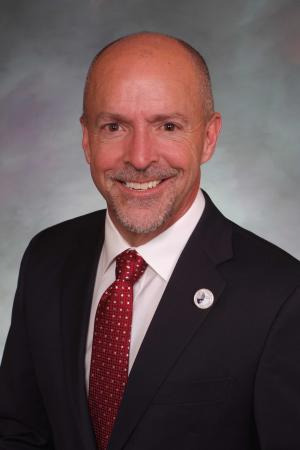
Photo of Rob Woodward
R Colorado Senate · District 15

Sen. Rob Woodward

Contact Email
Compare
Total votes
3,276
all sessions
Attendance
98%
57 missed
Near the chamber average
With party
95%
of cast votes
Near the chamber average
Bipartisan score
4%
crosses aisle rarely
Near the chamber average
Sponsored
81
bills & resolutions
Near the chamber average
Committees
0
assignments
81 bills and resolutions

Sponsored bills

Total
81
Primary
81
Co-sponsor
0
This page
81
matching current filters
Primary SB 20-106
Signed into law · Colorado Senate · Lead sponsor
Consent To Shelter And Services By Homeless Youth

The act allows a homeless youth who is 15 years of age or older (youth) to consent to receiving shelter or shelter services from a licensed homeless youth shelter. The state department of human services shall promulgate rules for licensed homeless youth shelters to follow when a youth consents to receiving shelter or shelter services. (Note: This summary applies to this bill as enacted.)

Signed into law Jun 26, 2020 0 co-sponsors
Primary HB 20-1125
Failed · Colorado House · Lead sponsor
Eligible Educator Supplies Tax Credit

Currently, under the federal educator expense deduction, an eligible educator can claim a deduction, not to exceed $250, for the purchase of school supplies and certain professional development courses. The bill creates a state income tax credit for an eligible educator for the purchase of school supplies that qualify for the deduction that exceeds $250 but are less than $750. The amount of the credit that exceeds the educator's income taxes is refunded to the educator.(Note: This summary applies to this bill as introduced.)

Failed Jun 16, 2020 0 co-sponsors
Primary HB 20-1181
Signed into law · Colorado House · Lead sponsor
Nonprofit Transit Authority Agency Fuel Tax

Under current law, the fuel tax exemption for nonprofit transit agencies exempts nonprofit transit agencies from the fuel excise tax on liquefied petroleum gas and natural gas used in vehicles for transit purposes. The act repeals this tax exemption. (Note: This summary applies to this bill as enacted.)

Signed into law Mar 27, 2020 0 co-sponsors
Primary HB 20-1036
Signed into law · Colorado House · Lead sponsor
Align Emergency Medical Service Provider Statutes

In 2019, Senate Bill 19-242, concerning the creation of an emergency medical service provider license, was enacted to authorize a certified emergency medical service (EMS) provider to seek licensure if the provider demonstrates to the department of public health and environment that the provider has sufficient educational credentials for licensure. Numerous conforming amendments added references to licensed EMS providers where certified EMS providers were referenced in statute. Also in 2019, Senate Bill 19-065, concerning the creation of a peer health assistance program for emergency medical service providers, was enacted to establish a peer health assistance program for EMS providers. The act amends the statute created in Senate Bill 19-065 by adding references to licensed EMS providers and licensees to align Senate Bill 19-065 with Senate Bill 19-242. (Note: This summary applies to this bill as enacted.)

Signed into law Mar 24, 2020 0 co-sponsors
Primary SB 20-134
Signed into law · Colorado Senate · Lead sponsor
Estimate Of Non-fee Sources Of Cash Fund Revenue

Current law limits the amount of uncommitted reserves that may remain in a cash fund at the end of any fiscal year. The definition of "uncommitted reserves" excludes revenue credited to a cash fund that is estimated to be derived from non-fee sources. Current law further specifies that when calculating the estimated revenue from non-fee sources, the estimate is required to be an amount equal to the portion of total revenues received from non-fee sources in the prior fiscal year. This requirement and the phrase "prior fiscal year" are causing confusion among executive branch departments, and the requirement is not necessary for the proper administration of the statute. The act repeals the requirement that the estimate for non-fee revenue is equal to the portion of total revenues received from non-fee sources in the prior fiscal year. (Note: This summary applies to this bill as enacted.)

Signed into law Mar 23, 2020 0 co-sponsors
Primary HB 20-1038
Signed into law · Colorado House · Lead sponsor
Repeal Colorado Department Of Public Health And Environment Youth Services Statutes

The act repeals statutory language requiring the department of public health and environment (CDPHE) to provide prevention, intervention, and treatment services for youths since these functions were previously transferred from CDPHE to the department of human services. (Note: This summary applies to this bill as enacted.)

Signed into law Mar 20, 2020 0 co-sponsors
Primary SB 20-152
Signed into law · Colorado Senate · Lead sponsor
Correct Senate Bill 19-263 Effective Date Error

The state treasurer is required to execute up to $500 million of lease-purchase agreements in each of the 2020-21 and 2021-22 state fiscal years for the purpose of funding transportation projects. A statewide ballot issue will be referred to the voters at the 2020 general election as required by Senate Bill 19-263 (SB 263) and will, if approved, authorize the state to issue up to $1.837 billion of transportation revenue anticipation notes (TRANs) for the purpose of funding transportation projects. When enacting SB 263, the general assembly intended that, upon approval of the ballot issue, the TRANs authorized would replace the lease-purchase agreements as a source of funding for transportation projects. However, due to an error in the effective date clause of SB 263, if the TRANs are approved, the state treasurer will still be required to execute the lease-purchase agreements. The act corrects the error and thereby ensures that approval of the ballot issue stops the issuance of the lease-purchase agreements. (Note: This summary applies to this bill as enacted.)

Signed into law Mar 20, 2020 0 co-sponsors
Primary HB 20-1096
In committee · Colorado House · Lead sponsor
Authorize Protected Series Of Limited Liability Company

In response to the growing popularity of series limited liability companies (series LLCs) in the United States, in 2017 the Uniform Law Commission promulgated the "Uniform Protected Series Act" (UPSA or Act). The bill enacts the UPSA, effective January 1, 2021. Subpart 1 contains general provisions. The UPSA uses the term "protected series" to highlight the internal liability shields that are a defining characteristic of the Act, and to avoid confusion with the term "series", which is often used to refer to classes of interests in business entities that do not affect liabilities to third parties. If the requirements of the UPSA are satisfied, then assets of one protected series (referred to as "associated assets") are not available to satisfy claims of creditors of the LLC or of other protected series of the series LLC. Subpart 2 explains how to establish a protected series. Subpart 3 includes the record-keeping requirements that must be satisfied for an asset to qualify as an "associated asset" under the Act. Subpart 3 also provides rules for associating members with a protected series and addresses series transferable interests, management, and nonassociated members' rights to information. Subpart 4 covers limitations on liability and enforcement of claims. The Act provides 2 types of liability shields: Vertical and horizontal. The traditional vertical shield protects equity holders and managers from status-based liability for an organization's obligations. The horizontal shield protects a protected series of a series LLC and its associated assets from liability for the debts, obligations, and other liabilities of the company or of another protected series of the company. A creditor may enforce a judgment against another protected series of a series LLC by pursuing assets owned by the company or by another protected series of the company if the UPSA's requirements are not satisfied for these other assets (or "nonassociated assets"). Subpart 5 addresses grounds for dissolution and provisions for winding up. Subpart 6 includes restrictions on mergers and other entity transactions involving series LLCs and protected series. Subpart 7 addresses foreign protected series. Subpart 8 addresses transitional issues. (Note: This summary applies to this bill as introduced.)


In committee Feb 27, 2020 0 co-sponsors
Primary SB 20-116
In committee · Colorado Senate · Lead sponsor
Penalties For Driving Under Restraint

Under existing law, the penalty for driving while a person's license or privilege to drive is under restraint includes that the person may not be issued a license or granted any driving privileges for a period of time beyond the initial restraint. This penalty is in addition to a sentence to the county jail or fines that may be imposed as a penalty for driving under restraint. The bill removes the penalty restricting a person's driving privileges beyond the initial restraint when the initial restraint is for reasons other than an alcohol-related offense. Under existing law, the department of revenue is required to immediately revoke an habitual offender's driver's license. The bill removes this revocation requirement when a person is an habitual offender solely because of convictions for driving under restraint when the restraint is for reasons other than an alcohol-related offense. (Note: This summary applies to this bill as introduced.)
In committee Feb 12, 2020 0 co-sponsors
Showing 61 to 70 of 81 bills
Previous 1 … 6 7 8 … 9 Next