

The act creates 3 new programs to be implemented and administered by the division of housing in the department of local affairs (division). The division is required to adopt policies, procedures, and guidelines for each program on or before November 1, 2024; except that, if there is insufficient funding before July 1, 2025 to implement and administer the child care facility development capital grant program, then the division is required to adopt policies, procedures, and guidelines for this program on or before November 1, 2025. For each program, consultation between the division and the department of early childhood is required for the policies the division develops and adopts to implement the programs. Additionally, the division is required to publish on its website and submit an annual report regarding the programs to specified legislative committees and to the department of early childhood. The child care facility development toolkit and technical assistance program is created to provide technical assistance from consultants and related professionals to enable interested child care providers, developers, employers, public schools, institutions of higher education, and local governments to understand the technical aspects of planning, developing, building, and co-locating child care facilities. The division must prioritize applications for projects that will meet a demonstrable need for child care in the areas of greatest need across the state and that satisfy one or more purposes of the program. The division's annual report must contain information regarding the assistance provided under this program and the uses of such assistance by program recipients. This program is available until July 1, 2028. The child care facility development planning grant program is created to incentivize and support local governments in identifying and making regulatory updates or improvements to community planning, development, building, zoning, and other regulatory processes to support the development of child care facilities. The division must develop a menu of recommended policy or regulatory tools, and eligible recipients for the grant must intend to implement one or more of such tools off the menu or identify other local policies or programs to implement to streamline the eligible recipient's regulatory environment for the development of child care facilities. The division's annual report must contain information regarding the amount of grants distributed and a description of recipients' use of the grants. This program is available until July 1, 2028. The child care facility development capital grant program is created to provide eligible entities, which are local governments, public schools, institutions of higher education, or public-private partnerships, with money to support the development of licensed child care and to construct, remodel, renovate, or retrofit a child care facility to meet a demonstrated need for child care in an eligible entity's community. The division shall utilize the state housing board within the division to review and make recommendations on grant applications. Grant recipients are required to provide a financial match. The financial match required from a grant recipient is 50% for a center-based facility and 25% for a home-based facility. More weight is given to applications that represent geographic diversity, will serve a high percentage of families below the area's median income, commit to providing a well-compensated staff, co-locate with or repurpose facilities with other uses, plan to serve children in regions with low child care capacity, or plan to serve infants and toddlers. The division's annual report must contain information regarding the amount of grants distributed and a description of recipients' use of the grants. The act also creates the child care facility development cash fund (fund) for use by the division to administer and implement the 3 programs and to make grants under the child care facility development planning grant program and the child care facility development capital grant program. On August 15, 2024, the state treasurer shall transfer $250,000 from the general fund to the fund. The money from the transfer must be used before June 30, 2025, to implement the child care facility development toolkit and technical assistance program and the child care facility development planning grant program, and the division must prioritize money first for the toolkit and technical assistance program. Then, after June 30, 2025 but before June 30, 2028, money from the transfer can be used for all 3 programs, and after July 1, 2028, but before June 30, 2029, money from the transfer may be used for the child care facility development capital grant program. Additionally, the division may receive gifts, grants, or donations to implement and administer and make grants under the child care facility development capital grant program. The division may also use $70,000 from the general fund transfer for administrative costs. For the 2024-25 state fiscal year, the act appropriates $250,000 from the child care facility development cash fund to the department of local affairs for child care facility development. APPROVED by Governor May 29, 2024 EFFECTIVE August 7, 2024(Note: This summary applies to this bill as enacted.)
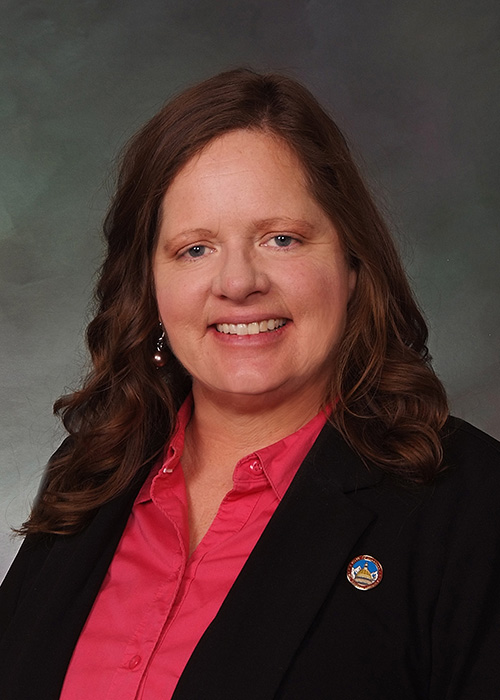
Sen. Janice Marchman
Sponsored bills
The act adds rare plants and invertebrates to the species that may be studied and conserved under the current "Nongame, Endangered, or Threatened Species Conservation Act", which is renamed the "Nongame, Endangered, or Threatened Wildlife and Rare Plant Conservation Act". The division of parks and wildlife in the department of natural resources (department) may undertake voluntary programs to conserve, protect, and perpetuate invertebrates. The department is required to include, in the department's SMART Act hearing, information about the investigations conducted under the act. The general assembly is required to make an appropriation from the general fund or the wildlife cash fund to study invertebrates. $774,788 is appropriated to the department for use by the division of parks and wildlife to implement the act. APPROVED by Governor May 17, 2024 EFFECTIVE August 7, 2024(Note: This summary applies to this bill as enacted.)
A "youth sports organization" is a private for-profit or not-for-profit organization that, as part of its core function, provides persons who are under 18 years of age the opportunity to participate in scheduled competitive or recreational sporting activities, whether individually or as a team. "Youth sports organization" does not include a neighborhood youth organization, a K-12 school, a licensed child care facility, an institution of higher education, or an organization that provides walk-in-basis sporting activities. A youth sports organization and local government that provides youth athletic activities is required to have at least one adult who possesses a current first aid and CPR/AED education certification present at each youth athletic activity. All youth sports organization coaches who work directly with youth members, and any chaperone who accompanies the youth sports organization on any trip that includes one or more overnight stays, must obtain a criminal history record check prior to employment or approval as a chaperone, and if the coach or chaperone lived outside the U.S. for more than 180 days since the coach's or chaperone's last criminal history record check, the person shall also obtain an international criminal history record check. A volunteer who is not acting in the capacity of a coach or manager and who only occasionally assists with the youth sports organization is not required to obtain a criminal history record check. A youth sports organization shall not hire a person as a coach or approve a person as a chaperone and shall terminate a coach or revoke the approval for a chaperone if a criminal history record check shows that the person has been convicted of felony child abuse, a felony offense involving unlawful sexual behavior, a crime of violence, or any comparable offense committed in another state. A person who takes part in the activities of a youth sports organization but who is not required to obtain a criminal history record check pursuant to this section or is unable to obtain a criminal history record check must at all times be supervised by a person who has been hired or approved after obtaining a criminal history record check. The act requires a local government that provides a youth athletic activity to comply with the criminal history record check requirements. The act creates a cause of action for failing to conduct a background check. A local government offering a local government-sponsored youth athletic activity may charge a person any fees for the required criminal history record check. Information obtained by a local government through the criminal history record check is not subject to the open records act. VETOED by Governor May 17, 2024(Note: This summary applies to this bill as enacted.)
The act requires a mortgage servicer, upon the request of a borrower, to disclose certain information to the borrower concerning the disbursement of insurance proceeds to the borrower in the event that a residential property that is subject to a mortgage is damaged or destroyed and an insurance company pays a claim associated with such damage or destruction. In the event that a residential property is damaged or destroyed, a borrower, after consulting with the borrower's contractor, must create a written repair plan or a written rebuild plan and submit the plan to the mortgage servicer for approval. The mortgage servicer must indicate approval or disapproval within 30 days after receiving the submitted plan. The plan must include specific milestones that require the mortgage servicer to disburse insurance proceeds. However, a mortgage servicer must also disburse insurance proceeds to a borrower in specified amounts, depending on the amount of the insurance proceeds and whether the borrower is delinquent in making payments on the mortgage. For the purpose of such disbursements: A mortgage servicer must make the first disbursement within 14 days after the mortgage servicer receives the insurance proceeds if the mortgage is insured by the federal government or securitized by the federal national mortgage association or the federal home loan mortgage corporation and as soon as reasonably possible and no later than 30 days after the mortgage servicer receives the insurance proceeds if the mortgage is not insured by the federal government or securitized by the federal national mortgage association or the federal home loan mortgage corporation; and A mortgage servicer may disburse funds directly to a designee of a borrower so long as the designee is agreed to by both the borrower and the mortgage servicer and the designation is permitted by federal and state law and any associated rules. With certain exceptions, a mortgage servicer must promptly disburse to a borrower any amount of insurance proceeds in excess of the remaining amount that the borrower owes on the mortgage. A mortgage servicer must hold in an interest-bearing account any insurance proceeds that the mortgage servicer does not immediately disburse to a borrower. A mortgage servicer must ensure that any interest that is credited to the account is credited and disbursed to the borrower. A mortgage servicer must retain for at least 4 years all written and electronic communications between the mortgage servicer and a borrower. The act repeals certain provisions of existing law concerning the disbursement of insurance proceeds following a claim of property damages. APPROVED by Governor May 17, 2024 EFFECTIVE May 17, 2024(Note: This summary applies to this bill as enacted.)
The act requires a school district board of education, a charter school, an institute charter school, a board of cooperative services, or the Colorado school for the deaf and the blind (local education provider) to satisfy certain requirements concerning installation, inspection, and maintenance of heating, ventilation, and air conditioning (HVAC) systems in schools if the local education provider undertakes HVAC infrastructure improvements using money made available by a federal government source or by a federal government source in combination with a state government source specifically for such purpose. The requirements established in the act concern: Ventilation verification assessments, which include assessments of an HVAC system's filtration, ventilation exhaust, economizers, demand control ventilation, air distribution and building pressurization, general maintenance requirements, operational controls, and carbon dioxide output; The preparation of HVAC assessment reports; The review of HVAC assessment reports by mechanical engineers, who make recommendations regarding necessary repairs and improvements and estimate associated costs; HVAC adjustments, repairs, upgrades, and replacements; The preparation of HVAC verification reports and the submission of the reports to the department of education; and Periodic inspections and ongoing maintenance. The act establishes mandatory criteria that an HVAC contractor must satisfy in order to perform work described in the act. A local education provider that undertakes HVAC infrastructure improvements using money made available by a federal government source or by a federal government source in combination with a state government source must: Obtain and make use of the certified contractor list established by the department of labor and employment; and Employ only contractors on the certified contractor list or certain other contractors to perform the HVAC improvements. The act allows a local education provider to apply for grants to pay for HVAC infrastructure improvement projects and establishes requirements for local education providers that apply for grants from federal and state government sources. The act requires the governor's office to use existing resources funded by the "Infrastructure Investment and Jobs Act" cash fund to provide grant writing support, administrative support, and project planning to local education providers that undertake HVAC infrastructure improvement projects. The governor's office must submit a report to the joint budget committee and the capital development committee concerning the number of applicants for matching funds from local education providers reviewed by the office before October 2, 2025. The report must include the amount of requested matching funds, the recommended amount of matching funds, and an explanation for the difference, if any, between the requested amounts and the recommended amounts. VETOED by Governor May 17, 2024(Note: This summary applies to this bill as enacted.)
The act clarifies the scope of the high-performance transportation enterprise's (transportation enterprise) powers and duties to expand its capacity to execute its charge and more explicitly prioritize mitigation of traffic congestion and traffic-related pollution through the completion of multimodal surface transportation infrastructure projects as follows: Section 13: Authorizes the transportation enterprise to impose a congestion impact fee, as a new user fee, in maximum amounts of up to $3 per day that is subsequently adjusted for inflation, and, in conjunction with section 12, requires the fee to be collected and administered in the same manner as an existing state daily vehicle rental fee; Clarifies that providing diverse multimodal transportation options, including rail projects, that reduce traffic congestion and degradation of existing surface transportation infrastructure is part of the transportation enterprise's statutory charge; Requires the transportation enterprise to develop a new multimodal strategic capital plan that aligns with the 10-year transportation plan of the Colorado department of transportation (CDOT) and statewide greenhouse gas pollution reduction goals and priorities, complies with specified environmental standards adopted by the transportation commission, and prioritizes benefits to user fee payers and the reduction of adverse impacts on highways; Requires the transportation enterprise to complete an initial assessment of opportunities available through 2030 to leverage federal money made available to the state and to thereafter assess such opportunities on an ongoing basis; and Requires the transportation enterprise to detail its work to reduce traffic congestion and greenhouse gas emissions and support the expansion of public transit in its annual report to the legislative committees with oversight over transportation; and Section 11 modifies an existing definition of "surface transportation infrastructure" to explicitly include multimodal transportation options and transportation of freight. Section 11 also modifies an existing definition of "user fee" to include the new congestion impact fee. Section 4 authorizes the regional transportation district (RTD) to extend construction and operations of its northwest rail fixed guideway corridor beyond its boundaries if all capital and operating expenses outside the RTD are fully accounted for and already reimbursed to the RTD by a public body. Section 6 requires the front range passenger rail district (rail district), in cooperation with RTD, CDOT, and the transportation enterprise, to provide to the transportation legislation review committee and the governor: A report containing an implementation plan, which must include, among other things, identification and evaluation of options for creating a separate legal entity or intergovernmental agreement as a business model, for construction and operations of the corridor and may also consider the creation of a Colorado rail authority to house some or all passenger rail services under one entity; and A report, which must also include the cooperation of any separate legal entity created, concerning a plan to begin providing front range passenger rail service no later than January 1, 2029. Sections 5, 7, 8, and 13, respectively and in conjunction with section 2, provide specific, explicit authorization to the RTD, the rail district, CDOT, and the transportation enterprise, in accordance with an implementation plan developed as required by section 6, to enter into a standalone intergovernmental agreement with or create a separate legal entity with each other to implement the completion of construction and operation of the RTD's northwest fixed guideway corridor, including an extension of the corridor to Fort Collins as the first phase of front range passenger rail service. Section 10 requires CDOT and the rail district to annually report to the transportation legislation review committee and the governor regarding the status of the service development plan for front range passenger rail service between Trinidad, Pueblo, and Fort Collins and requires the plan to include descriptions of steps taken to maximize the chances of securing federal grant assistance and of how the project will create good-paying, high-quality, and safe jobs. Section 9 requires CDOT's transit and rail division to submit a report containing a development plan for rocky mountain rail service to the legislative committees that oversee transportation and the governor not later than December 31, 2024. Section 15 appropriates $42,399 from the general fund to the department of revenue to implement the act. APPROVED by Governor May 16, 2024 EFFECTIVE May 16, 2024(Note: This summary applies to this bill as enacted.)
Under current law, the independent ethics commission created in article XXIX of the state constitution does not have jurisdiction over officials or employees of special districts or school districts. The bill gives the independent ethics commission jurisdiction to hear complaints, issue findings, assess penalties, and issue advisory opinions on ethics issues concerning a special district official or employee or school district official or employee. Existing law establishes ethical standards for a special district official or employee or school district official or employee. The bill incorporates those standards under the independent ethics commission's jurisdiction and expands the standards to include those described in article XXIX of the state constitution.(Note: This summary applies to this bill as introduced.)
The bill creates a state sales and use tax exemption commencing on July 1, 2024, for all sales, storage, use, and consumption of college textbooks. The bill allows a county or municipality to choose to adopt the exemption by express inclusion in its sales and use tax ordinance or resolution. (Note: This summary applies to this bill as introduced.)
The bill creates the time-to-eat task force (task force) in the department of education (department) to evaluate Colorado school districts' and other states' policies regarding scheduled lunch time (time-to-eat policies) and repeals the task force, effective January 1, 2025. The bill creates the safe and healthy play grant program in the department to assist schools in implementing programs that support social and emotional learning through play.(Note: This summary applies to this bill as introduced.)
The bill establishes a state income tax credit (credit) for the sale or lease of land, crops, livestock and livestock facilities, farm equipment and machinery, grain storage, irrigation equipment, or water used for agriculture (agricultural assets) to certain agricultural producers for income tax years beginning on or after January 1, 2026, but before January 1, 2031. There are 3 different credits that may be earned by a qualified taxpayer. For the sale of an agricultural asset to a beginning farmer or rancher or socially disadvantaged farmer or rancher, a qualified taxpayer may earn a credit equal to 5% of the lesser of the sale price or fair market value of the agricultural asset up to a maximum credit of $32,000 for one income tax year. For the lease of an agricultural asset to a beginning farmer or rancher or socially disadvantaged farmer or rancher, a qualified taxpayer may earn a credit equal to 10% of the gross rental income in each of the first, second, and third years of the rental agreement, up to a maximum credit of $7,000 for one income tax year. For the lease of an agricultural asset to a beginning farmer or rancher or socially disadvantaged farmer or rancher for a period of 20 years or more, a qualified taxpayer may also earn a credit equal to 2% of the gross rental income for each year after the first 3 years of the extended term lease, up to a maximum amount of $2,000 per income tax year. The credit is refundable and may not be carried forward. To claim the credit, a qualified taxpayer must apply to the Colorado agricultural value-added development board (board) for a credit certificate (certificate). The board will evaluate the application and issue a certificate if the taxpayer qualifies for the credit. If a certificate is issued, the qualified taxpayer must attach it to the taxpayer's income tax return and submit it to the department of revenue to claim the credit. The board may issue rules to administer the credit. The aggregate amount of credits issued in one calendar year cannot exceed $2 million. After certificates have been issued for credits that exceed an aggregate of $2 million for all qualified taxpayers during a calendar year, any claims that exceed the amount allowed are placed on a wait list in the order submitted and a certificate is issued for use of the credit in the next income tax year. No more than $2 million in claims shall be placed on the wait list in any given calendar year. (Note: This summary applies to this bill as introduced.)