

The act requires each institution of higher education (institution) in Colorado to create and adopt a policy and a process to support the ability of an admitted or enrolled student with a disability (student) to voluntarily self-disclose the student's disability and to engage in an interactive process with the institution to receive an academic adjustment. The adopted policy must, at a minimum, include information that: Describes the institution's process to determine whether a student is eligible for an academic adjustment; Outlines documentation that the institution may request to determine whether a student is eligible for an academic adjustment; Provides information on the available disability resources and academic adjustments provided to students with disabilities; and Describes an appeals process for academic adjustment decisions that focuses on documentary review. Each institution shall publish the policy on the institution's website in an accessible format. The act describes the type of documentation that an institution may request to determine whether a student is eligible for an academic adjustment. (Note: This summary applies to this bill as enacted.)
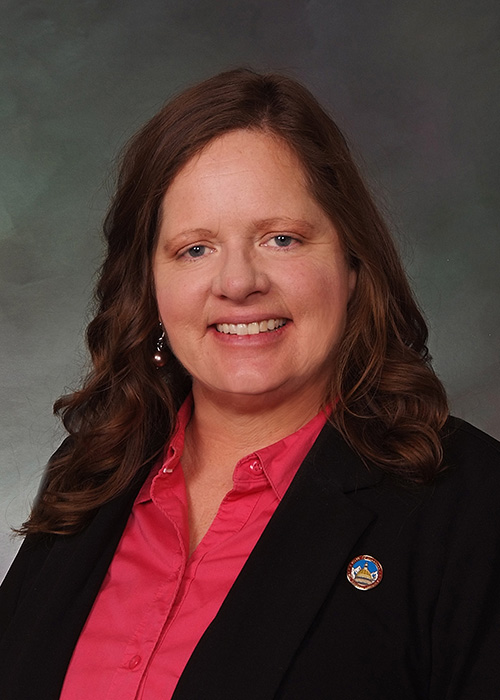
Sen. Janice Marchman
Sponsored bills
The act requires an insurer that issues or renews an automobile insurance policy to include in the applicable coverage the replacement cost of a child restraint system that is in a motor vehicle at the time of a motor vehicle accident and to which the coverage is applicable. The act requires the insurer to ask a claimant if a child restraint system was in the motor vehicle at the time of the accident and, if so, requires the applicable coverage to cover the cost of its replacement. (Note: This summary applies to this bill as enacted.)
The act expands the conduct that can constitute the crime of obstructing governmental operations to include the repeated calling of or contact with 911 dispatch centers or specified public safety entities without justifiable cause. (Note: This summary applies to this bill as enacted.)
The act encourages each local education provider to adopt a policy to reduce food waste in school cafeterias and food preparation facilities (policy). The policy may address food waste diversion and aversion initiatives, including composting, donation of excess food to local nonprofits, or share table programs that permit students to return whole food or beverage items for redistribution to other students. A local education provider that implements a policy shall comply with all applicable sanitation and health requirements, including protocols to prevent student exposure to allergens, and shall require school personnel to complete related safety training. Current law establishes the Colorado circular communities enterprise (enterprise) to award grants and other funding and to provide technical assistance to certain entities throughout the state that pursue a circular economy for waste management, including waste diversion and aversion. The act requires the enterprise to consider reducing food waste by incentivizing public schools to develop and implement effective composting, excess food donation, or share table programs. The act extends limited immunity from civil and criminal liability to school personnel and local education providers that supervise food and beverage redistribution in accordance with policies that include share tables. (Note: This summary applies to this bill as enacted.)
The act clarifies that the child of an inbound active duty military member (member) who has an existing individualized education program (IEP) or existing section 504 plan is eligible for open enrollment, remote enrollment, and guaranteed matriculation. The act requires the school district, district charter school, or an institute charter school (local education provider) where the child enrolls to ensure the student receives the appropriate services and accommodations, consistent with the child's existing IEP or section 504 plan, without unreasonable delay upon enrollment. The act requires each local education provider to take reasonable steps to notify members and their families of their rights, including providing information on special education services to prevent inadvertent exclusion and to ensure members and their families are fully informed of available supports. (Note: This summary applies to this bill as enacted.)
Beginning on January 1, 2026, any political subdivision of the state, public entity, or nonprofit corporation that provides paratransit services in the state (paratransit provider) is required to establish, in coordination with local public entities providing emergency services, a plan to communicate information and provide paratransit services during emergencies. The communication plan must include information on the number of riders who use paratransit services and the resource capacity of the paratransit provider, including the number of drivers and the number of vehicles used to provide paratransit services. Paratransit providers and public entities providing emergency services are also required to submit a report to the transportation legislation review committee on or before September 1, 2026, about the implementation of the communication and emergency services plan. (Note: This summary applies to this bill as enacted.)
Maddy summarySenate Joint Resolution 25-016 is a commemorative resolution from the Colorado General Assembly expressing strong support for strengthening the sister-state relationship between Colorado and Taiwan. It reaffirms the 42-year relationship and advocates for enhanced trade relations and academic exchanges between the two entities. The resolution also calls for the signing of a U.S.-Taiwan agreement on avoiding double taxation to promote bilateral investment. Additionally, it supports Taiwan's meaningful inclusion in various international organizations.
Maddy summarySJR 25-010 designates March 17, 2025, as "Colorado Aerospace Day" to recognize the state's leadership in the aerospace industry. The resolution highlights Colorado's status as the nation's top aerospace employment hub (with 33,000 direct jobs and 240,000 supporting jobs), home to major companies like Lockheed Martin and Boeing, and key military space operations. It does not create new laws but serves as a symbolic declaration urging federal support for space exploration and celebrating the industry's economic and educational contributions. This resolution is addressed to state and federal officials, educational institutions, and aerospace organizations.
The act requires the division of criminal justice (division) in the department of public safety to apply for and accept and expend federal or other available grant money to improve the state's response to mass shootings, including grant money to support services for victims of mass shootings. (Note: This summary applies to this bill as enacted.)
The act defines a "specified semiautomatic firearm" as a semiautomatic rifle or semiautomatic shotgun with a detachable magazine or a gas-operated semiautomatic handgun with a detachable magazine. The act excludes certain types of firearms and specified models of firearms from the definition of "specified semiautomatic firearm". The act prohibits knowingly manufacturing, distributing, transferring, selling, or purchasing a specified semiautomatic firearm on or after August 1, 2026; except that a person may transfer a specified semiautomatic firearm to an individual residing in another state or a federally licensed firearm dealer. The act exempts certain manufacture, transfers, sales, and purchases from the prohibition, including specified transactions involving law enforcement agencies and peace officers, the department of corrections, armored vehicle businesses, military forces, gunsmiths, educational programs, and historical societies and museums; transfers that occur by operation of law or because of the death of a person; and conduct involving firearms for use solely as a prop for a film. Additionally, the prohibition does not apply to the transfer or sale of a specified semiautomatic firearm to, and receipt or purchase of a specified semiautomatic firearm by, a person who: Completed a hunter education course certified by the division of parks and wildlife (division) and, within 5 years before making the purchase, completed a basic firearms safety course; Within 5 years before making the purchase, completed an extended firearms safety course; or Completed an extended firearms safety course more than 5 years before making the purchase and completed a basic firearms safety course within 5 years before making the purchase. Unlawful manufacture, distribution, transfer, sale, or purchase of a specified semiautomatic firearm is a class 2 misdemeanor; except that a second or subsequent offense is a class 6 felony. The department of revenue shall revoke the state firearms dealer permit of a dealer who unlawfully manufactures, distributes, transfers, sells, or purchases a specified semiautomatic firearm. The Colorado bureau of investigation shall deny the transfer of a firearm to a person who was convicted of misdemeanor unlawful manufacture, distribution, transfer, sale, or purchase of a specified semiautomatic firearm within 5 years prior to the transfer. A person convicted of felony unlawful manufacture, distribution, transfer, sale, or purchase of a specified semiautomatic firearm is prohibited from possessing a firearm and certain other weapons. The act sets minimum requirements for the instruction included in, and length of, a basic firearms safety course and an extended firearms safety course. The act requires the division to establish the course requirements for a basic or extended firearms safety course. In order to enroll in a basic or extended firearms safety course, a person must hold a valid firearms safety course eligibility card (firearms course card) issued by a sheriff. The act sets the requirements to be issued a firearms course card, which includes completing a name-based background check, paying a processing fee set by the sheriff, and paying the firearms training and safety course record fee established by the division. A sheriff shall issue a firearms course card to an applicant; except that a sheriff shall deny an application if the applicant cannot lawfully possess a firearm under state or federal law or the sheriff cannot positively identify the applicant. A sheriff may deny an application for a firearms course card if the sheriff has a reasonable belief that documented previous behavior by the applicant makes it likely the applicant will present a danger to themself or others if the applicant holds a card. A sheriff shall revoke an issued firearms course card if the cardholder cannot lawfully possess a firearm under state or federal law and may revoke an issued card if the sheriff has a reasonable belief that documented previous behavior by the applicant makes it likely the applicant will present a danger to themself or others. The act sets forth the process for judicial review of the denial or revocation of a firearms course card. The act requires the division to develop and maintain a firearms training and safety course record system (system) that includes records of persons who hold a valid firearms course card and who have completed a hunter education course, a basic firearms safety course, or an extended firearms safety course. The system must allow: A sheriff to electronically enter information about each person who was issued a firearms course eligibility card; The instructor of a basic or extended firearms safety course to request and receive information about whether a person holds a valid firearms course card; The instructor of a hunter education course or a basic or extended firearms safety course to electronically enter into the system information about each student who completes a course; and A federal firearms licensee to electronically request and receive information about whether a person has completed the courses necessary to purchase a specified semiautomatic firearm. The act creates the firearms training and safety course cash fund, which consists of firearms training and safety course record fee remitted to the division by a sheriff and any other money that the general assembly may appropriate or transfer to the fund. Money in the fund is continuously appropriated to the division. The director of the division may report to the state treasurer an amount of money to transfer between the firearms training and safety course cash fund from the parks and outdoor recreation cash fund. Within 3 days after receiving a report, the state treasurer shall make the reported transfer. By June 30, 2030, the total amount of the transfers to the parks and outdoor recreation cash fund reported by the director of the division must be equal to the total amount transferred from the parks and outdoor recreation cash fund, plus fair market interest. On or before December 31 of each year, the division shall submit a report to the house of representatives and senate judiciary committees, or their successor committees, about the expenses incurred by the division to implement the act, and any additional resources the division needs to effectively implement the act. The act requires the division in the department of revenue responsible for issuing state firearms dealer permits to publish and make publicly available guidance about specific models of specified semiautomatic firearms to which the act applies. The act makes the unlawful sale, transfer, or possession of a large-capacity magazine a class 1 misdemeanor. Existing law prohibits possession of a dangerous weapon. The act defines "rapid-fire device" and classifies rapid-fire devices as dangerous weapons under Colorado law. The act repeals the definition of "machine gun conversion device" and removes machine gun conversion devices from the list of dangerous weapons. For the 2025-26 state fiscal year, the bill appropriates $100,000 to the office of the governor for use by the office of information technology from funds received from the department of natural resources from the firearms training and safety course cash fund. The general assembly appropriated money to the department of revenue to implement House Bill 24-1353, concerning requirements to engage in the business of dealing in firearms. The act further appropriates unspent money from that appropriation to the department of revenue for expenditure until the close of the 2025-26 state fiscal year. (Note: This summary applies to this bill as enacted.)