

Passed Feb 17, 2021
0 co-sponsors
Total votes
4,896
all sessions
Attendance
94%
324 missed
Near the chamber average
With party
95%
of cast votes
Near the chamber average
Bipartisan score
2%
crosses aisle rarely
Near the chamber average
Sponsored
543
bills & resolutions
Near the chamber average
Committees
4
assignments
543 bills and resolutions
Sponsored bills
Total
543
Primary
188
Co-sponsor
355
This page
543
matching current filters
Colorado Uniform Electronic Wills Act
The act enacts the "Colorado Uniform Electronic Wills Act", which declares that an electronic will is a will for all purposes of Colorado law. The act specifies the requirements for:Executing and revoking an electronic will; Simultaneously executing, attesting, and making an electronic will; and Certifying a paper copy of an electronic will.(Note: This summary applies to this bill as enacted.)
Signed into law Jan 21, 2021
0 co-sponsors
Penalties For Liquor Law Violations
Currently, the state or a local licensing authority may suspend or revoke a licensee's license or permit for the licensee's violation of a law related to the regulation of alcohol beverages. The licensee may choose to pay a fine instead of the revocation or suspension. The act: Authorizes the state and local licensing authorities to fine the licensee initially; Increases the potential fine for violations related to alcohol beverages from between $200 and $5,000 to between $500 and $100,000; and Requires the manner in which licensees pay fines to the state licensing authority to be determined by the state licensing authority.(Note: This summary applies to this bill as enacted.)
Signed into law Jul 13, 2020
0 co-sponsors
Tax Expenditure Bill Requirements
Current law requires a legislative declaration stating the intended purpose of a new tax expenditure or the intended purpose for extending an expiring tax expenditure. The act expands that law by: Requiring a statutory legislative declaration, not nonstatutory; Requiring any bill that creates a new tax expenditure to include a repeal of the expenditure after a specified period of tax years and any bill that extends an expiring tax expenditure to extend the expenditure for a specified period of tax years; and Requiring the statement of the intended purpose to be a part of a tax preference performance statement, which includes: The classification of the type of the tax expenditure; and Detailed information regarding the legislative purpose of the tax expenditure, which, at minimum, includes clear, relevant, and ascertainable metrics and data requirements that allow the tax expenditure to be measured for effectiveness in achieving the intended purpose.(Note: This summary applies to this bill as enacted.)
Signed into law Jun 30, 2020
0 co-sponsors
Extend UCC Fee For Fraud Investigators Unit
The secretary of state currently charges uniform commercial code filing fees. The filing fee is transferred for deposit in the Colorado identity theft and financial fraud cash fund to support activities of the Colorado fraud investigators unit. The current fee is $4 and is set to be reduced to $3 in 2020. The act extends the $4 fee and an associated report to the general assembly until 2024. (Note: This summary applies to this bill as enacted.)
Signed into law Jun 30, 2020
0 co-sponsors
Fire Prevention & Control Employee Benefits
Certain employers of firefighters are currently required to maintain insurance to provide benefits to a firefighter if he or she has a heart and circulatory malfunction in connection with a stressful or strenuous activity related to an emergency response activity. In addition, certain employers of firefighters may make contributions into a multiple employer health trust established to provide benefits to volunteer firefighters diagnosed with certain covered cancers. The act adds the division of fire prevention and control in the department of public safety (division) to the definition of "employer" for the purpose of providing benefits for a heart and circulatory malfunction and to the definition of "employer" for the purpose of providing benefits for certain covered cancers. In addition, the act expands the definition of "state trooper" for purposes of the public employees' retirement association to include all current and future employees of the division that are classified as a firefighter I through firefighter VII class titles. For the 2020-21 state fiscal year, various amounts are appropriated from the general fund, cash funds, federal funds, and reappropriated funds to the department of health care policy and financing, the department of public health and environment, and the department of public safety for the implementation of the act. (Note: This summary applies to this bill as enacted.)
Signed into law Jun 29, 2020
0 co-sponsors
Net Operating Loss Deduction Modifications
Colorado taxpayers can claim a net operating loss deduction on their Colorado tax return. Unless statute otherwise provides, the state deduction is currently allowed in the same manner that a similar deduction is allowed under the internal revenue code to determine federal taxable income. Under current law, corporate taxpayers in Colorado are allowed to carry forward their net operating loss deduction for the same number of years as allowed for a federal net operating loss. For many years, taxpayers were limited to a 20-year carryforward period for both state and federal taxes. The federal "Tax Cuts and Jobs Act" (TCJA), enacted in 2017, allowed federal taxpayers unlimited years to carry forward net operating losses. Because Colorado's statute specifies that net operating losses may be carried forward "for the same number of years as allowed for a federal net operating loss", the TCJA's change resulted in the same change to Colorado's law. The act partially decouples the corporate net operating loss deduction from the federal net operating loss deduction by returning the state's carryforward period to 20 years for net operating losses generated in income tax years commencing on or after January 1, 2021. The act also repeals a state provision that was effective only for financial institutions, so that, for purposes of the period of years a loss can be carried forward, financial institutions will now be treated the same as any other taxpayer. (Note: This summary applies to this bill as enacted.)
Signed into law Jun 26, 2020
0 co-sponsors
Sunset Home Warranty Service Contracts
The act implements the recommendations of the department of regulatory agencies in its sunset review and report on home warranty service contracts by continuing the statutes governing the contracts for 6 years, until 2026, and clarifying that home warranty service contracts are not insurance. (Note: This summary applies to this bill as enacted.)
Signed into law Jun 24, 2020
0 co-sponsors
2-1-1 Statewide Human Services Referral System
The act amends provisions relating to the human services referral service authorized by the Colorado 2-1-1 collaborative. The act requires the department of human services to award a grant for $500,000 to the Colorado 2-1-1 collaborative for necessary human services referral services in the state through December 30, 2020, relating to the COVID-19 public health emergency. The services may include, among others, providing information on COVID-19 test site locations and referrals regarding equity, access, or discrimination concerning employment and health access, as well as other necessary referrals and intake services due to the presence of COVID-19 in the state. The act includes a legislative declaration describing the source of federal funding for the act and the restrictions on the use of the grant money. For the 2019-20 fiscal year, the act appropriates $500,000 from the care subfund in the general fund to the department of human services to award a grant to the Colorado 2-1-1 collaborative, which appropriation may be used through December 30, 2020. (Note: This summary applies to this bill as enacted.)
Signed into law Jun 22, 2020
0 co-sponsors
Divide Insurer Into Resulting Insurers
The bill states that a domestic stock insurer (dividing insurer) may divide into 2 or more resulting insurers pursuant to a plan of division. A plan of division must include: The name of the dividing insurer; The name of each resulting insurer created by the proposed division and, for each resulting insurer, a copy of proposed articles of incorporation and proposed bylaws; The manner of allocating assets and liabilities, including policy liabilities, between or among all resulting insurers; The manner of distributing shares in the resulting insurers to the dividing insurer or the dividing insurer's shareholders; A reasonable description of all liabilities and all assets that the dividing insurer proposes to allocate to each resulting insurer, including the manner by which the dividing insurer proposes to allocate all reinsurance contracts; All terms and conditions required by the laws of this state and the articles of incorporation and bylaws of the dividing insurer; and All other terms and conditions required by the division. A plan of division must include additional provisions, the nature of which depends on whether the dividing insurer will survive the division. A dividing insurer may not file a plan of division with the commissioner of insurance (commissioner) until the plan of division has been approved in accordance with all provisions of the dividing insurer's articles of incorporation and bylaws. After a dividing insurer approves a plan of division, the dividing insurer shall file the plan of division with the commissioner. The commissioner shall approve the plan of division if, after considering certain criteria, the commissioner finds that certain requirements are met. If the commissioner approves a dividing insurer's plan of division, an officer or duly authorized representative of the dividing insurer shall sign a certificate of division that sets forth certain information concerning the division. The bill establishes procedures for amending and abandoning plans of division. The bill provides for the protection of confidential information, documents, and materials that are submitted to, obtained by, or disclosed to the commissioner in connection with a plan of division or in contemplation of a plan of division. (Note: This summary applies to this bill as introduced.)
Failed Jun 16, 2020
0 co-sponsors
Ask Maddy
·
AI policy assistant
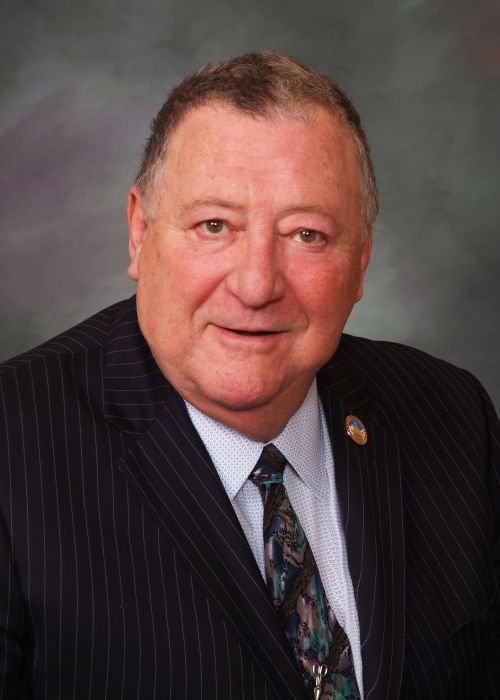
Ask Maddy about Marc Snyder
Scope: colorado
Hi! I can help you understand Marc Snyder's legislative record. What would you like to know?
Try one of these
i
Maddy answers using official bill text and legislative records. Always verify before sharing.
Sources cited inline