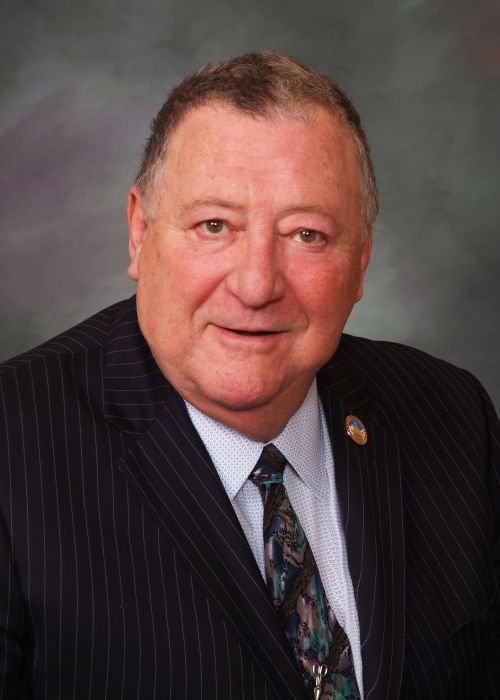
Photo of Marc Snyder
D Colorado Senate · District 12

Sen. Marc Snyder

Compare
Total votes
7,147
all sessions
Attendance
98%
121 missed
Higher than 80% of chamber peers
With party
96%
of cast votes
Near the chamber average
Bipartisan score
2%
crosses aisle rarely
Near the chamber average
Sponsored
543
bills & resolutions
Near the chamber average
Committees
4
assignments
543 bills and resolutions

Sponsored bills

Total
543
Primary
188
Co-sponsor
355
This page
543
matching current filters
Co-sponsor SB 25-118
Signed into law · Colorado Senate · Co-sponsor
Health Insurance Prenatal Care No Cost Sharing

The act requires that, for health insurance policies providing maternity coverage, policies issued or renewed on or after January 1, 2027, must include prenatal care coverage without cost sharing for up to 3 office visits. (Note: This summary applies to this bill as enacted.)

Signed into law May 29, 2025 1 co-sponsor
Co-sponsor HB 25-1026
Vetoed · Colorado House · Co-sponsor
Repeal Copayment for Department of Corrections Inmate Health Care

Current law requires the department of corrections (department) to assess a copayment for inmate-initiated visits to providers of medical, dental, mental health, and optometric care services. Current law permits a waiver or reduction of the copayment under a range of circumstances. The department's current administrative regulations assess fees when an inmate fails to attend or refuses a scheduled health-care appointment. The act eliminates the copayment and prohibits the department from assessing a fee when an inmate fails to attend or refuses a health-care appointment. The department is required to report during its 2026 "SMART Act" hearing on the number of times in the previous year that an inmate failed to attend a scheduled health-care appointment or requested an appointment when the request was not relevant to an actual medical condition. The act reduces appropriations to the department by a net of $165,682, which includes an increase of $157,179 appropriated from the general fund and a decrease of $322,861 from cash funds. VETOED by Governor 5/29/2025(Note: This summary applies to this bill as enacted.)

Vetoed May 29, 2025 1 co-sponsor
Co-sponsor HB 25-1294
Signed into law · Colorado House · Co-sponsor
Court Costs Assessed to Juveniles

Current law requires a court to vacate any court costs and fees assessed to a juvenile under the jurisdiction of the juvenile court prior to July 6, 2021, however, this requirement repeals on June 30, 2025. The act removes the June 30, 2025 repeal. (Note: This summary applies to this bill as enacted.)

Signed into law May 29, 2025 1 co-sponsor
Co-sponsor HB 25-1163
Signed into law · Colorado House · Co-sponsor
Free Access to State Parks for Colorado Ute Tribes

The act allows enrolled members of the Southern Ute Indian Tribe and enrolled members of the Ute Mountain Ute Tribe to enter state parks without having to pay an entrance fee. By June 1, 2026, the division of parks and wildlife (division) in the department of natural resources (department) shall build on existing efforts to conduct outreach to and engagement with the Southern Ute Indian Tribe, the Ute Mountain Ute Tribe, other tribal governments, American Indian communities, and Indigenous communities about opportunities related to state parks that are managed by the division. In January 2026 and January 2027, the department shall include, as part of its presentation during its "SMART Act" hearing, information concerning the division's outreach and engagement about opportunities related to state parks. (Note: This summary applies to this bill as enacted.)

Signed into law May 29, 2025 1 co-sponsor
Primary HB 25-1293
Signed into law · Colorado House · Lead sponsor
Drug Overdose Education & Opioid Antagonists in Schools

The act requires the state board of education (board) to adopt high school health education standards regarding drug overdose risks, identification of a drug overdose event, and drug overdose prevention and response. The act authorizes the board to seek, accept, and expend gifts, grants, or donations for the purpose of adopting these standards. The board must adopt the standards on or before July 1, 2028, if, the board receives by July 1, 2026, $20,000 from gifts, grants, or donations to adopt the standards. If sufficient money is not received, the board is required to adopt the standards on or before July 1, 2032, pursuant to the general standards schedule. Under current law, a school district, the state charter school institute (institute), or the governing board of a nonpublic school may adopt and implement a policy allowing an employee or agent of the school to furnish an opioid antagonist to any individual, including a student, but only if the student has received appropriate school-sponsored training. The act repeals the required condition that a student must receive appropriate school-sponsored training. The act authorizes a school district, the institute, a public school, or a nonpublic school to seek, accept, and expend gifts, grants, or donations for purposes related to acquiring, maintaining, and providing training for administering opioid antagonists. (Note: This summary applies to this bill as enacted.)

Signed into law May 29, 2025 0 co-sponsors
Co-sponsor SB 25-301
Signed into law · Colorado Senate · Co-sponsor
Remove Authorization Requirement Adjust Chronic Prescription

The act allows a health-care provider to, under certain circumstances, adjust the dose or frequency of a chronic maintenance drug without needing prior authorization from an insurance carrier. (Note: This summary applies to this bill as enacted.)

Signed into law May 29, 2025 1 co-sponsor
Co-sponsor SB 25-296
Signed into law · Colorado Senate · Co-sponsor
Insurance Coverage for Breast Cancer Examinations

The act makes changes to requirements for preventive care coverage by health insurers for breast cancer screening, including: Relocating in statute the high-risk breast cancer screening requirements; Defining and specifying criteria for the use of diagnostic breast examinations and supplemental breast examinations; and Clarifying that, in addition to regular breast cancer screening, diagnostic and supplemental breast examinations that are medically necessary and conducted within nationally recognized screening guidelines do not require cost sharing by the patient.(Note: This summary applies to this bill as enacted.)

Signed into law May 29, 2025 1 co-sponsor
Co-sponsor SB 25-061
Signed into law · Colorado Senate · Co-sponsor
Federally Recognized Tribes & Construction of Laws

Current Colorado laws do not always expressly provide whether the laws apply to the Southern Ute Indian Tribe or the Ute Mountain Ute Tribe (Tribes). The act creates a rule of construction that a law does not apply to the Tribes unless the law clearly and expressly states that the law applies to the Tribes. The act further clarifies that if the general assembly enacts a new law or materially amends an existing law that is silent as to its application to the Tribes or to tribally controlled entities; purports to apply statewide; or grants a governmental agency or entity civil, criminal, or regulatory authority, it is presumed that the law does not apply within the exterior boundaries of the reservations to the Tribes, including the Tribes' officials and employees acting in their official capacities, to a tribally controlled entity, or to Tribal lands. The act reinforces that these rules of construction do not: Preclude or limit the authority of the Tribes' governing bodies from requesting inclusion in legislation pending before the general assembly; Abrogate the sovereign immunity of the state or the Tribes; or Affect the rights of the state, the Tribes, or other persons to pursue legal remedies that may be available to contest the application of laws passed by the general assembly.(Note: This summary applies to this bill as enacted.)

Signed into law May 28, 2025 1 co-sponsor
Co-sponsor HB 25-1057
Signed into law · Colorado House · Co-sponsor
American Indian Affairs Interim Committee

The act creates the American Indian affairs interim committee (committee). The purpose of the committee is to examine issues and challenges that impact American Indian Tribal Nations. The committee consists of 6 voting members of the general assembly who serve for the duration of the committee unless they resign, are removed, or are no longer in office and 2 nonvoting members, one from the Southern Ute Indian Tribe and one from the Ute Mountain Ute Tribe. The act allows the committee to meet up to 6 times and recommend up to 5 bills during each interim, but the committee does not meet or recommend legislation during the 2025 interim. On or before January 15, 2031, the act requires the committee to submit a report to the executive committee of the legislative council summarizing the work of the committee during the preceding 5 years. The committee is repealed, effective June 30, 2031. (Note: This summary applies to this bill as enacted.)

Signed into law May 28, 2025 1 co-sponsor
Co-sponsor HB 25-1097
Signed into law · Colorado House · Co-sponsor
Placement Transition Plans for Children

Beginning July 1, 2026, absent an emergency placement change, the act requires a county or district department of human or social services (county department) child welfare caseworker (caseworker) to create an individualized placement transition plan (plan) for a child any time the child is moved from one placement in a foster care home, kinship foster care home, or non-certified kinship care home (placement) to another or back to the child's home. The plan must prioritize the mental, emotional, and physical needs of the child while considering the needs of the parents, current providers, and future providers as the needs of the parents, current providers, and future providers relate to the care of the child. If a sibling group is moved from a placement together, the caseworker may develop a single plan for the sibling group, as long as the plan takes into account the individualized needs of each child. The plan, at a minimum, must include: A determination of pre-transition logistics to adequately prepare for the child's new placement; A plan for pre- and post-transition communications between individuals who have relevant information for the transition; A timeline to transition the child to a new placement; A plan to physically move the child to the new placement; and A framework for a caseworker's post-transition communications. The department of human services (state department), within existing resources, shall create a training on the importance of plans that is recorded and made available on a training system that can be accessed statewide. The training must focus on plans and individuals who have lived experience with placement transitions, including an emphasis on individuals who experienced placement transitions. Newly employed caseworkers must complete the training within the first year of employment as a caseworker. All caseworkers may complete this training every 3 years. A foster care, kinship foster care, or non-certified kinship care provider (provider) may complete the training and may receive support from the state department or the county department to improve the provider's skills in transitioning a child in the provider's care from one placement to another. The state department may adopt rules for purposes of the plans. (Note: This summary applies to this bill as enacted.)


Signed into law May 28, 2025 1 co-sponsor
Showing 271 to 280 of 543 bills
Previous 1 … 27 28 29 … 55 Next