

The bill creates the Colorado workforce demonstration grants pilot program (pilot program) in the office of economic development (office) to provide grants to eligible workforce training providers in order to facilitate workforce training for eligible participants. The office administers the pilot program and awards grants from the Colorado workforce demonstration grants pilot program cash fund (fund), which is created in the bill. In awarding grants, the office must: Give first priority to eligible workforce training providers that implement a proven program or practice; Give second priority to eligible workforce training providers that implement an evidence-informed program or practice; and Allocate one-third of the money appropriated to the fund to eligible workforce training providers that are qualified intermediaries, so long as at least one eligible workforce training provider that is a qualified intermediary selected to participate includes in its application a plan to conduct an evaluation that, once completed, will demonstrate that the qualified intermediary is offering a proven program or practice. An eligible workforce training provider that receives a grant from the pilot program must report to the office certain information concerning the proven programs or practices and the evidence-informed programs or practices that it provides or facilitates with the grant money. The office must conduct an evaluation of long-term wage outcomes for eligible participants served by eligible workforce training providers under the pilot program. The evaluation must anonymize personal data, aggregate data by each eligible workforce training provider, and be consolidated into a single annual report. The office must submit an annual summarized report to the legislative subject matter committees concerned with labor and employment. The pilot program is repealed, effective July 1, 2029. Any unexpended and unencumbered money remaining in the fund is transferred to the general fund. (Note: This summary applies to this bill as introduced.)
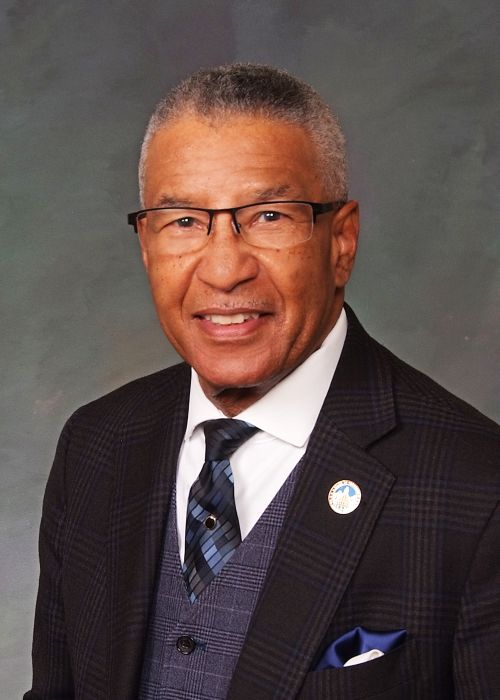
Sen. Tony Exum
Sponsored bills
For a residential eviction action filed in county court, the act: Requires the court to allow either party or any witness to choose to appear in person or remotely at any return, conference, hearing, trial, or other court proceeding and to allow either party to change their designation until up to 48 hours before the proceeding; Authorizes a pro se defendant to file an answer to a summons electronically through an e-filing system; and authorizes either party, if the party is pro se, to file a motion or other documents electronically through an e-filing system; Prohibits the court from assessing an e-filing fee or service fee on a motion to waive filing fees, or from assessing an e-filing fee, service fee, or any other fee associated with the electronic filing or e-mailing of motions, answers, or documents for an indigent party; and Requires the court to comply with federal and state law or regulations, including state supreme court directive or policy, regarding accommodations for people with a disability or for people with limited English proficiency. If a party is appearing remotely and is disconnected, the act requires the court to make all reasonable efforts to contact the party and allow reasonable time for the party to reestablish connection. If the party is unable to reestablish connection, the act requires the court to reschedule the hearing for the first available in-person date after the date of the originally scheduled hearing, but no later than one week after the originally scheduled hearing, to the extent practicable. The act prohibits the court from entering a default judgment if a party is unable to participate remotely due to a technological disconnection or failure. The act requires the complaint to include a designation of whether the plaintiff elects to participate in any hearing in person or remotely and a box indicating if the eviction is for a residential or commercial tenancy. The act requires the summons to include a statement in bold-faced type notifying the defendant that either party has a right to appear in person or remotely, include a place for the defendant to indicate whether the defendant will appear in person or remotely, and provide information for how a pro se party can file documents related to the case. The act appropriates $418,118 from the general fund and the judicial department information technology cash fund to the judicial department for trial court programs, capital outlay, and information technology infrastructure. APPROVED by Governor June 7, 2023 EFFECTIVE January 1, 2024 NOTE: This act was passed without a safety clause. (Note: This summary applies to this bill as enacted.)
The act creates the youth mentorship assistance grant pilot program (program) in the Colorado opportunity scholarship initiative within the department of higher education (department). The program provides financial assistance for the cost of attendance at a public higher education institution to students who provide mentorship services to an approved youth mentorship organization. The act requires the Colorado opportunity scholarship initiative advisory board to select approved youth mentorship organizations to participate in the program and administer the program. The act requires each approved youth mentorship organization to submit an annual report to the department, and the department to submit an annual report to the education committees of the senate and house of representatives, concerning the program. For the 2023-24 state fiscal year, $100,000 is appropriated from the general fund to the department for use by the Colorado opportunity scholarship initiative advisory board to implement the act. APPROVED by Governor June 6, 2023 EFFECTIVE August 7, 2023 NOTE: This act was passed without a safety clause and takes effect 90 days after sine die. (Note: This summary applies to this bill as enacted.)
The act restricts a landlord, with certain exceptions, from considering or inquiring about certain information relating to a prospective tenant's amount of income and credit history. A landlord may not require a prospective tenant to have an annual income that exceeds 200% of the annual cost of rent. A landlord who violates one of the new prohibitions is subject to an initial penalty of $50, to be paid to the aggrieved party. A landlord who does not cure the violation is also subject to a penalty of $2,500, to be paid to the aggrieved party in addition to the initial penalty and any economic damages, court costs, and attorney fees. A violation is also an unfair housing practice subject to enforcement by private persons, the attorney general, and the Colorado civil rights division. The act prohibits a landlord from requiring a tenant to submit a security deposit in an amount that exceeds the amount of 2 monthly rent payments. The act allows a tenant who is subject to an eviction action to assert as an affirmative defense that the tenant's landlord has violated or is in violation of certain state laws concerning unfair housing practices. APPROVED by Governor June 6, 2023 EFFECTIVE August 7, 2023 NOTE: This act was passed without a safety clause and takes effect 90 days after sine die. (Note: This summary applies to this bill as enacted.)
The act creates the direct care workforce stabilization board (board) in the department of labor and employment (department) to review the direct care industry, which is the industry of workers who provide home-based or community-based direct care to individuals who require assistance in accomplishing activities of daily living. The act directs the board, at least once every 2 years, to review the direct care industry and develop recommendations for: Minimum employment standards for direct care workers based on information gathered through an investigation of the direct care industry market in relation to the Colorado labor market; and Improving state communications with direct care workers about their rights and the obligations of direct care employers. The board must conduct public hearings to engage direct care workers, direct care employers, and direct care consumers in the development of the standards and recommendations for improved communications. The executive director of the department may direct the board to review minimum direct care employment standards more frequently. The board must report any recommendations approved by at least 8 board members to the governor and specified committees of the general assembly by September 1, 2024, and at least every 2 years thereafter. Direct care employers are required to provide annual notices to direct care workers regarding: Their rights and the obligations of direct care employers under the act; Any minimum direct care employer standards and local jurisdiction employment standards applicable to direct care workers; and Contact information for obtaining assistance from the department. Direct care employers are prohibited from retaliating against direct care workers for participating in board meetings and activities. The board is subject to a sunset review and repeal on September 1, 2029. For the 2023-24 state fiscal year, the act appropriates: $186,876 from the general fund to the department of labor and employment for use by the executive director's office to implement the act; and $60,358 from the general fund and anticipates $60,358 in federal funds to the department of health care policy and financing to implement the act. APPROVED by Governor June 5, 2023 EFFECTIVE August 7, 2023 NOTE: This act was passed without a safety clause and takes effect 90 days after sine die. (Note: This summary applies to this bill as enacted.)
The act modifies the affordable housing programs (programs) created by Proposition 123, which was approved by voters at the 2022 statewide election, by: Allowing tribal governments to participate in the programs; Requiring the division of local government, rather than the division of housing, to administer the land planning capacity development program; Allowing the office of economic development (office) to use a portion of the money in the affordable housing financing fund (financing fund) for its administrative expenses, without increasing the total amount of money from the fund that may be used for administrative expenses; Modifying the calculation for determining eligibility for some of the programs; Clarifying the description of how money is transferred or allocated; Specifying certain units to be included for purposes of the 3% growth obligation that is a condition for funding for local and tribal governments; Establishing a process for rural resort communities to petition the division of housing to use alternative percentages of area median income for eligibility for certain affordable housing programs for a given funding cycle; Exempting money that was originally from the federal coronavirus state fiscal recovery fund from the appropriations for fiscal year 2022-23 used to determine the state's maintenance of effort requirement for other affordable housing funding; and Requiring the office and the division of housing to provide 3 annual reports to legislative committees about the affordable housing programs. APPROVED by Governor June 5, 2023 EFFECTIVE June 5, 2023 (Note: This summary applies to this bill as enacted.)
The act establishes several measures that protect the best interests of a child or youth and that will not hinder reunification with the child's or youth's family when the child or youth has been temporarily placed outside the family home with a relative or kin (relative), including: Permitting a relative to appeal when denied placement of the child or youth with the relative; Requiring the department of human services (department), to use reasonable efforts to help a relative whose barrier to caring for the child or youth is a lack of resources; Amending the court's advisement to the parent so it is consistent with changes to statute; Specifying what information should be included in a notice to relatives when the child or youth has been removed from the child's or youth's home; Requiring that courts give preference to a relative unless placement with that relative would negatively affect the child's or youth's mental, physical, or emotional needs, or hinder reunification with the child's or youth's family; Providing options for a relative to be allowed to participate in a child's or youth's care and planning; Creating a rebuttable presumption that placement with a relative is in the child's or youth's best interest. The presumption may be rebutted by a preponderance of the evidence, giving primary consideration to the child's or youth's mental, physical, and emotional needs, including the child's or youth's preference regarding placement. Requiring that caseworkers inform the court of efforts to identify and place a child or youth with a relative. Foster parents who have the child or youth in their care for 12 months or more may intervene, as a matter of right, with or without counsel, following adjudication. The purpose of intervention is to provide knowledge or information concerning the care and protection of the child or youth, including the child's or youth's mental, physical, and emotional needs. For the 2023-24 state fiscal year: $13,879 is appropriated to the department of human services from the general fund for use by the division of child welfare for Colorado TRAILS for the implementation of this act; and The general assembly anticipates that the department of human services will receive $7,473 in federal funds for use by the division of child welfare to assist in the implementation of this act. APPROVED by Governor June 5, 2023 EFFECTIVE August 7, 2023 NOTE: This act was passed without a safety clause and takes effect 90 days after sine die. (Note: This summary applies to this bill as enacted.)
The act prohibits debt collectors and collection agencies, when attempting to collect debt that they know or should know is medical debt or to obtain information about a consumer in relation to an attempt to collect medical debt, from making a false, deceptive, or misleading representation that the medical debt will be included in a consumer report or factored into a consumer's credit score unless the information is used in connection with a credit transaction involving, or that may reasonably be expected to involve, a principal amount that exceeds the national conforming loan limit value determined annually by the federal housing finance agency. "Medical debt" is debt arising from health-care services or health-care goods, including products, devices, durable medical equipment, and prescription drugs. The act also prohibits a consumer reporting agency from making any consumer report containing any adverse information that the agency knows or should know concerns medical debt. The department of revenue is required to study the effect of prohibiting medical debt reporting and, on or before January 1, 2028, report its conclusions from the study to certain legislative committees. In its initial written communication to a consumer, a debt collector or collection agency is required to include a statement regarding the new prohibitions. Current law prohibits a consumer reporting agency from reporting certain types of information. However, the prohibition does not apply to: A credit transaction involving, or that may reasonably be expected to involve, a principal amount of $150,000 or more; or The underwriting of life insurance involving, or that may reasonably be expected to involve, a face amount of $150,000 or more. The act eliminates both of these exceptions to the prohibition and substitutes a new exception, which applies to a credit transaction involving, or that may reasonably be expected to involve, a principal amount that exceeds the national conforming loan limit value for a one-unit property as determined annually by the federal housing finance agency. APPROVED by Governor June 5, 2023 EFFECTIVE August 7, 2023 NOTE: This act was passed without a safety clause and takes effect 90 days after sine die. (Note: This summary applies to this bill as enacted.)
Section 1 of the act repeals the statute that: Creates in each region of the division of youth services a community board to promote transparency and community involvement in division of youth services' facilities within the region, provide opportunities for youth to build positive relationships with adult role models, and promote youth involvement within the community; and Specifies the number, manner of appointment, and required qualifications of community board members and meeting requirements for a community board. Section 2 modifies the process for the resolution of grievances filed against county departments of human and social services (county department) concerning the conduct of county department personnel in the performance of their duties relating to children who may be neglected or dependent by: Repealing the requirement that a citizen review panel be created consisting of citizens who are representative of the community, have demonstrable personal or professional knowledge and experience with children, and are not employees or agents of the department of human services (state department) or any county department; Requiring referral of grievances that are currently referred to a citizen review panel to instead be referred to the office of the child protection ombudsman (child ombudsman) for review; Repealing grievance review processes and requirements relating to citizen review panels; Requiring each county department to post information about the grievance process on its public website or otherwise provide information concerning the grievance process to individuals involved in the county child welfare system; and Clarifying that the grievance resolution process allows a person who wishes to file a grievance to do so directly to the child ombudsman. Section 3 specifies that if fewer than all the 17 members of the law enforcement community services grant program committee created in the division of local government of the department of local affairs (department) provided for by statute are appointed as of June 30, 2023, the executive director of the department shall determine the number of members of the committee; except that the committee must consist of at least 9 members. Sections 4 through 14 clarify existing provisions relating to compensation and reimbursement of expenses for members of specific boards and commissions that focus on functions related to human and social services. APPROVED by Governor May 24, 2023 EFFECTIVE May 24, 2023 (Note: This summary applies to this bill as enacted.)