

In common interest communities for real property, Colorado law allows a unit owners' association (association) to require, without starting a legal proceeding, a unit owner to reimburse the association for collection costs, attorney fees, or other costs resulting from the owner failing to timely pay assessments or other money owed. The act limits the reimbursement amount for attorney fees to $5,000 or 50% of the original money owed. Colorado law allows the association to require, also without starting a legal proceeding, a unit owner to reimburse the association for collection costs and attorney fees resulting from the owner failing to obey the bylaws or rules of the association. The act limits the reimbursement amount for attorney fees to $5,000 or 50% of the actual costs the association incurred for the failure to obey. Colorado law requires a court to award an association reasonable attorney fees, costs, and collection costs in an action in which the association seeks to collect unpaid assessments or enforce or defend the association's bylaws or rules and the association prevails in the matter. The act limits the award for attorney fees to $5,000 or 50% of the balance owed to the association; except that the court may award attorney fees in excess of these limits if the court finds that the unit owner was able to comply but willfully failed to comply. Each of the mentioned limitation is adjusted for inflation. The court, when determining reasonable attorney fees, is required to consider relevant factors, including the amount of the unpaid assessments, whether foreclosure action was contested, and whether the attorney fees incurred are disproportionate to the needs of the case. Colorado law grants an association a lien on a unit for amounts owed to the association by the unit owner. The act prohibits foreclosing on the lien until: The association has: Obtained a personal judgment against the unit owner in a civil action; Attempted to bring a civil action against the unit owner but was prevented by the death of or incapacity of the unit owner; or Attempted to bring a civil action against the unit owner but the association was unable to serve the unit owner within 180 days; or The unit owner is in a bankruptcy civil action. These foreclosure requirements: Apply to a unit owned by an individual who occupies the unit as a principal residence; Do not apply to a unit owned by an entity other than an individual or a unit that is not occupied as the unit owner's principal residence; and Apply to a unit used for workforce housing. At least 30 days before initiating legal action to foreclose a lien under the act, an association must provide notice to the unit owner that the unit owner has the right to engage in mediation prior to litigation. The association must also provide notice to all lienholders identified on the unit owner property records of the pending legal action for foreclosure. The notice must include the amount of any outstanding assessment and other money owed. Colorado law requires the association to attempt to enter into a payment plan to collect amounts due from a unit owner. The act prohibits foreclosure on a lien if the unit owner is in compliance with the payment plan. Colorado law prohibits certain persons from purchasing the property foreclosed upon under an association lien as a conflict of interest. The act adds the following persons to the prohibition: A community association management company representing the association; and An individual or a community association management company that was, at any time during the 5-year period immediately preceding the sale of the foreclosed unit, a person that was subject to, or that was owned by or affiliated with a person that was subject to, the prohibition. A person that purchases a unit through the foreclosure of a lien held by an association acquires the unit subject to any covenants or limitations on the use or sale of the unit to which the previous unit owner was subject. The act creates a right of redemption for 180 days following a foreclosure sale. In general, the procedures for the act's right of redemption are based on the procedures in current law. A person wanting to redeem the unit under the act must file a notice of intent to redeem within 30 days after the foreclosure sale. The following people have the right of redemption in order of priority: The unit owner; A tenant of the unit; A nonprofit entity whose primary purpose is the development or preservation of affordable housing; A community land trust; A cooperative housing corporation; and The state of Colorado or a political subdivision of the state of Colorado. If 2 or more people with the right of redemption attempt to redeem the property, the person with the highest priority is awarded the property. If the highest priority lienor has not redeemed the property, each subsequent lienor is entitled to redeem, in succession, within five business days. To redeem a unit, the redeemer must reimburse the foreclosure purchaser or association in accordance with the standards set by the act. APPROVED by Governor June 5, 2024 EFFECTIVE August 7, 2024(Note: This summary applies to this bill as enacted.)
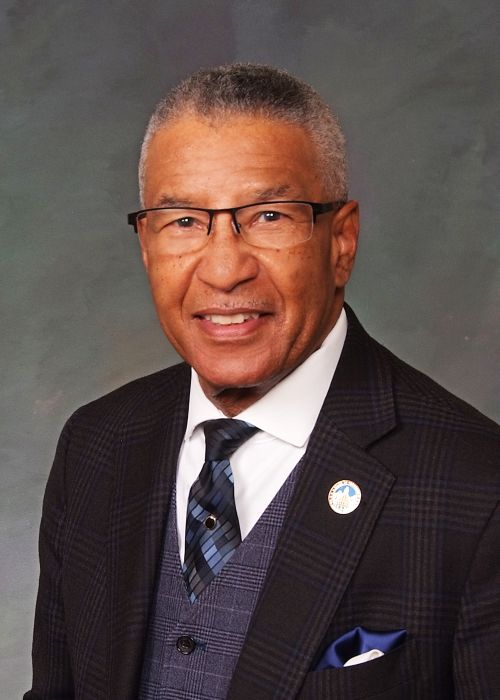
Sen. Tony Exum
Sponsored bills
The Colorado fire commission (commission) was created in the division of fire prevention and control in the department of public safety. The commission is set to be repealed, effective September 1, 2024, and is subject to a sunset review prior to its repeal. The act implements the recommendations in the department of regulatory agencies' 2023 sunset report to extend the commission's repeal date until September 1, 2033, and requires a sunset review prior to its repeal. APPROVED by Governor June 5, 2024 EFFECTIVE August 7, 2024(Note: This summary applies to this bill as enacted.)
The act creates an income tax subtraction (deduction) for income tax years 2026 to 2033 for the amount of any Segal AmeriCorps Education Award received by a taxpayer for service in the AmeriCorps national service program, which is used by the taxpayer during the income tax year. APPROVED by Governor June 3, 2024 EFFECTIVE June 3, 2024(Note: This summary applies to this bill as enacted.)
Beginning July 1, 2025, the act requires a duly sworn employee of the division of fire prevention and control in the department of public safety to be classified as a "state trooper" for purposes of the public employees' retirement association if the employee's duties include structural or wildfire management, wildfire response, live-fire training, or wildfire leadership, as determined by the executive director of the department. APPROVED by Governor May 24, 2024 EFFECTIVE August 7, 2024(Note: This summary applies to this bill as enacted.)
Starting July 1, 2025, each youth sports organization shall require each coach to annually complete mandatory reporter training and shall encourage each coach to annually complete an abuse prevention training that includes: Prohibited conduct by coaches; Appropriate one-on-one interactions between players and coaches; How to recognize and appropriately respond to and prevent behaviors that violate the prohibited conduct policy; and How to respond to disclosures of sexual abuse, disclosures of child abuse, or reports of behaviors violating the prohibited conduct policy in a supportive and appropriate manner that meets the mandated reporting requirements pursuant to Colorado statutes. Each youth sports organization shall develop a prohibited conduct policy that its coaches must comply with and that must include: A list of prohibited conduct by parents, spectators, coaches, and athletes and a mandatory reporting policy for adults who have knowledge of an act of prohibited conduct; and A code of conduct for parents, spectators, coaches, and athletes to follow. The act requires the department of early childhood to make a model code of conduct available that a youth sports organization may adopt. The act requires all youth sports organization and local government coaches to obtain a criminal history record check and to not hire a coach with a record of child abuse or unlawful sexual behavior. A volunteer who is not acting in the capacity of a coach or manager and who only occasionally assists with the team is not required to obtain a criminal history record check. The act requires each local government that operates a youth athletic activity to make available a prohibited conduct policy related to youth athletic activities. The act requires the attorney general to draft a notice that explains the requirements of the act and make it available to all youth sports organizations. Each youth sports organization shall post the notice on its website or, if it does not have a website, provide the notice to parents and legal guardians. APPROVED by Governor May 17, 2024 EFFECTIVE August 7, 2024(Note: This summary applies to this bill as enacted.)
Section 1 of the act creates a series of requirements related to accessory dwelling units. Section 1 establishes unique requirements for subject jurisdictions and for qualifying as an accessory dwelling unit supportive jurisdiction (supportive jurisdiction). As established in section 1, a subject jurisdiction is either: A municipality that has a population of 1,000 or more and that is within the area of a metropolitan planning organization; or The portion of a county that is both within a census designated place with a population of forty thousand or more, as reported in the most recent decennial census, and within the area of a metropolitan planning organization. Section 1 requires a subject jurisdiction, on or after June 30, 2025, to allow, subject to an administrative approval process, one accessory dwelling unit as an accessory use to a single-unit detached dwelling in any part of the subject jurisdiction where the subject jurisdiction allows single-unit detached dwellings. Section 1 also prohibits, on or after June 30, 2025, subject jurisdictions from enacting or enforcing certain local laws or otherwise acting in certain ways that would restrict the construction or conversion of an accessory dwelling unit. In order to qualify as a supportive jurisdiction, a local government must submit a report on or before June 30, 2025, to the department of local affairs (department) demonstrating that the local government: Has complied with the accessory dwelling unit requirements section 1 imposes on subject jurisdictions as a subject jurisdiction or, if the local government is not a subject jurisdiction, as if the local government were a subject jurisdiction; and Has implemented one or more specified strategies to encourage and facilitate the construction or conversion of accessory dwelling units. Section 1 also creates the accessory dwelling unit fee reduction and encouragement grant program within the department. The purpose of this grant program is for the department to provide grants to supportive jurisdictions for offsetting costs incurred in connection with developing pre-approved accessory dwelling unit plans, providing technical assistance to persons converting or constructing accessory dwelling units, or waiving, reducing, or providing financial assistance for accessory dwelling unit associated fees and other required costs. In addition to providing grants, the department is required to develop a toolkit to support local governments in encouraging accessory dwelling unit construction. Section 1 requires the state treasurer to transfer $5 million to the accessory dwelling unit fee reduction and encouragement grant program fund created for purposes of implementing the grant program. Section 2 requires the department to create, and for local governments to consider and adopt, model public safety code requirements related to geographic or climatic conditions for factory-built structures, including those structures that would be considered accessory dwelling units. Section 3 grants the Colorado economic development commission the power to expend $8 million to contract with the Colorado housing and finance authority to operate and establish the following programs to benefit low- to moderate-income residents of supportive jurisdictions: An accessory dwelling unit credit enhancement program that supports lenders offering affordable loans to eligible low- and moderate-income borrowers for the construction or conversion of accessory dwelling units; A program that allows for the buying down of interest rates on loans made to eligible low- and moderate-income borrowers in connection with the construction or conversion of accessory dwelling units; A program that offers down payment assistance in connection with accessory dwelling units, principal reduction on loans to eligible low- and moderate-income borrowers made in connection with accessory dwelling units, or both; and A program through which the Colorado housing and finance authority offers loans, revolving lines of credit, or grants to eligible non-profits, public housing authorities, and community development financial institutions to make direct loans or grants to support the construction or conversion of accessory dwelling units for low- and moderate-income borrowers or tenants. Section 4 directs the state treasurer to transfer $8 million from the general fund to the Colorado economic development fund for the purpose of the contracting described in section 3. Section 5 prohibits a subject jurisdiction's planned unit development resolution or ordinance for a planned unit development from restricting the permitting of an accessory dwelling unit more than the local law that applies to accessory dwelling units outside of the planned unit development. Section 6 states, subject to a reasonable restriction exception, that any prohibition on accessory dwelling units or the implementation of restrictive design or dimension standards by a unit owners' association in a supportive jurisdiction is void as a matter of public policy. Section 7 makes appropriations to the department, the division of local government within the department, and the office of the governor for use by the office of information technology for the purpose of implementing the act. APPROVED by Governor May 13, 2024 EFFECTIVE May 13, 2024(Note: This summary applies to this bill as enacted.)
The length of the bill summary for this bill requires it to be published on a separate page here: https://leg.colorado.gov/hb24-1030-bill-summary (Note: This summary applies to this bill as enacted.)
The act modifies existing warranty of habitability laws by clarifying actions that constitute a breach of the warranty of habitability (breach) and procedures for both landlords and tenants when a warranty of habitability claim (claim) is alleged by the tenant. Updates to existing warranty of habitability laws include: Establishing time frames for when a landlord must communicate with the tenant and commence remedial action after having notice of a condition related to the habitability of a residential premises; Requiring a landlord to perform conduct to address an uninhabitable condition until such condition is completely remedied or repaired; Establishing a rebuttable presumption that a landlord has failed the landlord's duty to remedy or repair a condition if the condition continues to exist either 7 or 14 days after the landlord has notice of the condition, depending on the condition at issue in the tenant's claim; Determining when a landlord is presumed to have notice of a condition; Requiring a landlord to provide a tenant with a comparable dwelling unit or hotel room for up to 60 days while the landlord addresses any uninhabitable conditions that materially interfere with the tenant's life, health, or safety; Requiring a landlord to maintain all records, including correspondence and other documentation, relevant to a tenant's claim and any remedial actions taken by the landlord; Requiring rental agreements entered into after January 1, 2025, to feature a statement in English and Spanish regarding where a tenant can report or deliver written notice of an unsafe or uninhabitable condition; Establishing procedures for when a landlord may enter the dwelling unit of a tenant to address an uninhabitable condition and identifying circumstances when a tenant may deny a landlord entry to the dwelling unit; Clarifying certain conditions or characteristics of residential premises that are considered uninhabitable; Establishing that there is a rebuttable presumption that certain conditions and characteristics of a residential premises materially interfere with a tenant's life, health, or safety; and Modifying and clarifying a tenant's option for remedies when bringing a claim against a landlord and modifying procedures for accessing those remedies. The act establishes legal standards and court procedures related to claims, including authorizing a tenant to raise a breach as an affirmative defense against a landlord's action for possession or action of collection against the tenant. The act also establishes legal standards and procedures for a landlord's defense to a claim and limitations on a tenant's claim. The act instructs the court in its calculation of actual and punitive damages for breach cases. The act prohibits retaliation and specifies what tenant actions are protected by the prohibition on retaliation and what actions constitute retaliation by the landlord. The act clarifies the jurisdiction of the attorney general and county and district courts over matters related to violations of the warranty of habitability. The act also modifies the statement included in a summons issued to a defendant in a court proceeding regarding an action for possession brought by a landlord. APPROVED by Governor May 3, 2024 EFFECTIVE May 3, 2024(Note: This summary applies to this bill as enacted.)
The act prohibits a unit owners' association from prohibiting the operation of a home-based business in a common interest community. The operation of a home-based business must still comply with any applicable and reasonable unit owners' association rules or regulations related to architectural control, parking, landscaping, noise, nuisance, and other matters that may impact the operation of a home-based business. The operation of a home-based business must also comply with municipal and county noise and nuisance ordinances or resolutions. APPROVED by Governor April 19, 2024 EFFECTIVE August 7, 2024(Note: This summary applies to this bill as enacted.)