

The act requires the department of public health and environment (department), to the extent that funding is available as part of the department's green business network, to: Provide annual training that includes food waste prevention and reduction strategies; Develop a food waste reduction guidance document (document); Place the document on the department's public website; and Update the document at least annually. The act suggests means by which retail food establishments may donate or resell safe food. The act states that, on and after January 1, 2026, grocery stores are encouraged to: Clearly display the ingredients of items of prepared food; and Use "best if used or frozen by" dates rather than "sell by" dates upon prepared items of food. Current law provides civil and criminal immunity to a farmer, retail food establishment, correctional facility, school district, hospital, or processor, distributor, wholesaler, or retailer of food that donates items of food to a nonprofit organization for use or distribution in providing assistance to individuals in need. The act extends this immunity to apply to: Faith-based organizations that donate food; and Food donations to faith-based organizations and individuals. The act also clarifies that the immunity from liability applies regardless of whether the donated food is alleged to have caused illness or death. (Note: This summary applies to this bill as enacted.)
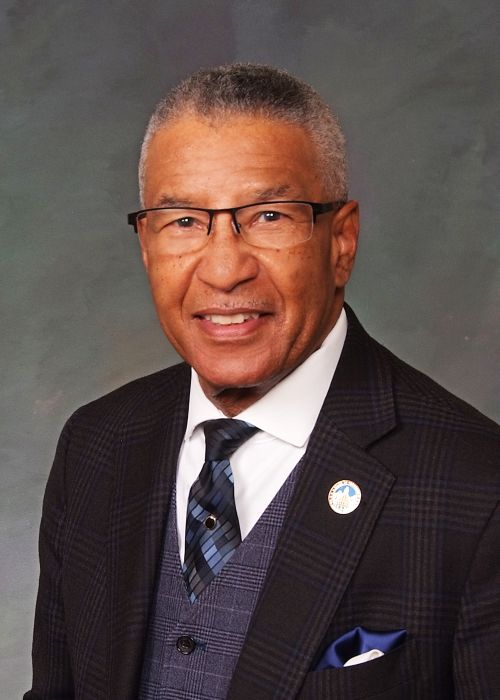
Sen. Tony Exum
Sponsored bills
The act prohibits a person's failure to appear from forming the basis of a municipal criminal charge against the person. The act clarifies that, for purposes of the act, failure to appear includes contempt of court for the failure to appear or any other term used by a municipality to refer to a person's failure to appear at a scheduled court date. (Note: This summary applies to this bill as enacted.)
The act requires an insurer that issues or renews an automobile insurance policy to include in the applicable coverage the replacement cost of a child restraint system that is in a motor vehicle at the time of a motor vehicle accident and to which the coverage is applicable. The act requires the insurer to ask a claimant if a child restraint system was in the motor vehicle at the time of the accident and, if so, requires the applicable coverage to cover the cost of its replacement. (Note: This summary applies to this bill as enacted.)
The act prohibits food processing plants from selling or offering for sale cell-cultivated meat that is misbranded as a meat product. The act also requires food processing plants to clearly label cell-cultivated meat as cell-cultivated meat. The department of public health and environment (department) is required to inspect food at a food processing plant if the department has reasonable cause to believe that: Cell-cultivated meat sold or offered for sale by the plant is misbranded as a meat product; or The plant is failing to label cell-cultivated meat as required. If, after an inspection, the department has reasonable cause to believe that a food processing plant is selling or offering for sale cell-cultivated meat that is misbranded as a meat product, or is failing to label cell-cultivated meat as required, the department may issue a stop order. Upon being issued the stop order, the food processing plant shall not sell the product or offer it for sale until the department determines whether it is misbranded or unlabeled in violation of the act. If the department determines that a food processing plant is selling or offering for sale cell-cultivated meat that is misbranded as a meat product, or is failing to label cell-cultivated meat as required, the department may issue an embargo order requiring the food processing plant to dispose of the cell-cultivated meat by means other than by sale to purchasers in Colorado. The department, the attorney general, or the district attorney in the district where cell-cultivated meat is being offered for sale or sold may petition the district court to enforce a stop order or an embargo order. The department may adopt rules as necessary to implement the act. (Note: This summary applies to this bill as enacted.)
The act specifies that the fair access to insurance requirements plan association (association) is not: A department, unit, agency, political subdivision, or instrumentality of the state; or An insurance company or a person engaged in the business of insurance. The act also grants a member insurer, the association and its agents or employees, the board of directors of the association, and the commissioner of insurance or the commissioner's representatives immunity for any action taken by them in the performance of their powers and duties for the association. The act specifies that the only causes of action and remedies available to a policyholder of a fair access to insurance requirements plan policy against the association is for breach of contract or breach of the common law covenant of good faith and fair dealing. (Note: This summary applies to this bill as enacted.)
The act clarifies that the child of an inbound active duty military member (member) who has an existing individualized education program (IEP) or existing section 504 plan is eligible for open enrollment, remote enrollment, and guaranteed matriculation. The act requires the school district, district charter school, or an institute charter school (local education provider) where the child enrolls to ensure the student receives the appropriate services and accommodations, consistent with the child's existing IEP or section 504 plan, without unreasonable delay upon enrollment. The act requires each local education provider to take reasonable steps to notify members and their families of their rights, including providing information on special education services to prevent inadvertent exclusion and to ensure members and their families are fully informed of available supports. (Note: This summary applies to this bill as enacted.)
Beginning on January 1, 2026, any political subdivision of the state, public entity, or nonprofit corporation that provides paratransit services in the state (paratransit provider) is required to establish, in coordination with local public entities providing emergency services, a plan to communicate information and provide paratransit services during emergencies. The communication plan must include information on the number of riders who use paratransit services and the resource capacity of the paratransit provider, including the number of drivers and the number of vehicles used to provide paratransit services. Paratransit providers and public entities providing emergency services are also required to submit a report to the transportation legislation review committee on or before September 1, 2026, about the implementation of the communication and emergency services plan. (Note: This summary applies to this bill as enacted.)
Maddy summarySenate Joint Resolution 25-016 is a commemorative resolution from the Colorado General Assembly expressing strong support for strengthening the sister-state relationship between Colorado and Taiwan. It reaffirms the 42-year relationship and advocates for enhanced trade relations and academic exchanges between the two entities. The resolution also calls for the signing of a U.S.-Taiwan agreement on avoiding double taxation to promote bilateral investment. Additionally, it supports Taiwan's meaningful inclusion in various international organizations.
Maddy summarySJR 25-010 designates March 17, 2025, as "Colorado Aerospace Day" to recognize the state's leadership in the aerospace industry. The resolution highlights Colorado's status as the nation's top aerospace employment hub (with 33,000 direct jobs and 240,000 supporting jobs), home to major companies like Lockheed Martin and Boeing, and key military space operations. It does not create new laws but serves as a symbolic declaration urging federal support for space exploration and celebrating the industry's economic and educational contributions. This resolution is addressed to state and federal officials, educational institutions, and aerospace organizations.
The act requires the division of criminal justice (division) in the department of public safety to apply for and accept and expend federal or other available grant money to improve the state's response to mass shootings, including grant money to support services for victims of mass shootings. (Note: This summary applies to this bill as enacted.)