

The act requires the state board of education (state board) to adopt standards related to Black historical and cultural studies (standards). Local education providers shall incorporate the standards into courses for public elementary and secondary school students in the state no later than 2 years after the state board adopts the standards. The act aligns the timeline for the development, adoption, and integration of the standards with the 6-year cycle that the state board of education currently uses for revising the state academic standards. The act creates the Black historical and cultural studies advisory committee (committee) in the department of education (department) to recommend standards and related materials and to provide technical assistance at the request of local education providers implementing the standards. The committee's recommendations must include updates to the state's history and civics standards and must advance developmentally appropriate but comprehensive instruction that features factual accounts of the struggles and contributions of Black Americans in all fields of endeavor. Using the committee's recommendations, the department will create and maintain a resource bank of research-based, scholarly articles and promising program materials and curricula pertaining to Black historical and cultural studies. For the 2025-26 state fiscal year, the act appropriates $19,225 from the general fund to the department for costs related to content specialists. (Note: This summary applies to this bill as enacted.)
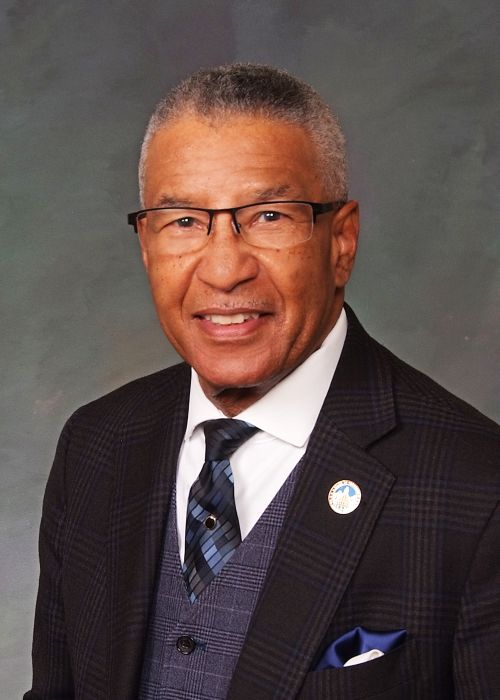
Sen. Tony Exum
Sponsored bills
Beginning January 1, 2027, the act requires large group health benefit plans to provide coverage for the treatment of the chronic disease of obesity and the treatment of pre-diabetes, including coverage for a comparable program to the national diabetes prevention program, medical nutrition therapy, intensive behavioral or lifestyle therapy, and metabolic and bariatric surgery. For a large group health benefit plan offered in the state, the act requires carriers to offer the policyholder the option to purchase coverage for FDA-approved anti-obesity medications, including at least one FDA-approved GLP-1 medication. The commissioner of insurance may adopt rules for the implementation of the act. (Note: This summary applies to this bill as enacted.)
The act requires the office of just transition (office) in the department of labor and employment to prioritize awarding funding to support tier one and tier 2 coal transition communities experiencing socioeconomic impacts of coal closures and for opportunities for economic diversification, local community input, feasibility studies of specific proposed projects, and needs assessments. The office is required to use money appropriated to the just transition cash fund after July 1, 2025, to support programs that support targeted investment in coal transition communities by collaborating with coal transition communities and eligible entities, state and regionally recognized governmental and economic development entities, employee organizations that represent coal transition workers, and workers who are not affiliated with employee organizations to implement the most effective projects and programs for those communities. The act requires the office to annually report to the joint budget committee and at the annual "State Measurement for Accountable, Responsive, and Transparent (SMART) Government Act" hearings of the senate local government and housing committee and the house transportation, housing, and local government committee about the grants awarded by the office during the preceding state fiscal year, their recipients, and the purpose for which they were awarded. A public entity may invest public funds only as allowed by law. The act specifies that the investment of a payment or settlement to offset the socioeconomic impacts to a community or government from the closure of a coal mine or coal power generating station is not subject to these investment limitations. The act allows the executive director of the department of local affairs to establish a policy preference for awarding up to 70% of the money credited to the local government severance tax fund to just transition communities for a 3-year period beginning January 1, 2026. The act extends the deadline for the submittal by the director of the Colorado energy office of the findings and conclusions of assessments of advanced energy solutions in the northwestern and west end of Montrose county and in southeastern Colorado from July 1, 2025 to December 19, 2025, and makes the requirement that the findings and conclusion be submitted contingent on the director having sufficient federal money to support the submittal. (Note: This summary applies to this bill as enacted.)
The act authorizes an agency of government to incorporate a project labor agreement requirement for a public project in the amount of $1 million or more if the project labor agreement will promote successful project delivery by securing a skilled labor force for the project and if it will promote cost-efficiency, safety, quality, and timely completion of the project. (Note: This summary applies to this bill as enacted.)
The act refers 2 ballot issues to the voters at the November 2025 statewide election concerning funding for the healthy school meals for all program. Section 2 refers a ballot issue to the voters at the November 2025 statewide election to allow the state to retain and spend state revenue that would otherwise need to be refunded for exceeding the estimate in the ballot information booklet analysis for Proposition FF and to allow the state to maintain the increases in state taxable income established in Proposition FF that would otherwise need to be decreased. If voters reject the ballot issue, the state will both: Refund $12,430,388 to individuals who have a federal taxable income of $300,000 or more and claimed itemized or standard state income tax deductions greater than $12,000 for single tax return filers and $16,000 for joint tax return filers; and Adjust the limit on itemized deductions established in Proposition FF to a level that would have reduced the amount of income tax revenue attributable to these itemized deductions by $12,430,388. If voters approve the ballot measure: The state will not refund $12,430,388 to individuals who have a federal taxable income of $300,000 or more and claimed itemized or standard state income tax deductions greater than $12,000 for single tax return filers and $16,000 for joint tax return filers; and The increases in federal taxable income as a result of Proposition FF will stay at the levels established by Proposition FF. Section 3 refers a ballot issue to the voters at the November 2025 statewide election to allow the state to increase taxes by $95 million annually by increasing state taxable income to support the healthy school meals for all program. If voters approve the ballot issue: Income tax deductions for individuals who have a federal taxable income of $300,000 or more will be reduced from current levels to $1,000 for single filers and $2,000 for joint filers; and The state will allocate the additional revenue generated by the reduction in income tax deductions to the healthy school meals for all program. If voters reject the ballot issue, income tax deductions will not be reduced, and there will not be any additional revenue to be allocated to the healthy school meals for all program. In addition to the income tax changes and potential refunds that may result from voters approving or rejecting the ballot issues described in sections 2 and 3, the act also changes the healthy school meals for all program cash fund (fund) and healthy school meals for all programs. If voters approve the ballot issue submitted pursuant to section 2 and reject the ballot issue submitted pursuant to section 3, $1 million is transferred annually from the fund to local school food purchasing programs. If voters approve the ballot issue submitted pursuant to section 3, regardless of whether the voters approve the ballot issue submitted pursuant to section 2: The permissible distribution of local food purchasing grants is modified; Certain school food authorities are allowed to collaborate to implement advisory committees; The duties of an advisory committee are clarified; and The distribution of funds from the fund is changed so that the amounts distributed through local food purchasing grants for increasing wages or providing stipends for individuals whom the participating school food authority employs to directly prepare and serve food for school meals and through the local school food purchasing technical assistance and education grant program are modified based on the amount of money in the fund. NOTE: Certain provisions of the act are contingent on the results a measure concerning Proposition FF refunds or Proposition FF revenue increases being either approved or not approved by a majority of voters at the November 2025 statewide election.(Note: This summary applies to this bill as enacted.)
The act requires the division of criminal justice in the department of public safety (division) to establish an automated protection order notification system (notification system) to provide a protected person, a protected person's immediate family, and other interested persons (registered users) with information related to a criminal or civil protection order. The notification system must disseminate specific information to registered users in English and Spanish through a telephone call, email, text message, or mobile phone application. The act authorizes the division to contract with a third-party entity to provide the functionality for the notification system. A public entity is immune from liability in any civil action based on its release of information or failure to release information related to the notification system. The act prohibits the division from establishing or operating the notification system until the division receives sufficient money to establish and operate the notification system for at least one year from gifts, grants, or donations, including federal funds, or money appropriated to the division from the Colorado crime victim services fund. (Note: This summary applies to this bill as enacted.)
Under current law, there exists a working group formed by the department of human services and the state court administrator in the judicial department to perform various duties related to the allocation of juvenile detention beds. The act amends these duties. Under current law, 22 emergency detention beds are available statewide. The act expands this to 39 emergency detention beds available statewide. The act requires the department of human services to publish a monthly report concerning the status of all youth who are in detention and are awaiting services that would mitigate the substantial risk of harm to others that are presented by the juvenile or the juvenile's risk of flight from prosecution and the number of emergency beds used by each judicial district or facility. The act requires the division of youth services to: Publish a report by July 1, 2027, concerning available placements for juveniles who are awaiting mitigating services in the state; and Establish a pilot program for certain staff members to wear a body-worn camera while in a facility while interacting with youth. The act requires a court to dismiss a delinquency petition or charges against a juvenile if the court determines that the juvenile is incompetent to proceed and the highest charged act constitutes a class 2 misdemeanor, petty offense, drug misdemeanor, or traffic offense. The act amends and expands considerations for a juvenile's case management plan, if the court determines that a juvenile is incompetent to proceed. The act creates the deflection and community investment grant program in the division of criminal justice to provide grants to eligible applicants to implement a mixed-delivery system of trauma-informed health and development deflection programs for youth, including Native American youth. The grant program repeals on January 1, 2031. For the 2025-26 state fiscal year, the act: Appropriates $6,854,420 from the general fund to the department of human services to implement the act; Reappropriates $122,279 of general funds to the department of education to the department of human services for use by the division of youth services to implement the act; Appropriates $437,264 from the general fund to the department of public safety for use by the division of criminal justice to implement the act; and Appropriates $2,708,316 from the general fund to the department of public safety for use by the division of criminal justice for the deflection and community investment grant program.(Note: This summary applies to this bill as enacted.)
The act authorizes local authorities to enforce the state requirement that a vehicle, trailer, semitrailer, or motor vehicle (vehicle) be registered. A conviction by a local authority does not bar a subsequent state prosecution if the subsequent prosecution does not arise from the same event. A court may dismiss a violation for failing to register a vehicle if: The vehicle was unregistered for no more than 4 months at the time of the violation; The owner registered the vehicle before the owner's first court date; and The owner pays a $30 administrative dismissal fee if the court is a municipal court. A peace officer who charges a person for a violation must notify the defendant of the opportunity to have the charge dismissed by the court. (Note: This summary applies to this bill as enacted.)
The act creates a specific criminal offense related to wrongfully interfering with a transit worker and adds it to the criminal harassment statute, as well as making the offense subject to the victim rights act. The act eliminates similar criminal conduct from the regional transportation district (district) statutory scheme. Further, a law enforcement agency may grant money received from the peace officer training and support fund to the district for training, equipment, and other purposes deemed necessary to ensure the safety of employees and patrons of the district. (Note: This summary applies to this bill as enacted.)
The act defines "knowing misconduct" as a voluntary act or omission or series of acts or omissions consciously performed by a crime laboratory employee (employee) as a result of effort or determination in which the employee is aware that the employee's conduct is improper or deceptive and involves mishandling physical evidence or data or results, incorrectly performing forensic testing, presenting misleading or false results, concealing material information, or presenting false sworn testimony about evidence. The act defines a "significant event" as an act or omission by an employee that is a gross deviation from the standard operation procedures or accreditation requirements of the crime laboratory, or requirements in law that were applicable at the time of the act or omission of the employee, that could substantially negatively affect the integrity of the crime laboratory activities. The act requires an employee to report witnessed or discovered knowing misconduct or a significant event (collectively, "wrongful action") within 7 days of witnessing or discovering the wrongful action to the director of the crime laboratory (director) or to the employee's immediate supervisor, who shall report it to the director. A director who receives a report shall investigate the alleged wrongful action. As part of the investigation, the director must compile a list of all cases that the employee worked on. At the conclusion of the investigation, the director shall prepare a written final report. When an investigation is of alleged wrongful action in a pending case, the director shall notify each district attorney who has jurisdiction over the pending case about the investigation. At the conclusion of the investigation, if the investigation determines that the employee did not engage in wrongful action, the director shall deliver the final report to each district attorney who received notice of the investigation and to each district attorney who has jurisdiction over any case that was subject to investigation. If the investigation determines that the employee engaged in wrongful action, the director shall deliver the final report and all discoverable materials to each district attorney who has jurisdiction over any case that the employee worked on in an official capacity. If an investigation concerning wrongful action by a crime laboratory occurred after July 1, 2014, and before July 1, 2025, and the investigation resulted in criminal allegations filed against the employee or a sustained internal affairs action by the department supervising the employee, the director shall, as soon as practicable but no later than September 1, 2025, prepare a final report and provide the final report to all district attorneys with jurisdiction over any criminal case that is identified in the final report that is pending or has resulted in a conviction in that jurisdiction. Upon receipt of a notice from a director about an investigation into alleged wrongful action in a pending case, a district attorney shall notify the defendant in the case of the investigation. If the case involved a crime listed in the "Victim Rights Act", the district attorney shall also notify the victim about the alleged wrongful action, if the charges have been filed but the trial has not begun. A district attorney who receives a final report of an investigation that determines that a crime laboratory employee engaged in wrongful action in any case shall notify the defendant in that case, and each defendant whose case was reviewed as part of the investigation, of the determination of wrongful action. The act establishes a defendant's right to counsel in matters involving an employee's wrongful action and a right to investigate the wrongful action, to request discovery related to the wrongful action, and to seek post-conviction relief based on the wrongful action. The act permits a court to enter a protective order related to discovery requests. The act establishes a process for a defendant convicted in a case involving an employee's wrongful action to petition for post-conviction relief based on the wrongful action. If the defendant's petition for post-conviction relief asserts facts that, if true, demonstrate that a wrongful action was material to the case, the court shall decide the claim upon the merits after an evidentiary hearing. At the evidentiary hearing, the defendant has the burden to show that the employee committed the wrongful action and that the wrongful action is material to the case. If the defendant meets their burden, the court shall vacate the defendant's conviction and grant a new trial. The act makes all records related to an investigation criminal justice records and makes release of the records governed by the existing law governing criminal justice records; except that the custodian of a final report that concludes that a crime laboratory employee engaged in wrongful action may deny inspection of the report if there is an ongoing criminal investigation or criminal case. The act appropriates $140,433 from the general fund to the judicial department for use by the state courts. (Note: This summary applies to this bill as enacted.)