

The act allows a currently licensed Colorado teacher seeking to add an early childhood education endorsement, early childhood special education endorsement, elementary education endorsement, or special education generalist endorsement to demonstrate professional competencies by submitting evidence of achieving sufficiently high education coursework grades on coursework aligned with relevant standards as approved by the department of education. If the applicant spots for the multiple measures pathway are not filled, the act allows currently licensed Colorado teachers who are seeking additional licensure endorsements to demonstrate professional competencies using the multiple measures pathway. The act clarifies that 4-year institutions of higher education that offer programs of off-campus instruction and that have courses included in the guaranteed transfer pathway matrix or that are part of a statewide degree transfer agreement may participate in the teacher recruitment education and preparation program. (Note: This summary applies to this bill as enacted.)
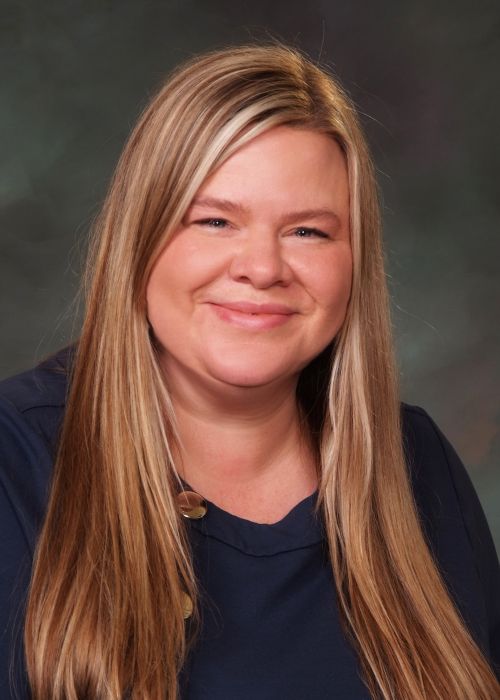
Rep. Katie Stewart
Sponsored bills
Maddy summaryHJR 25-1028 designates Friday, April 25, 2025, as "Sportsmen's Day" in Colorado. This resolution aims to recognize the contributions of Colorado's sportsmen and women to conservation efforts and the state's economy. It also encourages members of the General Assembly to join the Colorado Legislative Sportsmen's Caucus and urges public and private institutions to work with the caucus.
Maddy summaryHouse Joint Resolution 25-1027 designates a specific portion of Colorado State Highway 1 in Larimer County, from East County Road 60 to Interstate 25, as the "Commissioner Lew Gaiter III Memorial Highway." It authorizes the Colorado Department of Transportation (CDOT) to accept donations for the initial placement of signs and to explore a cooperative agreement with Larimer County for sign maintenance.
Maddy summaryHouse Joint Resolution 25-1030 expresses the State of Colorado's strong opposition to the use of forced labor in the production of goods. The resolution states that Colorado will use its purchasing power to support businesses that ethically source or manufacture products without forced labor. It also encourages state and local economic development offices to attract businesses that avoid these labor practices. This joint resolution aims to influence state and local government purchasing decisions and promote ethical business standards.
Maddy summaryHJR 25-1026 designates Colorado State Highway 402, from United States Highway 287 to Interstate 25, as the "Rep. Hugh McKean Memorial Highway." It also authorizes the Colorado Department of Transportation (CDOT) to accept donations for the initial placement of signs and to explore agreements with Larimer County for sign maintenance.
The bill creates 2 enterprises in the division of insurance (division) in the department of regulatory agencies. The bill creates the strengthen Colorado homes enterprise (strengthen homes enterprise), which is a state-owned business that imposes and collects a fee from insurance companies (insurers), including the FAIR plan association, that offer on policyholders of homeowner's insurance policies issued by insurance companies (insurers) and the fair access to insurance requirements (FAIR) plan association in the admitted market covering property located in or risks in Colorado. which The fee is collected on a per-policy basis and is equal to 1.5% of one-half percent on the dollar amount percentage of the total premiums that the insurer collects in the immediately preceding calendar year from homeowners for issuing homeowner's insurance policies ( insurer fee); except that an insurer shall not collect the fee on policyholders that have resilient roof systems. With the insurer fee revenue, the strengthen homes enterprise board administers a grant program (grant program) to strengthen homes against the risk of future damage claims caused by high winds, wildfire, hail, and other extreme weather events (extreme weather events) by allowing a homeowner to use grant money to upgrade their roof system with certain resilient roof materials. By paying the insurer fee to support the grant program to retrofit homes with resilient roofs, policyholders may defray the cost of retrofitting their property to resist losses due to common perils, including windstorms, wildfire, and other extreme weather events, and insurers reduce their overall risk in the market due to hail and other extreme weather events, in order to promote insurance market stability throughout the state. The bill also creates the wildfire catastrophe reinsurance enterprise (reinsurance enterprise), which is a state-owned business implementing and administering the wildfire catastrophe reinsurance program (reinsurance program). The reinsurance program makes reinsurance payments to insurers that offer homeowner's insurance on properties located in the state to partially mitigate losses in the event of a state or federally declared wildfire-related disaster (wildfire-related disaster). The purpose of the reinsurance program is to stabilize the homeowner's insurance market in the state and to attract and retain homeowner's insurers. In exchange for access to the reinsurance program, the reinsurance program requires insurers to sell homeowner's insurance in areas of the state that are at high risk for wildfires. To pay for the reinsurance program, the reinsurance enterprise: Issues revenue bonds secured by the reinsurance enterprise; Issues a catastrophe bond to a person that purchases the bond but pays the principal to cover costs of a wildfire-related disaster if it occurs; May impose and collect an insurer fee on insurers to cover a shortfall if a wildfire-related disaster does not occur during the bond term and the reinsurance enterprise has insufficient money to redeem the bonds at maturity; and Beginning in the 2026 calendar year, impose and collect a fee on a per-policy basis on each policyholder of a homeowner's insurance policy issued in the admitted market covering property in or risks in the state. The amount of the fee is equal to one-half percent on the percentage of total premiums collected by each insurer in the immediately preceding calendar year. Invests the revenue from the revenue bonds and insurer fees. In addition, the bill sets the loss ratio for homeowner's insurance by presuming that the rates charged to purchasers are excessive if the insurer's loss ratio is less than 75% over a 3-year period and, if rates are in excess of the loss ratio, requires insurers in the admitted market participating in the reinsurance program to submit rates that are at least 5% less than the previous year one set of rates taking into consideration the reinsurance program and one set without. In addition to offering a replacement-cost policy in accordance with current law, an insurer may offer a replacement-cost policy that has a reasonable coverage limit or percentage cap for additional living expenses if the insurer provides a premium decrease for the coverage limit or replacement cap that is approved by the division. For the 2025-26 state fiscal year, the bill appropriates $7,410,037 to the department of regulatory agencies from the strengthen homes enterprise and also appropriates money to the department of law for legal services to implement the reinsurance program. (Note: Italicized words indicate new material added to the original summary; dashes through words indicate deletions from the original summary.) (Note: This summary applies to the reengrossed version of this bill as introduced in the second house.)
The bill requires a subject jurisdiction, on or after December 31, 2026, to allow a residential development to be constructed on a qualifying property that does not contain an exempt parcel, subject to an administrative approval process. A subject jurisdiction shall not allow a residential development to be constructed on a qualifying property unless the residential development complies with certain affordability requirements. The bill specifies that a subject jurisdiction shall not: Disallow construction of a residential development on the basis of height if the tallest structure in the residential development is no more than 3 stories or 45 feet tall; Disallow construction of a residential development on the basis of height if the tallest structure in the residential development complies with the height-related standards for the zoning district in which the residential development will be built or any zoning district parcel that is contiguous to the qualifying property on which the residential development will be built; Disallow construction of a residential development based on the number of dwelling units that the residential development will contain, except in accordance with standards listed in the bill; or Apply standards to a residential development on a qualifying property that are more restrictive than the standards the subject jurisdiction applies to similar housing constructed within the subject jurisdiction, including standards related to structure setbacks from property lines; lot coverage or open space; on-site parking requirements; numbers of bedrooms in a multifamily residential development; or on-site landscaping, screening, and buffering requirements; or minimum dwelling units per acre. A subject jurisdiction shall allow the following uses in a residential development on a qualifying property: Childcare; and The provision of recreational, social, or educational services provided by community organizations for use by the residents of the residential development and the surrounding community. A subject jurisdiction may condition additional uses in a residential development on the uses being allowed only on the ground floor of the residential development and the uses occupying no more than 15% of the ground floor area of the residential development. The bill requires a faith-based organization, school district, or state college or university to notify the county assessor that a subject jurisdiction has allowed the construction of a residential development on a qualifying property within the county. (Note: Italicized words indicate new material added to the original summary; dashes through words indicate deletions from the original summary.) (Note: This summary applies to the reengrossed version of this bill as introduced in the second house.)
Current law does not expressly allow for the state to recognize an arrest warrant issued by a Tribal court of a federally recognized Tribe (Tribal court). The act clarifies that a state court shall give full faith and credit to an arrest warrant issued by a Tribal court. Upon issuance of a Tribal court arrest warrant, a peace officer in the state may apprehend the person identified in the Tribal warrant if the peace officer verifies the validity of the warrant and confirms that the warrant permits extradition. The act outlines the court process for extradition cases arising from a Tribal court arrest warrant. Current law does not expressly allow for the recognition of a Tribal court behavioral health commitment order (commitment order). The act clarifies that a commitment order entered by a Tribal court that concerns a person under the Tribal court's jurisdiction is recognized to the same extent as a commitment order entered by a state court. A health-care provider may communicate with the officers of the Tribal court regarding a patient placed under the health-care provider's care pursuant to a commitment order to the same extent that the health-care provider may communicate with officers of the court pursuant to a commitment order entered by a state court. If a Tribal court issues an order rescinding the Tribal court's original commitment order, the state, county, or municipal law enforcement agencies; state courts; hospitals; behavioral health facilities; health-care providers; and others within the state responsible for providing services to the person subject to the commitment order shall recognize the order rescinding the Tribal court's original commitment order and release the person subject to the commitment order. (Note: This summary applies to this bill as enacted.)
The act continues the early childhood leadership commission (commission) housed in the department of early childhood for 5 years, repealing on September 1, 2030. Before its repeal, the commission is subject to a sunset review. (Note: This summary applies to this bill as enacted.)
A speech language pathology assistant (SLPA) is defined in the act as an individual who has a bachelor's degree or higher in speech-language pathology, communications disorders and speech sciences, or any other field that includes at least 24 semester hours in speech-language hearing sciences granted by an accredited institution of higher education. Only an individual who practices as an SLPA in accordance with statute or who is a school speech-language pathology assistant (school SLPA) authorized by the department of education may use the title "speech-language pathology assistant" or other terms that indicate that the individual is an SLPA or a school SLPA. An SLPA shall practice speech-language pathology only in collaboration with and under the direction and supervision of a certified speech-language pathologist (SLP). The act establishes requirements and guidelines for an SLP supervising an SLPA. The act prohibits an SLPA from engaging in certain speech-language pathology tasks, such as the diagnosis of patients and preparation of a treatment plan. An SLP may be disciplined for failing to properly direct and supervise an SLPA. The act repeals the regulation of SLPAs on September 1, 2033, subject to sunset review by the department of regulatory agencies. (Note: This summary applies to this bill as enacted.)